


















OCTOBER 5 — “Air is the most underrated and overlooked nutrient, yet it is essential to life. Without it, we would die within minutes.” — Daniel Vitalis. At the very core of our existence lies a vital yet often underestimated nourishment — air. Daniel Vitalis’ words echo a profound truth.
Air is a fundamental component of Earth’s intricate ecosystem, supporting the essence of life for all living organisms. Within the vast Earth’s atmospheric system, air engages in a complex interplay of chemical and physical processes, facilitating the exchange and movement of gases among the atmosphere, oceans, land, and all living creatures.
Hence, air is not merely a passive backdrop to our lives but an active participant in our planet’s intricate dance of life. It is essential to recognise the profound stress placed on our respiratory system when the intensity of air filtration escalates due to the inhalation of polluted air, particularly during events such as haze in Malaysia. Its significance extends from the sustenance of life and the complex workings of our bodies to the preservation of Earth’s climate and atmospheric balance.
However, in recent days, the skies over Kuala Lumpur have taken on an eerie semblance to the pre-winter climate of the UK, characterised by heavy clouds and a sombre dimness. Rather than relishing this atmospheric change, it is with a heavy heart that we must acknowledge its underlying cause. The persistent smoky sky has plagued Malaysia for nearly four decades, with the source of this smoke consistently traced to a specific region in Southeast Asia, particularly during the south-west monsoon season.
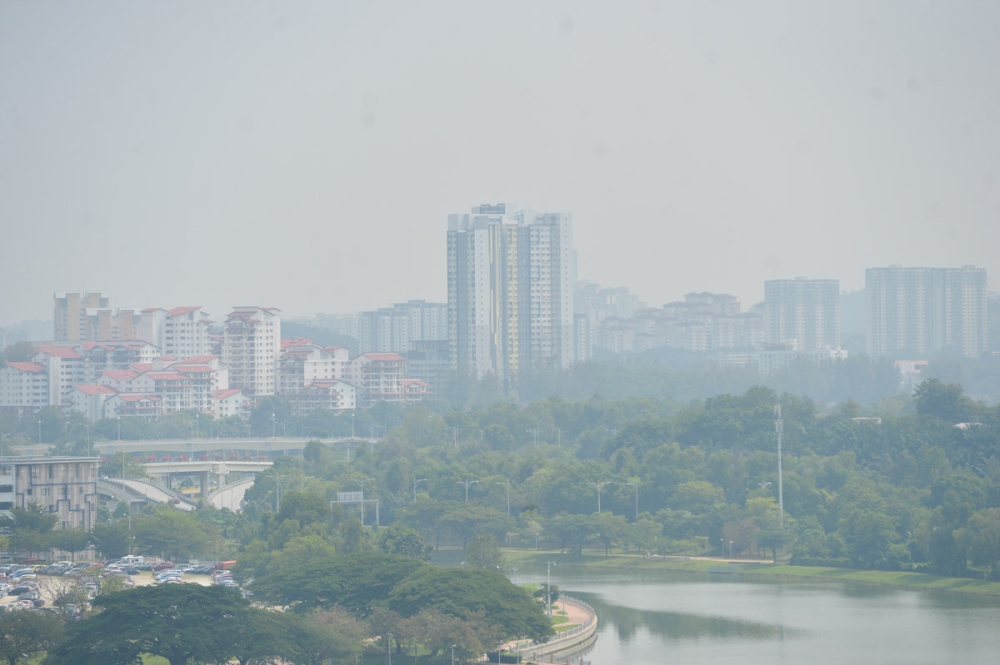
The current state of the air, shrouded in smoke and uncertainty, poses a grave threat to our immediate well-being and carries profound short-term and long-term health consequences. The recent surge in air pollution levels, as indicated by the Malaysia Air Pollutant Index (API), should be a source of grave concern for Malaysians. High API values, particularly those associated with increased particulate matter (PM2.5), threaten public health by elevating the risks of premature deaths and morbidity. Studies have shown that on a global scale, air pollution is estimated to be responsible for a staggering 8.8 million deaths yearly. WHO report 2017 showed that these fatalities encompass premature deaths attributed to severe health issues, including carcinogenic diseases, respiratory ailments, and cardiovascular conditions.
In light of these concerning seasonal air pollution trends, we must prioritise measures to combat air pollution, safeguard our health, and uphold the invaluable gift of clean air, which we trust for current and future generations. Recognising the gravity of the situation is just the first step; concrete actions are essential to mitigate the adverse effects of air pollution and protect our environment and health. Here are three vital steps that can be taken by Malaysia in preparation for the inevitable transboundary haze especially in preparation for the anticipated strong El Nino effect in the next 12 months:
Reevaluate Asean member states obligations under AATHP: The time is ripe for Malaysia to revisit the obligations outlined in the Asean Agreement on Transboundary Haze Pollution (AATHP). Article 17 of the AATHP stipulates that Asean member states should ‘support scientific and technical research programs related to transboundary haze pollution. However, none member states have operationalised such programs beyond basic knowledge-sharing. A practical approach to operationalise Article 17 involves establishing an Asean Panel of Technical and Scientific Experts. This panel would play a pivotal role in addressing two persistent challenges in regional haze cooperation: the validity of data and the establishment of the Asean Coordinating Centre for Transboundary Haze Pollution Control. This panel can resolve the pertinent hotspot and smoke pathway dispute that arises frequently in Asean.
Enforce stringent emission standards, particularly during the southwest monsoon season: Government agencies must rigorously enforce emission standards for industries and vehicles, especially before the southwest monsoon season in urban areas of Malaysia. The powers vested in the Environment Pollution Act 1974 can facilitate this stringent implementation. It aims to curb local source emissions that contribute to pollution levels in Malaysian urban areas during haze seasons. Regular monitoring and imposing penalties for non-compliance are essential for ensuring accountability. Industries should also embrace cleaner technologies and processes to minimise emissions, necessitating investments in pollution control equipment and sustainable practices.
Promoting Research and Development in Atmospheric Science: To effectively combat air pollution, investing in the field of atmospheric science within local research institutions is imperative. Collaborating with established research institutes is a key step towards developing innovative solutions tailored to Malaysia’s unique atmospheric conditions. Furthermore, it is essential for government agencies to tap into the expertise of Malaysia’s globally renowned atmospheric researchers, particularly those at the Department of Earth Sciences and Environment and the Institute of Climate Change at UKM, Malaysia. These experts possess invaluable knowledge and experience that can be seamlessly integrated into environmental agencies. This collaborative effort will significantly enhance the capacity of these agencies in effectively managing air pollution crises, including the complex challenges presented by transboundary haze incidents.
In conclusion, addressing air pollution during haze demands a multifaceted approach that involves the concerted efforts of individuals, communities, governments, and industries. Together, though collective determination, we can fulfil our responsibility to safeguard the invaluable gift of clean ir, not only for ourselves but for the well-being of current and future generations in Malaysia.
*Jayaprakash Murulitharan is a PhD Researcher (Atmospheric Science) at the University of Cambridge.
**This is the personal opinion of the writer or publication and does not necessarily represent the views of Malay Mail.


