


DECEMBER 23 — On Dec 13, the federal capital witnessed the departure of the 14th Yang di-Pertuan Agong, and the arrival from Kelantan of the 15th Yang di-Pertuan Agong, Sultan Muhammad V, elected by the Conference of Rulers to that position on Oct 15. He is the second (after Sultan Mizan Zainal Abidin) to be born after the creation of the institution, and the second to follow in the footsteps of a grandfather (Sultan Yahya Petra, the 6th Yang di-Pertuan Agong from 1975-1979). However, this is the first time the position of Raja Permaisuri Agong is vacant.
 Our new King is also the first to reign with a regnal number, expressed with a Roman numeral following predecessors in his own state: in this case V. This sets an interesting precedent, because if there were to be a future Yang di-Pertuan Agong also reigning as Muhammad, he could have an earlier regnal number (or none at all). For example, a future Yang di-Pertuan Agong from Terengganu could hypothetically reign as Sultan Muhammad III, following two instances of that name in that state’s dynastic history.
Apart from these interesting observations, the swearing-in (not the Installation, as some ignorant media reported) of our 15th Yang di-Pertuan Agong has renewed interest in the roles of the institution. There are, of course, those specified in the Federal Constitution, including his discretion in appointing a prime minister or withholding consent to a request for the dissolution of Parliament (Article 40), Supreme Commander of the Armed Forces (Article 41), the power of pardon (Article 42), the power to extend legislative or executive powers of states (Article 95C), making appointments to the Election Commission, judiciary and various commissions (Parts VIII, IX and X), being responsible “to safeguard the special position of the Malays and natives of any of the states of Sabah and Sarawak and the legitimate interests of other communities” (Article 153), and so on.
Article 34 of the Constitution states “the Yang di-Pertuan Agong shall not exercise his functions as Ruler of his State” — instead a Regent or Council of Regency is appointed to exercise those functions — “except those of head of the religion of Islam”, which can encompass a wide scope.
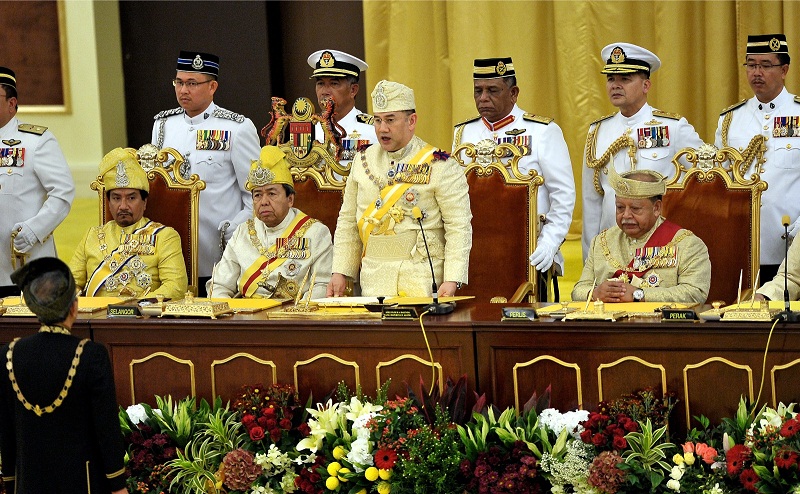
The Rulers are appointed to roles in many other organisations, including as colonels-in-chief in the armed forces, chancellors of universities and patrons of charitable, arts and sporting bodies. In some cases, the exercising of these roles may also be transferred to representatives during the tenure as Yang di-Pertuan Agong.
There is scepticism in some parts of the population about the effectiveness of these appointments. Indeed, in 21st century democracies, all institutions need to be cognisant not only of their powers and responsibilities as provided by law, but also the expectations, confidence and affections of the people. This is challenging where competing parties interpret the law differently, and where the populace is polarised across multiple fault lines. That is why it is essential citizens, especially those in public office, have a common understanding of the word and spirit of the Constitution and other laws that govern our national institutions.
Clearly, the position of the ancient institution of Malay monarchy in our parliamentary democracy was designed to symbolise our sovereignty, history and unity, and to play a relevant role in the governance and tenor of the nation. We should take heart similar combinations of monarchical and democratic institutions have worked so well in other countries (seven of the top 10 democracies as judged by the Economist’s Democracy Index 2015 are also monarchies).
Within our individual states, too, there are traditional offices of authority that continue to endure, endowing a sense of identity and reminding people of a foundational past which enables their hopes and dreams today.
In Negri Sembilan, two days either side of Sultan Muhammad V’s arrival in Kuala Lumpur, two individuals elected according to the intricate customs (adat) of their own district (luak) by their respective clans (suku) formally presented themselves before the Yang di-Pertuan Besar in Seri Menanti — the 11th Penghulu Luak Jempol and the 15th Undang Luak Johol. According to centuries-old tradition, they hold responsibility for customary issues including land and family matters, though the latter holds greater responsibilities as a Ruling Chief under the Negri Sembilan Constitution.
I shared pictures and videos of the proceedings on Instagram, triggering an enormous curiosity from young people about their own traditions and how they can be useful today. If we can satiate that appetite with a reminder of the timeless principles that inspired them, these glorious ceremonies could point us to equally glorious governance.
* Tunku Zain Al-’Abidin is founding president of Ideas.
** This is the personal opinion of the writer or publication and does not necessarily represent the views of Malay Mail Online.


