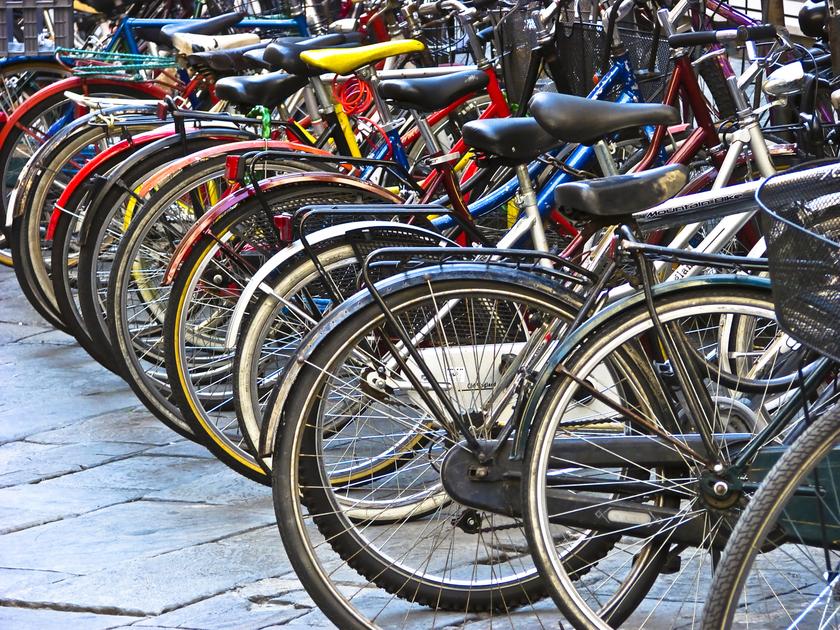


SINGAPORE, July 3 — The Land Transport Authority (LTA) is calling for ideas on how to pilot a bicycle-sharing scheme less than 18 months from now in the city centre, Jurong Lake District and possibly Tampines, Pasir Ris and Sembawang.
The authority hopes to encourage the use of bicycles to complement the public transport system. Such schemes can be found in cities such as New York City, London and Taipei.
Request for Information (RFI) documents calling for proposals released yesterday showed that the scheme for Singapore should feature docking stations spaced no more than 300m apart, located near public transport nodes and amenities such as neighbourhood centres and schools.
Typical users envisioned by the LTA include HDB dwellers commuting within the town, students travelling to school, workers travelling to and from the office and tourists. The system must also allow users to rent and return bikes at the same or different stations.
Those interested in submitting a proposal must also put forth a viable business model, such as how to fund the system, whether it will require sponsorship and how much to charge users.
The LTA said it expects to conclude the RFI by the fourth quarter of this year. A tender will then be called to launch the pilot by the end of next year.
Such a scheme was first mentioned by Parliamentary Secretary for Transport Muhammad Faishal Ibrahim last year, who said the LTA would conduct a pilot in the Jurong Lake District.
Earlier this year, he said the Marina Bay area would be included in the pilot, as the first phase of the cycling path network there had been completed.
Taman Jurong has a 1.4km cycling path along Yuan Ching Road and Ho Ching Road.
In Marina Bay, cyclists can look forward to 16km of cycling paths in the area this year.
New York City launched a bike-sharing scheme — Citi Bike — in May last year, with Citibank as the sponsor.
Run by NYC Bike Share, the scheme offers 330 stations and more than 4,000 bikes.
Annual memberships cost US$95 (RM304), while 24-hour passes are US$9.95 and seven-day passes are US$25.
Annual membership users can make trips up to 45 minutes before extra charges kick in. For 24-hour and seven-day pass users, they can make trips of 30 minutes before incurring charges.
In Taipei, the government’s Youbike bicycle-sharing system allows people to pay using its EasyCard — similar to Singapore’s EZ-link card — or credit card.
The first 30 minutes are free and every 30 minutes thereafter is NT$10 (RM1.072).
Industry observers cite challenges in introducing such a scheme here, with Professor Lee Der Horng from the National University of Singapore saying bicycle lanes that directly lead users to public transport nodes are needed.
“You can have a well-designed bike and well-completed collection and return centre but, if you do not have a convenient bicycle lane network, it is no use,” he said, suggesting that bicycle lanes be constructed on the green belts beside the pedestrian paths.
Dr Paul Barter, an adjunct professor at the Lee Kuan Yew School of Public Policy, said such a scheme has to be launched with sufficient critical mass.
“Tiny schemes do not work ... Successful cities started this with a bang, with a big-enough programme and a dense-enough network of bicycle pods,” he said. Furthermore, if the situation for cyclists “is hostile on the roads”, it might not be very well-received, he added.
Government Parliamentary Committee for Transport deputy chairman Seng Han Thong said the scheme would be more useful in private estates that “are quite deep in” and farther away from bus services or MRT stations.
“In public housing estates, such as Ang Mo Kio, that have good accessibility to public transport, this scheme may not be so popular among residents. Roads will also not be conducive for riding,” he said.
Rayner Koh, co-owner of bike rental company Druthers Biking Singapore, expressed scepticism, noting that bike theft is rampant.
He has encountered customers who chose to forgo their S$100 deposit and did not return his bicycles.
He added: “This may attract tourists, but very seldom do locals actually cycle. Imagine people in a suit cycling ... it’s not feasible,” he added.
“The Singapore weather is also too humid.”
Former LTA traffic planner Gopinath Menon, however, felt that while Singapore is not as bicycle-friendly, the Government has been improving the situation and the time is right to start such a scheme.
Most schemes overseas are sustained by corporate sponsorships and subscription revenues.
However, experts say such a system is expensive, yet fees have to be low enough to attract users.
“If it is not sustainable, the government will have to come in and subsidise,” said Prof Lee. — Today