


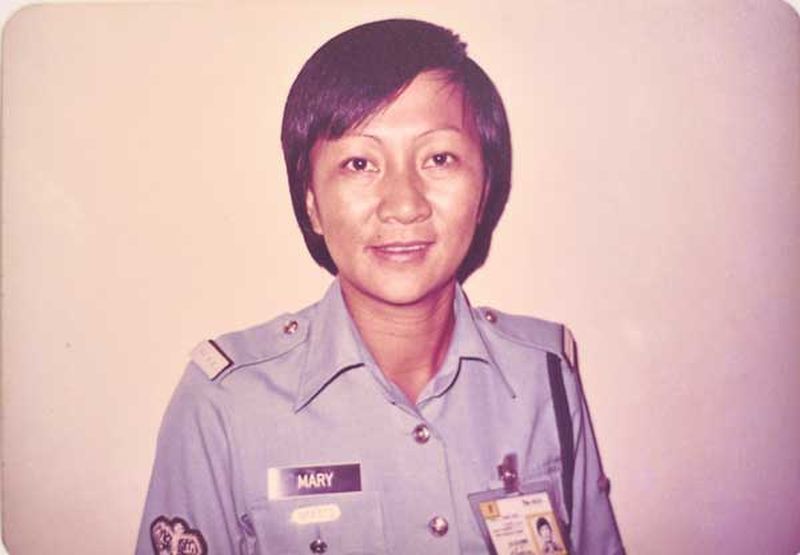


KUALA LUMPUR, May 23 ― It was by chance rather than design that Mary Soo stumbled between the hockey goalposts as a teenager and she has never looked back since.
That was in 1961 when she was 13 and playing fullback for the Methodist Girls School in Malacca.
The regular school goalkeeper did not show up in time to take the field with the rest of the team and the sports teacher turned to Soo.
The teacher helped Soo strap the pads onto her legs for the first time before she awkwardly took her position between the posts.
Soo sized-up the situation and put up a performance that surprised her teammates, not to mention the teacher who gambled on her.
Soo grew in stature as a goalkeeper of calibre playing first class hockey for the next 19 years from 1966 before she quit at the age of 37.
Right from the start she was an extraordinary player with technique and speed and an eye on the ball approaching her.
With growing confidence in the advent of the 1980s, Soo wore national colours at the 1983 Inter-Continental tournament, 1982 New Delhi Asian Games and 1986 World Cup.
She was at the top of her game at a time when women's hockey did not quite enjoy the degree of popularity and success as the men.
"It was an era when the joy of pulling down a Malaysian jersey over your shoulders brought more pride and talking about money was taboo," reflected Soo at her home in Happy Garden, Kuchai Lama.
Now 67, Soo, who hails from Gajah Berang, Malacca, admitted playing for the country helped her career-wise in that she was accepted into the police force. She retired a sub-inspector and remains thankful to former Selangor police chief Tan Sri P. Alagendra for absorbing her into the force.
Soo was proud playing alongside Daphne Boudeville, Rani Kaur — the only hockey player to win the National Sportswoman Award (in 1972) — K. Maheswari and Christina Chin.
She said she was lucky to be guided by two respected coaches of that era — the van Huizen brothers of Lawrence and Peter.
Soo captained the national team at the 1983 SEA Games in Singapore and a year earlier, the team won the bronze medal at the Asian Games.
She enjoyed every moment in the game — both in victory and defeat.
“Of course, we wanted to win all the time. But it doesn’t work that way. It’s important in defeats we pick up the positives and make amends in the next game.”
Upon retirement Soo continued to serve the sport when she was appointed team manager of the national team for two years. She also doubled up as goalkeeper and coach.
These days, Soo spends her time caring for husband Soo Poh Seng and with her two grandchildren.
Soo has a son Peter and a daughter Melissa.
She also at onetime dropped her surname in the 70s to avoid a case of mistaken identity in the presence of another Mary Lim in the team.
Her namesake was a forward from the famous Lim family which produced a string of footballers in Seng Khoon, Kim Choon, Chuan Chin, Hong Guan and Teong Kim.
Of all the knocks she took on the playing field one stands out for particular mention. That was in Hong Kong in 1976 when Soo was playing in a tournament when the ball struck her on the head.
Everything seemed normal then but a blood clot in her head led to a stroke in 2000.
Tests showed the blood clot was the result of the hit she took 24 years earlier.
“I never bothered going for an examination when I had occasional headaches. We never thought much of it, until the stroke," explained Soo.
“As an afterthought, I wish I had gone for an examination," said Soo, who is partially paralysed on the right side.
“Those days we didn’t wear protective masks or body guards.”
It was only after goalkeeper Zulkifli Abbas' hairline skull fracture at the 1976 Bombay World Cup match against England that kept him in ICU for 76 hours, did the FIH make it mandatory for goalkeepers to wear helmets.
But fate has been unkind to Soo as her husband too suffered a stroke in 1990. Soo takes him for his dialysis by taxi three days a week. When met for the interview, she had just returned home after her afternoon visit and looked stressed and tired.
Her hindered movement was a sight which saddened the scribe who has known Soo for 35 years and had covered many matches she played in.
But Soo was still her affable self, inviting me and the cameraman into the house and making us comfortable.
“Life is full of challenges and one has to work around it. It’s pointless brooding over it because it will not get you anywhere.
“It’s tough on me and I wish things were rosier but life has to go on,” said Soo, who receives a pension from the police force and medicine expense from the National Athletes Welfare Foundation.


