


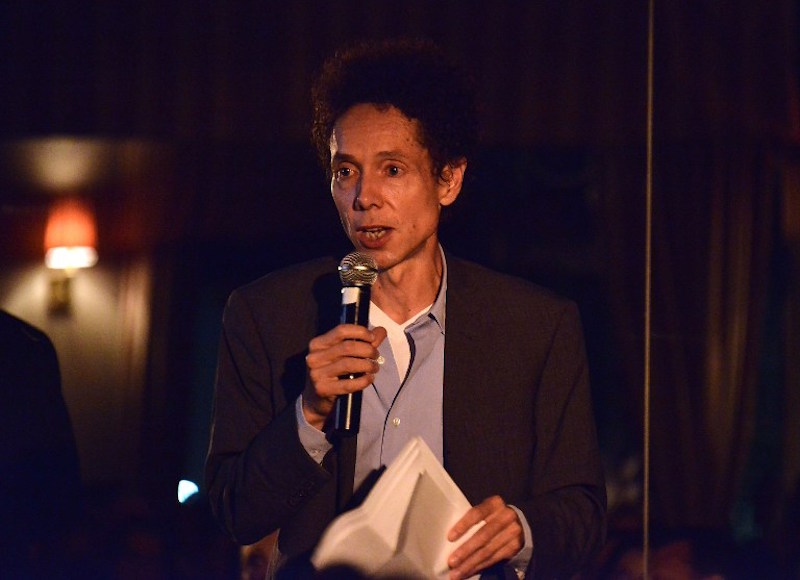
NEW YORK, Dec 17 — When Malcolm Gladwell was asked to write a blurb for the 2005 book “Freakonomics,” he did not explain that it explored the dynamics of the Ku Klux Klan or the impact of naming a child “Loser.” Instead, the New Yorker writer and best-selling author of “The Tipping Point” and “Blink” simply wrote, “Prepare to be dazzled.”
“Freakonomics” became a best-seller.
And a decade later, Gladwell’s name adorns scores of book covers not his own. He has praised tomes by celebrity restaurateurs (Dan Barber of Blue Hill), Academy Award-winning movie producers (Brian Grazer), first-time novelists (Stephanie Clifford of The New York Times), hybrid writer-artists (Lauren Redniss) and more.
“It’s hard to compete with Malcolm Gladwell,” said AJ Jacobs, the author of four books, including “The Year of Living Biblically,” who was once such a prolific blurbist, his publisher demanded he stop writing them. “He is always going to get the front cover. I get the back cover or, maybe, inside.”
It’s hardly news that when it comes to selling books, blurbs from even famous people are of dubious value. “I discourage writers from doing them,” said Mort Janklow, the longtime literary agent whose firm once represented Gladwell.
Indeed, in the case of Janklow’s former client, they can be polarizing. One person on Twitter posted a photo of Gladwell’s blurb from Michael Lewis’ 2014 best-seller, “Flash Boys,” saying he “almost” picked up the book after seeing Gladwell’s blurb. (He meant this in a good way.) Another wrote: “A Malcolm Gladwell blurb on the cover of a book has the opposite of its intended effect on me.”
Is it possible that Gladwell has been spreading the love a bit too thinly?
The author, 52, was good-natured when asked in an interview why his name seems to be on so many book jackets (he could not say how many). “Do I really blurb that much?” he asked, laughing. He conceded: “The more blurbs you give, the lower the value of the blurb. It’s the tragedy of the commons.”
Thanks to Amazon ranking and self-publishing, the book market is more competitive than ever before. As with blockbuster movie marketing, everyone is looking for a big first week. Celebrity endorsements can seem vital for authors and sellers to help mint hits, a way to make books sell out on a crowded shelf or site.
“It’s an arms race,” Gladwell said.
Some, though, are laying down their arms. In 2014, Gary Shteyngart, who also contributes to The New Yorker, published a letter in that magazine swearing off blurb writing because, as he put it then: “Literature can and will go on without my mass blurbing. Perhaps it may even improve.”
Good blurb writing, Shteyngart said, is akin to performance art. In 2012, his ubiquitous blurbery was collected on a Tumblr account subtitled “a catalogue of promiscuous praise,” and, the next year, a 15-minute documentary that discussed it was released. “The market is so devalued right now, I don’t think anyone cares when I do blurb,” he said in a recent interview.
Kathryn Court, the president and publisher of Penguin Books, said authors should not be chastised for supporting their peers. “Some people like Malcolm Gladwell are very generous,” she said. “It is a lot to ask these people to read a book of ours.” Seth Godin, whose “Unleashing the Ideavirus” included a foreword by Gladwell, did acknowledge, “I think it means more to the author than reader.”
Shteyngart also suggested that, as in academic circles, few in the clubby literary world want to offend a fellow writer because they may need a blurb of their own someday. “Everyone is friendly,” Shteyngart said. “No one really punches people like in Norman Mailer’s day. We stand around and drink white wine in bluejeans and talk about health insurance. People are afraid to send a bad blurb.”
He sees writers clamoring for blurbs to entice reviewers who may not read a book unless it is recommended by a big-name author. (Gladwell’s writing has spawned its own adjective, “Gladwellian.”) When asked if he would buy a book based on a blurb from Gladwell, Shteyngart laughed heartily. “I would buy it immediately,” he said. “I am just kidding. I don’t read blurbs. I know how the sausage is made.”
According to Gladwell, his sausage is simple: He writes blurbs because people ask him to, and he does not overthink what to say. “People will show you a book and you think, ‘It’s cool,'” he said. “You want people to read it. I feel like we have to promote ourselves.”
For the paperback version of “Stumbling on Happiness,” a book about imagination and happiness written by his professional acquaintance, Harvard University psychologist Daniel Gilbert, Gladwell raved, imploring readers: “Trust me.” He also wrote a guest review on Amazon.
And he tweets recommendations freely to his 336,000 followers, as he did for the release of Fareed Zakaria’s new book, “In Defense of a Liberal Education” in April. “Fareed Zakaria’s new book is brilliant!” he wrote, adding a handy link to Amazon.
Many of the people for whom Gladwell has written blurbs he knows socially or has even dated, like Redniss. In the 1980s he was a roommate of Jacob Weisberg, editor-in-chief of the Slate Group, who introduced him to Zakaria and Lewis, of whom Gladwell once blurbed: “It’s good to be reminded every now and again what genius looks like.” He featured Grazer in his books and has eaten at Barber’s restaurant, Blue Hill.
“The thing about Malcolm is, he is a personality of the time,” Janklow said. “He has become a cultural figure, and I think Malcolm enjoys the role. He’s made the decision if he tries to help anyone, he should help everybody.” — The New York Times


