


NOVEMBER 6 — I first heard mention of “67” when Tottenham Hotspurs manager Thomas Frank was speaking about Spurs’ defeat to Newcastle.
He said, “There were maybe 6…7... chances or shots produced during the match.”
And I wouldn’t have noticed his use of the two numbers if someone hadn’t mentioned that it’s unlikely Frank said that by accident and that he was doing a friendly shout-out to his 18-year old daughter.
I then asked some younger acquaintances of mine if they had heard of that phrase. Almost every one of them broke into some grin slash ugh look and told me, “Oh yeah it’s a thing that’s going around.”
Interestingly enough no one I talked to appeared to “endorse” the usage of the slang; they knew where it came from and how it’s used but nobody wanted to be associated with it.
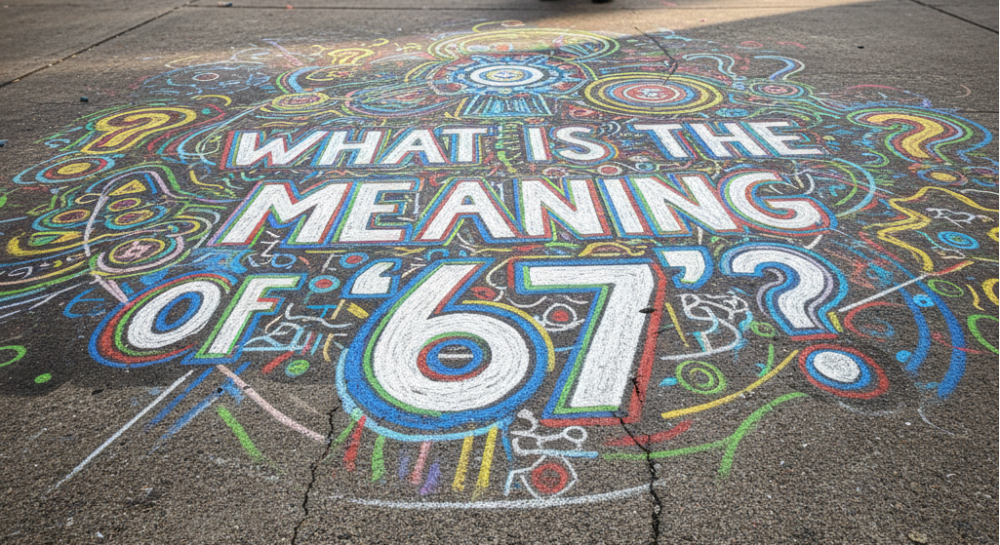
I then did some digging and it appears that “67” falls into the category of “brainrot” I.e. intentionally meaningless, stupid and absurd.
It’s the kind of thing people say simply because it can be said sans any explanation; millions of people are using the slang on social media (over two million TikTok posts under #67 in October it seems) and defying all reason and rhyme seems to be the point of things nowadays.
Nevertheless, even with nonsense there inevitably is some background. I found out that the craze with “67” would not have happened if not for the following events:
December 2024: Philadelphia rapper Skrilla dropped the track Doot Doot (67) with lyrics like “I know he dyin’ (oh my, oh my God) 6-7, I just bipped right on the highway (Bip, bip).”
The song ambiguously alludes to 67th Street, a notoriously rough area in Chicago (where Skrilla has family ties) or Philadelphia, symbolising danger or gang affiliations.
The song may also have hinted at US police radio code “10-67” which means a death or homicide.
February 2025: “67” becomes a hit (divorced from Skrilla’s song) on Instagram and TikTok, with users often pairing the number with Charlotte Hornets guard LaMelo Ball, who’s exactly 6’7” tall.
March 2025: A YouTube video went super-viral when a certain Maverick Trevillian (nicknamed “67 Kid”) sprinted to the camera, shouted “six-seven!” and did an over-the-top hand gesture: palms up, alternating up-and-down waves (like weighing options or hyping a crowd). The gesture and vid spawned thousands of parodies.
By mid-2025, “67” had infiltrated schools, sports highlights, and social media, leading to classroom bans, celebrity shoutouts, and even a South Park episode.
Dictionary.com crowned it the 2025 Word of the Year in late October, noting its “purposefully nonsensical” nature and sixfold surge in searches since June 2025.
Online nonsense or linguistic democracy?
Back in the 60s, French critical theorist and post-structuralist thinker Roland Barthes suggested that it’s the nature of language to morph and spin out of control from its original use and/or author.
According to Barthes, you may write a novel today intending to say something in particular but after its publication your readers can and will read it beyond your original intent.
This anchor-less characteristic of language (or what Barthes calls the signifiers) is part and parcel of the literary community’s inevitable evolution.
Eg, if I read Moby Dick today it is almost certain that I will “bring” to the book my own biases, background, Malaysian culture, understanding of whales and sea boat captains, philosophy of life, views of danger and existentialism, etc. so much so that what I’m “reading” in the end will likely differ quite a bit from what Melville had in mind when he wrote it.
As the case of “67” shows, a word is often simply a placeholder for concepts, ideas and emotions which evolve and change over time.
With social media, one may suggest this phenomenon (of slangs bursting into life out of the blue) will happen again and again.
As Barthes may suggest, language isn’t a mechanism for control but a very loose tool for wild proliferation. What starts as Skrilla’s ad-lib becomes a global “so-so” shrug, a sports taunt, a classroom disruption — endlessly cited, never fixed.
Is it just nonsense which reflects the worsening decadence of online culture, or does it represent a democratic explosion of meaning where young people are the true authors?
Well. Six… seven… maybe both?
* This is the personal opinion of the columnist.


