


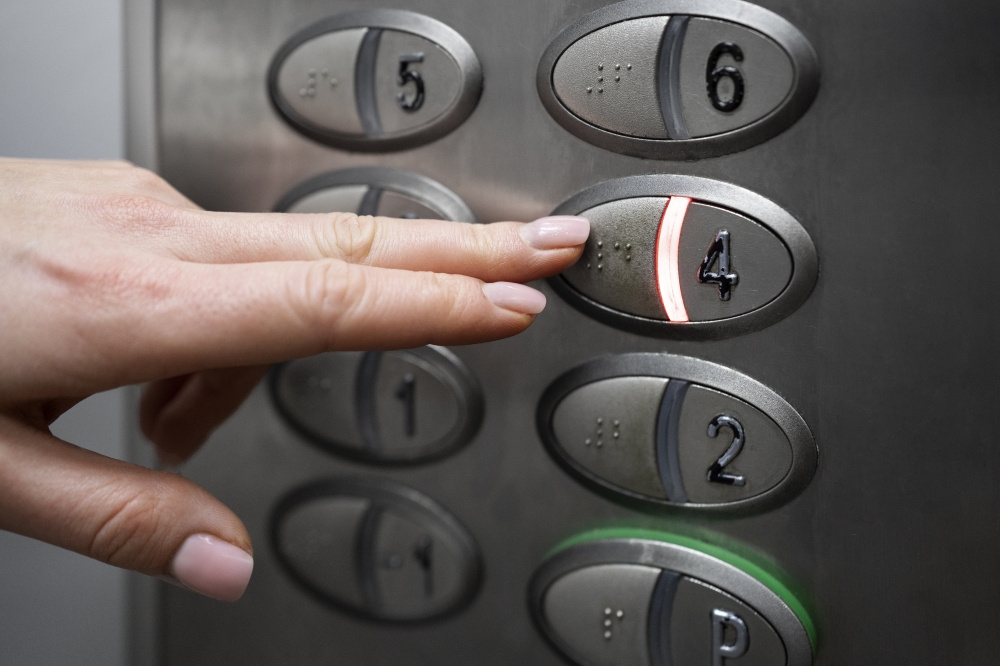
OCTOBER 24 — The student from Shenzhen, China, asked a question every Malaysian has asked at least once in our lifetime: “Sir, how come some elevators in Malaysia have the number ‘4’ but some have ‘3A’?”
I suspected he already knew the “basics” of the question but I felt his question had a deeper angle.
Anyhow, I led with the (very common) concept of tetraphobia, or how the word for “4” in Chinese sounds like the word for “death” (as he would surely know) and thus many building or elevator contractors replace the number with “3A” so their Chinese guests or tenants won’t feel uncomfortable.
After we chatted more, I found out that in Shenzhen (at least according to him) the practice of replacing “4” with “3A” is rare though not exactly non-existent.
Okay, so obviously he knew why “4” was replaced with “3A”.
But – and I suppose this is what he was more curious about – he noticed that in Kuala Lumpur you could have one building where “4” is used in the lift next to one where it’s “3A”.
Or in some residential areas the house numbers could be “3A” but in others “4”.
He said he was mildly surprised that the use of “4” and “3A” wasn’t more consistent.
Hardly being an expert on this topic, I casually suggested that it probably depends on who commissioned the construction of said buildings; and how not every Chinese office block or house owner in Malaysia has an issue with the number “4”.
Interestingly enough, as our conversation progressed, I suggested that in China it may have been the effect of Communism (since 1949 when Chairman Mao took over the leadership of the country) which gradually removed the influence of folk religion and cultural superstitions, such that today not many places in China are bothered by that gnarly number.
He then proposed that some provinces in China (eg, Fujian, Guandong, etc.) are strongholds of traditional Taoist and Buddhist practices and as such “3A” may remain prevalent in these areas.
We both also agreed that in very modern cities like Shanghai, Beijing and Shenzhen tetra-concerns would likely be far less, especially since these hyper-cities, being international commercial hubs or tourists centres, have to cater to a more globalised community and thus may be more stringent about adopting international and modern standards in their numbering systems.
My student then asked me if most of the newer buildings and hotels in Malaysia still adopt “3A”?
I confessed I didn’t know, although I recall a friend saying that in leading commercial hubs like Bangsar South many building elevators still avoided “4”.
If so, it would appear that the tetraphobic trend in Malaysia remains (slightly?) stronger than in China?
But I can detect some good future-looking questions in my student’s query. How strong is the discomfort towards “4” among Malaysian Chinese and will that remain in spite of continuing globalisation and urban growth?
What does this on-going superstition suggest about attitudes towards tradition, religion, commerce, modernity and so on?
Most importantly, should anyone be concerned? Why or why not?


