


MARCH 3 — With the Cricket World Cup in New Zealand and Australia approaching its midway point, it has become increasingly apparent that in the venerable sport’s age-old battle between bat and ball, the former is very much winning.
Nearly all the highlights of the tournament so far have come from batsmen, with a spectacular series of record-breaking displays grabbing the headlines.
First we had New Zealand captain Brendon McCullum scoring the quickest half-century in World Cup history, thrashing 50 off just 18 balls in his team’s one-sided larruping of England.
Next Chris Gayle strode into the spotlight, with the charismatic West Indian opener scoring the competition’s first-ever double century in an outrageous inning of 215 — featuring a joint world-record 16 sixes — during his team’s victory over Zimbabwe.
And then South Africa skipper AB De Villiers delivered on his awesome potential with the fastest-ever international 150 as he needed only 66 balls to score an undefeated 162 against the West Indies.
Throughout those boundary-rich knocks — and plenty more fast-paced innings besides — the bowlers have been left not far short of helpless.
Bowling changes, field placements, new ball, old ball, full-pitched or short… they have all proved powerless before the might of the ferocious big hitters, who often appear to be capable of scoring boundaries at will.
In stark contrast, very few bowlers have succeeded in grabbing the headlines by delivering match-winning performances.
New Zealand’s Tim Southee is one exception, setting a new record for his country in one-day internationals with figures of 7 for 33 in the battering of hapless England.
There was also a thrilling low-scoring battle between the two host nations, with New Zealand overcoming Australia by one wicket after the Aussies could only muster 151 runs, their lowest-ever World Cup total when batting first.
But on the whole, this has been a tournament of big scores and huge run-chases, with bowlers performing a secondary role of damage limitation rather than being able to seize the initiative — instead of showing genuine intent to take wickets, bowlers have been forced to concern themselves with the more defensive task of being bashed for as few runs as possible.
Cricket has certainly changed a great deal since the days — not so long ago — when 250 was regarded as a perfectly acceptable score and batsmen would restrict their shot-making efforts to the opening and closing overs, with lots of prodding and pushing in between. Nowadays, big hitting prevails throughout the innings, from the first over until the fiftieth, with the mid-innings lull a thing of the past.
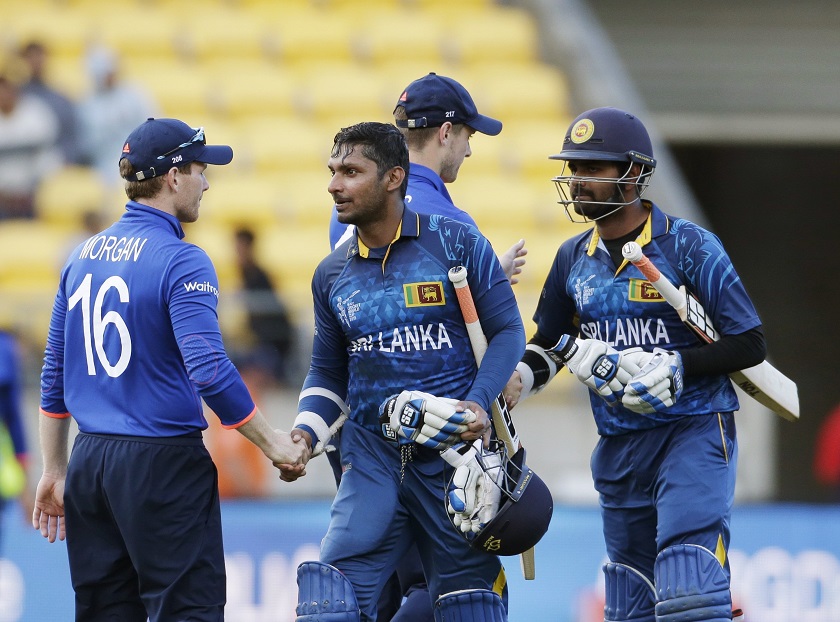
The new era of cricket was clearly illustrated during England’s latest humiliation against Sri Lanka on Sunday.
Batting first, England benefitted from carefully complied innings of 121 of 108 deliveries by Joe Root (pedestrian by modern standards) to compile a total of 309 — the 18th best in the country’s one-day history (out of 625 games) and, in the olden days, almost certainly a winning score.
But Sri Lanka simply blew it away, losing only one wicket in the process of winning with 16 balls to spare — it’s not much, if any, exaggeration to suggest that, with more risk-taking and a bit of luck, they could have scored another hundred runs if the need had arisen.
There have been plenty of causes for this transformation, namely: Bigger and more powerful bats, smaller boundaries, more fielding restrictions and the development of more varied and improvisational batting techniques.
And although the game is certainly more spectacular nowadays, with players like De Villiers and Gayle hitting their stride an undeniably thrilling sight, I do wonder whether the balance has been shifted too far in the batsmen’s favour.
Admittedly, I am saying this as an Englishman who is probably by nature conservative when it comes to the tactical evolution of what I believe to be the greatest sport there is.
And I am also speaking as someone whose shoddy amateur efforts are restricted to bowling (spin bowling, at that), so perhaps my views cannot be regarded as particularly objective.
But cricket, in my opinion, is at its best when it provides an even contest between bat and ball: When you don’t know whether each delivery will result in the batsmen hitting a boundary, being subdued for no runs, or losing his wicket.
My favourite World Cup memory, for example, was the great Shane Warne bowling against the West Indies in the 1996 semi-final, with the Windies needing just a few more runs to reach their total and therefore to progress to the final but the colossal Warne standing in their way, conjuring bamboozling deliveries like a magician.
It was thrilling, unpredictable, edge-of-the-seat tension: Would the batting team take advantage of a loose delivery and thread a shot through the fielders, or would Warne send one of his viciously spinning leggies through their defences? (For the record, he did and Australia won, but then lost the final against Sri Lanka).
These days, you sometimes feel the only tension is whether the batsmen will score a four or a six. That, for me, is just not cricket.
The problem is that television companies love the new breed of cricket because big hitting attracts more viewers. Whereas the intricacies of Warne’s googly or Jimmy Anderson’s reverse swing only really captivate die-hard cricket fans, McCullum smashing the ball 100 metres into the stands can be enjoyed by more casual supporters.
And as cricket, like all professional sport, is now largely a TV product, I expect little will be done to rectify the imbalance between bat and ball.
That's a shame. Don’t get me wrong: I love the sight of a batsman “in the zone” as much as anyone, but it would be nice if they didn’t have it quite so easy.
* This is the personal opinion of the columnist.


