


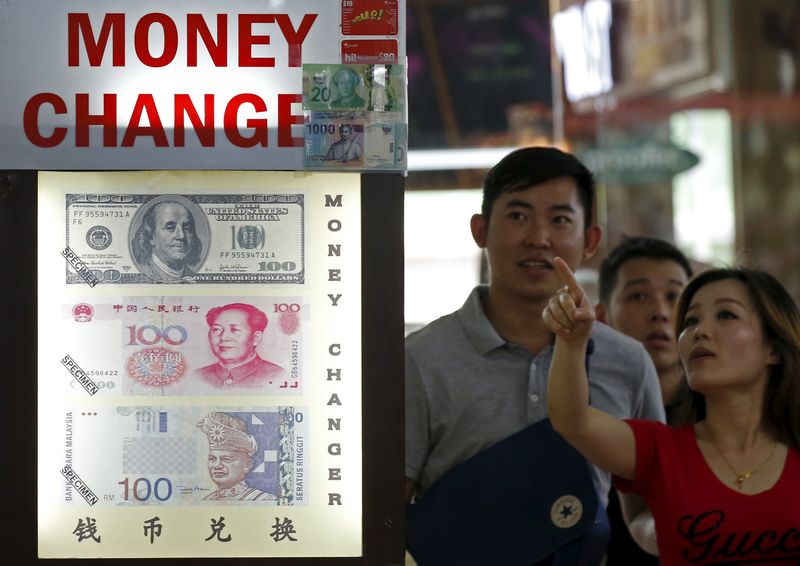
SINGAPORE, Nov 10 — Most emerging Asian currencies today fell on the dollar’s rebound on higher US Treasury yields, while concerns grew over negative impacts on regional exports and relationships with Washington after Republican Donald Trump won the presidency.
The Chinese yuan hit six-year lows as the central bank set its daily guidance rate weaker for a fifth straight session.
Malaysia’s ringgit fell to its weakest in more than nine months as the government bond prices lost ground.
Thailand’s baht touched a near two-week trough with local bond prices down and continuous foreign stock selling.
The dollar extended gains in Asian trading backed by higher US yields on expectations that Trump would enact protectionist trade policies and put upward pressure on US wages, boosting inflation.
Jumps in Treasury yields lifted yields of emerging Asian countries’ bonds.
Asian equities sharply rebounded on improving risk sentiment as Trump’s key policies including generous tax cuts as well as higher infrastructure and defence spending may boost US economic growth.
Still, regional currencies failed to fully benefit from the risk appetite.
“Trump’s motto centres on the US and Asia will see more trade pressure. So the overall direction is unlikely positive to Asia’s economic fundamentals,” said Jeong My-young, Samsung Futures research head in Seoul.
“In addition, higher US interest rates will reduce rate differential, which has been a merit for Asian currencies.”
Emerging Asian currencies already slumped yesterday as Trump unexpectedly defeated Democratic rival Hillary Clinton, causing investors to flee to safe-haven assets.
To Asia, Trump’s protectionist stance on trade is one of the main concerns.
“Asia ex-Japan is the region on the front line should a President Trump follow through on his main campaign pledges,” said Nomura’s analysts in a note.
“Markets are pricing-in a risk premium that Trump follows through on his pledges to increase US trade protectionism, tighten immigration, force America’s allies to meet the full cost of the security guarantees provided by the US and implement a zealous fiscal expansion.”
Ringgit
The ringgit lost 0.6 per cent to 4.2510 per dollar, its weakest since January 28.
Most of the Malaysia’s government bond prices fell, pushing up their yields with the 10-year return at 3.737 per cent, its highest since July 1.
The Malaysian currency pared some of earlier losses as higher commodity prices may ease worries about the country’s oil and gas revenues.
Baht
The baht slid 0.4 per cent to 35.08 per dollar, its weakest since October 28.
Thailand’s government bond prices fell with foreigners cutting holdings in domestic bonds.
Until yesterday, foreign investors were net sellers of Bangkok shares all of trading days in November, unloading a net 9.3 billion baht (RM1.13 billion) worth of equities during the period. — Reuters


