


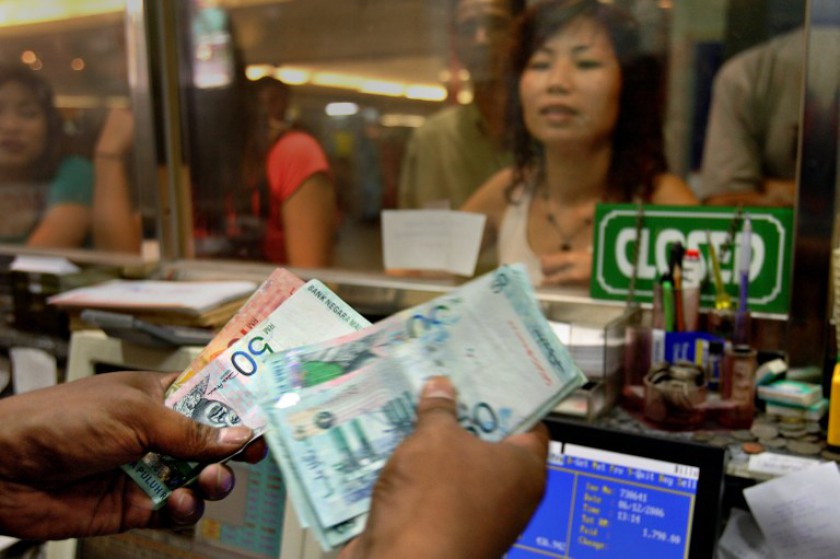
KUALA LUMPUR, Dec 11 — Malaysia’s ringgit was poised to halt a three-week advance as a drop in crude prices to under US$40 (RM171) a barrel compounded the pressure on Asia’s only major net oil exporter and clouded the outlook for government finances.
The nation will face a RM30 billion revenue shortfall next year due to the drop in energy prices, Prime Minister Datuk Seri Najib Razak was cited as saying in the New Straits Times this week.
He flagged the potential deficit in his budget speech in October. Brent crude fell 8 per cent this week to a six-year low as the Organization of Petroleum Exporting Countries suspended a long-time strategy of limiting output to control prices.
The ringgit’s decline this week was “largely driven by the slump in oil prices and leading up to the Federal Open Market Committee meeting next week,” said Christopher Wong, a Singapore-based senior currency analyst at Malayan Banking Berhad, Malaysia’s largest lender.
“We expect the Fed to reiterate the language for a gradual pace of tightening. So into year-end we are slightly more optimistic and see the ringgit around 4.20.”
Traders place a 76 per cent probability that the Fed will raise rates next week for the first time since June 2006, according to data compiled by Bloomberg.
Volatility drops
The ringgit weakened 1.3 per cent for the week and 0.4 per cent today to 4.2795 a dollar as of 11:43am in Kuala Lumpur, according to prices from local banks compiled by Bloomberg.
It is on track to end 2015 as emerging Asia’s worst- performing currency for the second year in a row.
The currency’s one-month implied volatility, a measure of expected exchange-rate swings used to price options, dropped 42 basis points from Dec. 4 to 12.82 per cent. It earlier declined to a four-month low of 12.65 per cent.
Government bonds retreated this week, pushing the 10-year yield up 12 basis points to 4.34 per cent, according to prices from Bursa Malaysia.
The yield on notes due October 2020 advanced eight basis points to 3.83 per cent. — Bloomberg


