


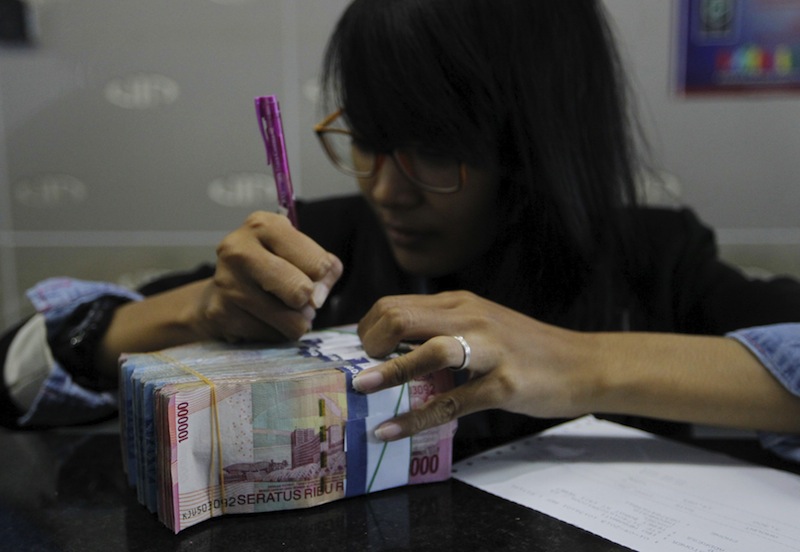
JAKARTA, Oct 7 — Indonesian stocks will rally through year- end as an undervalued rupiah lures back global money managers and President Joko Widodo delivers on plans to improve infrastructure in Southeast Asia’s biggest economy, according to the nation’s largest investor.
“The bottom is past already,” Elvyn Masassya, who oversees the equivalent of US$14.3 billion (RM61.647 billion) as president director of state pension fund BPJS Ketenagakerjaan, said in an interview on the sidelines of the Bloomberg Markets Most Influential Summit in Hong Kong yesterday. Foreign investors “will come again,” he said.
The Jakarta Composite Index, the biggest loser in Asia from mid-April through Sept. 28, has since rallied 8.8 per cent to lead gains in the region. The rupiah strengthened 4.9 per cent this week, more than twice as much as the next-best performing Asian currency.
While the rebound has been fueled by speculation the US Federal Reserve will delay its first interest-rate increase since 2006 until next year, Masassya is betting that government plans to build railways, airports and seaports will keep the rally intact. Widodo, known as Jokowi, has made infrastructure spending a centerpiece of efforts to revive confidence among foreign investors who pulled more than US$2 billion from Indonesian stocks and local-currency government debt last quarter.
Foreign funds bought a net US$59 million of Indonesian stocks yesterday, the most since July 10, following inflows of US$23 million on Monday, according to exchange data. Old Mutual Global Investors Ltd. has started to “bargain hunt” in Indonesia, said Joshua Crabb, head of Asian equities in Hong Kong at the unit of Old Mutual Plc, which manages about US$500 billion of assets worldwide. He cited a combination of low valuations, currency weakness and signs that work is starting on some infrastructure projects.
Bargain hunting
State spending “has been held up by issues around bureaucracy and politics,” he said. “But it’s been showing a little bit of life.”
Jokowi has been trying to speed up the development of infrastructure projects and in August he inaugurated a long- delayed US$4 billion power plant development in Central Java, even as some farmers held out against selling their land. Finance Minister Bambang Brodjonegoro said Sept. 21 that the government had met 60 per cent of its spending target for 2015.
The shares of state-controlled construction company PT Wijaya Karya rose 11 per cent this week, PT Indocement Tunggal Prakarsa advanced 15 per cent and PT Semen Indonesia is up 12 per cent.
While the nation’s sovereign bonds have also rallied over the past five days on optimism the Fed will keep rates lower for longer, there’s little evidence that foreigners are piling back into the Indonesian debt market. Foreign funds sold a net 7.9 trillion rupiah (RM2.43 billion) of the notes in the seven days through Oct. 2, the latest available Finance Ministry data show.
Oversold situation
“This is pure global risk-on due to expectations of the Fed hike being pushed into 2016,” said Edwin Gutierrez, who helps oversee US$13 billion as the head of emerging-market sovereign debt at Aberdeen Asset Management Plc in London. Aberdeen “isn’t buying at the moment” because it’s a long-term investor and already has all the Indonesian notes it wants, he said.
There are also doubts over whether the rally in the rupiah can be sustained. Jason Daw, head of Asia currency strategy at Societe Generale SA in Singapore, forecasts the currency will weaken to 15,400 a dollar by year-end and 16,000 by the end of the third quarter of 2016. The rupiah rose 2 per cent as of 10.29am in Jakarta to 13,965, the biggest gain since 2009.
“Significant depreciation in emerging-market currencies in the past few months means that a pause or short-term reversal would not be unusual,” Daw said. “We view the recent strength as temporary and look for the rupiah to continue weakening.”
Ashmore Group, which oversees US$59 billion of emerging- market assets, has been adding to its Indonesian stock holdings in the past two weeks, said Arief Wana, a Jakarta-based director at the money manager.
“With a little bit of stability, the Indonesian market can jump,” he said.
“We have come from a very oversold situation.” — Bloomberg


