


JUNE 5 — There are key environmental concerns facing the world. Climate change and global warming top the list. Driven by greenhouse gas emissions, climate change causes rising temperatures, rising sea levels and extreme weather. However, despite the overwhelming evidence, there are still deniers. The rapid destruction of biodiversity and the extinction of species threaten the planet's ecological balance. Reports confirm that 99 per cent of the global population breathes polluted air, whilst industrial and domestic waste contaminate water sources and rivers. Malaysia is not spared from such problems.
At the same time, large tracts of forests are cleared for agriculture and development, reducing carbon absorption and destroying wildlife habitats. Deforestation activities in the Amazon, where land is cleared for soybean cultivation and cattle farming, have attracted global attention. Also, billions lack access to safe drinking water, exacerbated by pollution and climate-related droughts. Overconsumption and population growth are exhausting essential resources. Issues include ocean acidification, overfishing and plastic pollution. Excessive generation of waste, including hazardous materials and plastics, causes environmental degradation. Although recovering, ozone layer depletion in the Arctic allows dangerous UV radiation to reach the Earth.
Every June 5, we mark World Environment Day. We use the moment to reflect on our planetary debts. Have we done enough to service those debts? Or do we continue piling up more debts to the planet?
But in Malaysia, the calendar tells a less convenient truth: every day is e-waste day. From the illegal container loads rotting at Port Klang to the acrid smoke rising from informal recycling camps in places like Sungai Petani, the nation is choking on someone else's discarded electronics.
Despite actions taken by the DOE and local authorities, Malaysia has become a global hotspot for e-waste smuggling. Officially, we import "recoverable materials". Unofficially, we are the developed world's digital landfill. In some developed economies, exported e-waste is considered recycled, creating incentives for such practices. The consequences of importing such waste are catastrophic: heavy metals leaching into water tables, children burning circuit boards for copper, and communities living downstream from unlicensed processing hubs.
The problem is not merely one of enforcement – though that is desperately weak – but of design. We are trying to manage a tsunami with a broom.
As the world goes digital, e-waste is projected to reach 75 million metric tonnes annually by 2030. Malaysia cannot arrest its way out of this. Here is the uncomfortable truth: managing e-waste begins before it arrives.
Under the circular economy, responsibility must shift upstream. Products entering Malaysia – whether locally assembled or imported – should be legally required to be repairable, modular and recyclable. That means no glued-in batteries, no proprietary screws that only the manufacturer can open, and no planned obsolescence disguised as innovation.
Second, Malaysia needs a national R&D mandate to phase out hazardous materials – brominated flame retardants, beryllium and cadmium – and replace them with safer, bio-based or recoverable alternatives. Our universities and industries are not sufficiently funded to lead this chemistry; they must be.
Third, we must distinguish between waste and resource. Formalise the informal recyclers. License them, train them and equip them with proper extraction technology. Turn Sungai Petani into a hub for certified urban mining, not backyard burning.
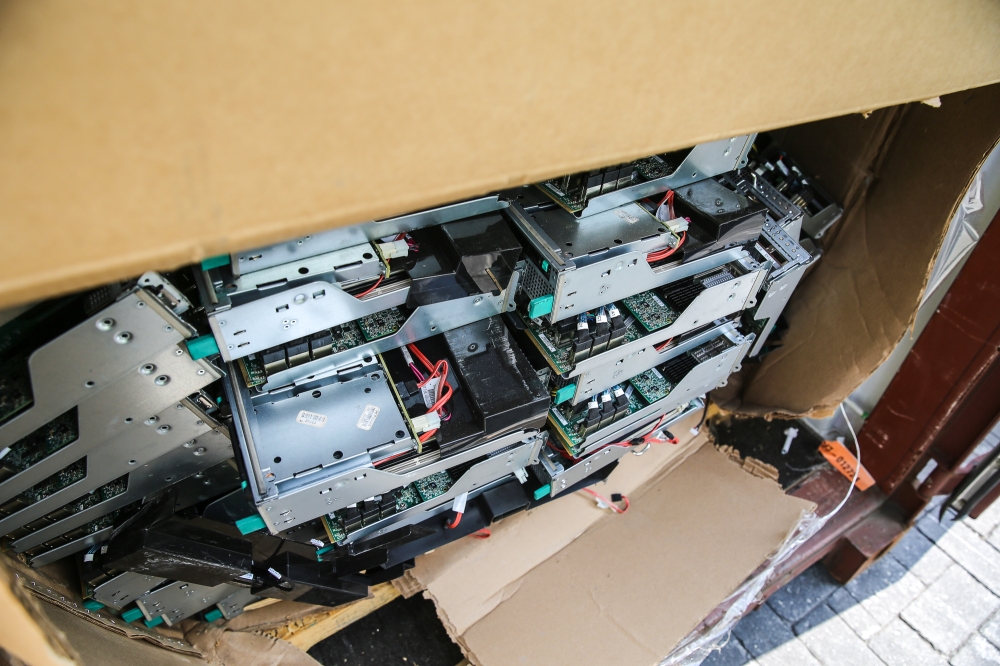
But none of this works without shutting the illegal import tap. Customs and the Department of Environment need real-time tracking, X-ray scanners at all major ports, and a public registry of licensed e-waste processors. Penalties must be existential – revoke licences permanently, seize assets and prosecute directors personally.
Finally, Malaysia must stop acting alone. Push for an Asean E-Waste Treaty that bans dirty exports, harmonises standards and creates shared recycling infrastructure. We are not the world's dumpster.
Circularity is not a green slogan. It is a survival strategy. It is about minimising waste and reducing emissions. Malaysia should soon launch a more comprehensive circular economy framework. This is positive.
If Malaysia fails to redesign both its products and its policies, World Environment Day will remain a cruel irony – a single day of awareness in a year of poisoning. Act now, or the next digital wave will drown us all.
* The author is affiliated with the Tan Sri Omar Centre for STI Policy Studies at UCSI University and is an Adjunct Professor at the Ungku Aziz Centre for Development Studies, Universiti Malaya. He can be reached at [email protected].
** This is the personal opinion of the writer and does not necessarily represent the views of Malay Mail.


