


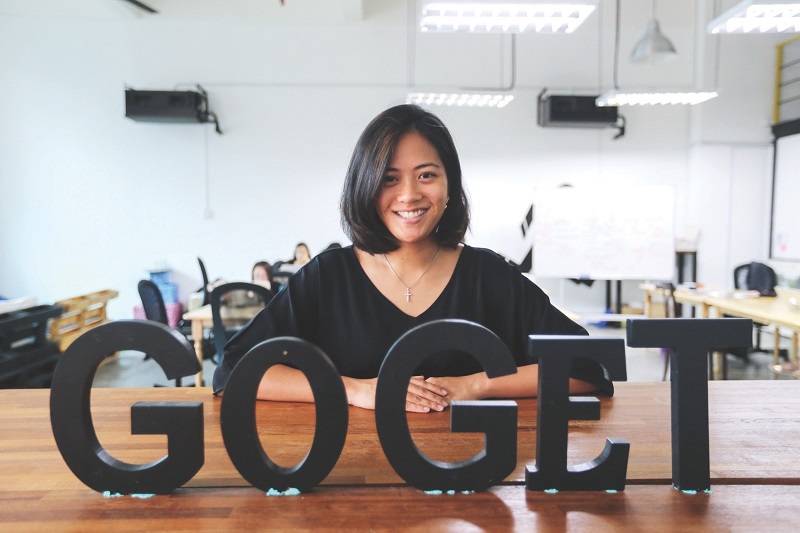
 KUALA LUMPUR, July 31 — GoGet chief executive officer Francesca Chia, 29, says design thinking (DT) provided her company with the tools to change their conventional method of thinking, eliminate redundancy and increase productivity.
“DT is a non-judgmental, highly inclusive and pushes boundaries. It provides us with the tools to allow us to be able to brainstorm better, produce better results and work in a more efficient way,’’ she said.
Chia was a student at Genovasi in 2014, and while she was still studying co-founded GoGet, which is an online platform that provides quick services for companies.
“I’m glad we are able to inculcate the DT culture in GoGet. Usually, before a brainstorming session, we take part in a physical activity to get things going,’’ she said.
“This is because at Genovasi, they believe that space, movement and activity also feed creativity.’’
A Genovasi student turned DT lead coach cum project and programme lead, Lee Jun-Elle, 26, said she was impressed by how DT is applied in various industries around the world, and the kind of creative collaboration it creates.
“DT is a user-centric approach to innovation, which leverages on multi-disciplinary teams, flexible environments and a creative process to generate meaningful products, services and experiences for the end-user,’’ she said.
Lee, who joined the Innovation Ambassador Development Programme (IADP) in 2013, said the lesson had turned her into a better listener.
“This is because you yearn to create meaning with, and for, your user, which makes me better at asking the right questions. DT also gets me out of my comfort zone and pushes me to be brave, to keep asking why, and as a perfectionist and typically ‘safe’ person, I tend to rely on the things that I already know.”
Another Genovasi student turned DT coach and project management executive, Muhammad Faizal Abd Aziz, 24, said DT is an eye-opener as it allows him to explore other creative ideas.
“What’s so special about DT is that they have the empathy part where it differs from other methodologies. The iterative process enables the users to explore more on radical ideas while tying it up with an objective in solving user needs,’’ he said.
Asked what was the most interesting lessons within the programme, Faizal said it was learning to fail early.
“It’s awesome to fail (early) as you will learn faster that way. My first project is to create a food tasting experience. So we created an application (app) that combines a concept like Waze and Airbnb concept,’’ he said.
“Initially, we thought people want to have better deals using an app but we found out that people actually will use our app to eliminate the ambiguity of the experience of a restaurant.
“It completely changes our perspective as a design team to create an app. Our critical function focus pivots completely and gives a better understanding of our user.’’


