


PETALING JAYA, July 6 — Malaysia continues to face four fundamental issues that hamper efforts to combat corruption, said three civil society groups that helped review its adherence to Article 13 of the United Nations Convention against Corruption (UNCAC).
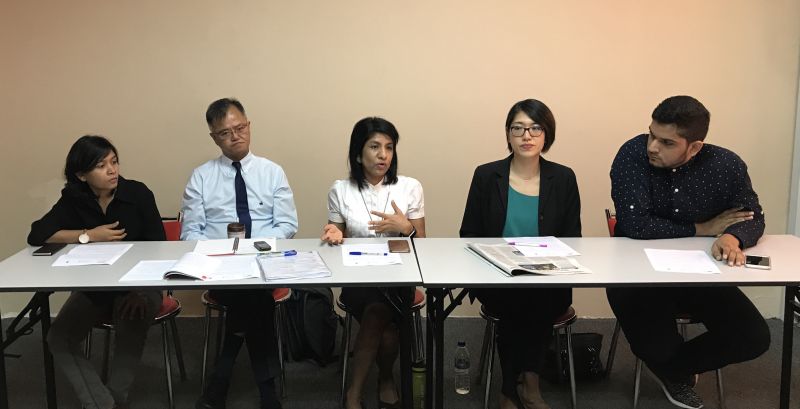
Institute for Democracy and Economic Affairs (IDEAS), Center to Combat Corruption and Cronyism (C4) and Transparency International Malaysia (TI-M) today said they conveyed these to the UN body's representative on Tuesday.
“Number one would be that the Malaysian Anti-Corruption Commission (MACC) lacks independence as not only is its chief commissioner comes under the office of the prime minister, its ability to pursue cases of high government profiles is diminished as the ultimate power to prosecute is by the Attorney-General,” C4's Cynthia Gabriel said in the joint press conference.
Gabriel also noted that protection under the Whistleblower Protection Act 2010 was not absolute, as it disqualifies whistleblowers who go public before informing the MACC.
“Because of this, in 2014, only 10 were afforded protection under the Act,” Gabriel said.
Other problems include the inadequate access to information, she said when citing the Official Secrets Act 1972.
The fourth problem was that not all senior public officials and members of Parliament declare their assets, which Gabriel said made it hard for the public to assess the state of political corruption.
TI-M's Chew Phye Keat said the UN panel highlighted the lack of public consultation when drafting new laws here.
“There are no mandatory process for public consultation... it happens occasionally but this is inconsistent across government,” he said.
Article 13 of the UNCAC explicitly calls for civil society participation in anti-corruption efforts.
The second review started in 2015 and ends in 2020, after which the UN will issue a report of recommendation for the country.


