


KUALA LUMPUR, March 12 — Southeast Asian countries, especially Malaysia, cannot afford to just dialogue with a nuclear-armed North Korea that has no qualms with banning Malaysians from leaving its soil, several pundits said.
A former US diplomat said it is “nonsensical” to keep the status quo with North Korea when the hermit state is flexing its military might while in diplomatic negotiations with Malaysia to resolve the standoff following the assassination of Kim Jong-nam, the South China Morning Post reported.
“Preserving the status quo is nonsensical… North Korea is a nuclear armed global pariah state threatening the security of the Middle East as much as the security of Northeast Asia,” David Asher, a former US State Department official who dealt with North Korea, was quoted saying.
The report claimed that Prime Minister Datuk Seri Najib Razak’s approach to North Korea was “cautious” and conciliatory compared to the United States who labelled it a “pariah” state in response to fresh missile tests.
Last week, Najib said Malaysia will not cut off its diplomatic ties with North Korea just yet, while his deputy Datuk Seri Ahmad Zahid Hamidi pledged an “amicable” solution to the stand-off.
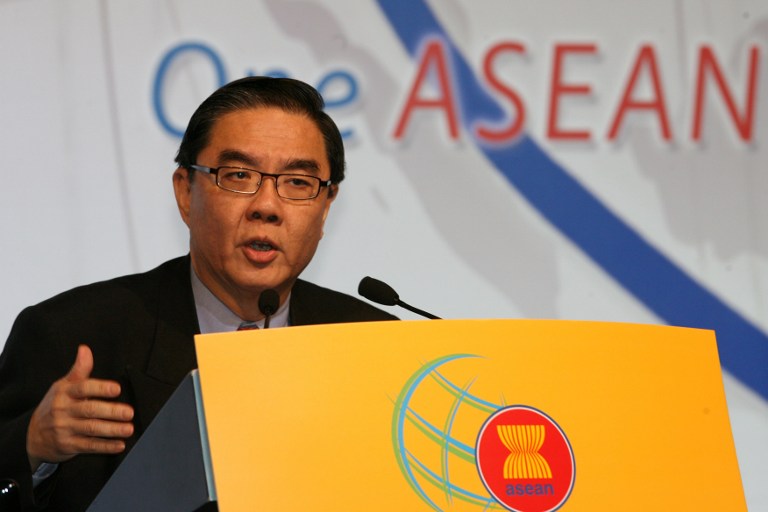
Former Asean secretary-general Ong Keng Yong however defended Malaysia’s choice, insisting that “dialogue is important”.
“It may appear that little has been achieved through such engagement, but small steps are better than no steps at all,” the Singaporean ambassador-at-large, who led Asean between 2003 and 2007, was quoted saying in the same report.
The Hong Kong daily reported the remarks as critics appear to view the episode with Malaysia as a compelling reason for Asean to take a harder stance against Pyongyang.
The report said the relaxed diplomatic policy is a factor for Pyongyang’s “exploitation” of cities such as Kuala Lumpur and Singapore for clandestine activities.
The relationship also seems to go both ways, with Song Jiyoung, a South Korean researcher at Australia’s Lowy Institute for International Policy, saying that Singapore maintains close link with North Korea to take advantage of the latter’s untapped consumer market.
Thitinan Pongsudhirak, a long-time Asean observer, was quoted saying that the murder of Jong-nam would see regional neighbours close ranks “to stamp out North Korea’s underground activities in the region to avoid future incidents”.
However, Shahriman Lockman, a senior analyst with the Institute of Strategic and International Studies in Kuala Lumpur said, “Asean countries do not have to do anything extraordinary here beyond fully implementing United Nations sanctions which are already stringent.”


