


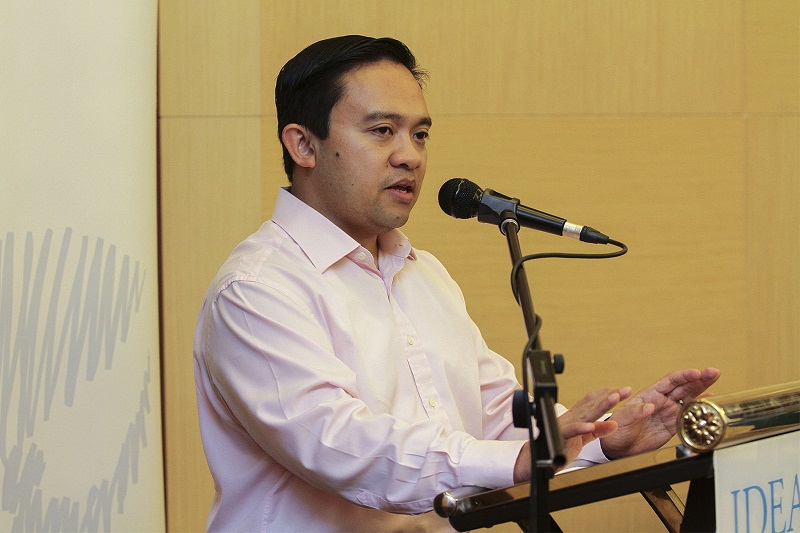
KUALA LUMPUR, Jan 26 — The Malaysian Anti-Corruption Commission (MACC) should be recognised in the Federal Constitution like the Election Commission (EC), the Institute for Democracy and Economic Affairs (Ideas) said today.
The think tank’s chief executive Wan Saiful Wan Jan said the current system in which MACC is operating does not allow for full public confidence in it, suggesting instead that the anti-graft body be given more powers and freedom for its work.
“That’s why I think it’s really important for us to go back to the proposal which many among civil society have been championing, which is to elevate position of MACC to become equivalent to that of the Election Commission, which means they are recognised by the Federal Constitution and their budget is secured,” he said at an anti-corruption forum here, noting that the MACC had suffered budget cuts.
Wan Saiful said it was important to boost the anti-corruption body’s stature as one that is “protected by the Constitution and not dependent on the happiness of politicians”.
Ideas also launched today an online signature drive to promote public support of the MACC’s efforts in fighting graft, with the petition to be given to MACC chief commissioner Datuk Dzulkifli Ahmad.
Wan Saiful stressed the importance of public support for the MACC, noting the Indonesian experience where it was such support that had helped the latter’s Corruption Eradication Commission (KPK) endure retaliation from the Indonesian police force.
Apart from institutional reforms for the MACC, Wan Saiful said the Attorney-General’s dual roles as the chief legal adviser to the government and public prosecutor should be split to avoid the perception of conflict of interest.
Wan Saiful later told Malay Mail Online that the proposal to turn MACC into a constitutional commission envisions protections such as security of tenure for commissioners and shortlisting of commissioner candidates by a parliamentary select committee, with the full proposal by Ideas and four other civil society groups having been announced in July 2015.
“As a coalition together with the Bar Council, we did present the recommendations to MACC and the government. But unfortunately after a change of leadership, that conversation stopped, I’m hoping to see a resurrection of that conversation,” he told Malay Mail Online.
Speaking at the same forum, Transparency International Malaysia president Datuk Akhbar Satar noted that having sufficient funds for anti-corruption work was just as important as having the necessary powers.
“Sometimes if you have powers but you don’t have money, you cannot do work; so we have to look at not only powers, but the money,” he said, further noting the budget cuts suffered by both the MACC and National Audit Department.
Akhbar then pointed to Indonesia where its KPK is regarded as one of the best anti-graft bodies globally, saying that politicians are trying to trim KPK’s budget which he said would make the latter’s work difficult.
Both were speaking at a public forum by Ideas titled “Supporting the MACC in fighting corruption in Malaysia”.
When asked about the government’s cuts to the MACC’s budget, MACC deputy chief commissioner (prevention) Datuk Shamshun Baharin Mohd Jamil noted that this was not an isolated problem faced by the anti-graft body alone this year.
“Actually, from the aspect of budgets, all agencies or ministries this year faced the same problem. But for MACC, when our budget was cut, we did appeal to the government to consider increasing the allocation so we can function according to our prior planning.
“It actually does not become an issue because it’s not just MACC. All ministries and agencies had the same fate, budget cut, not MACC only,” he told reporters when met at the sidelines of the forum.


