


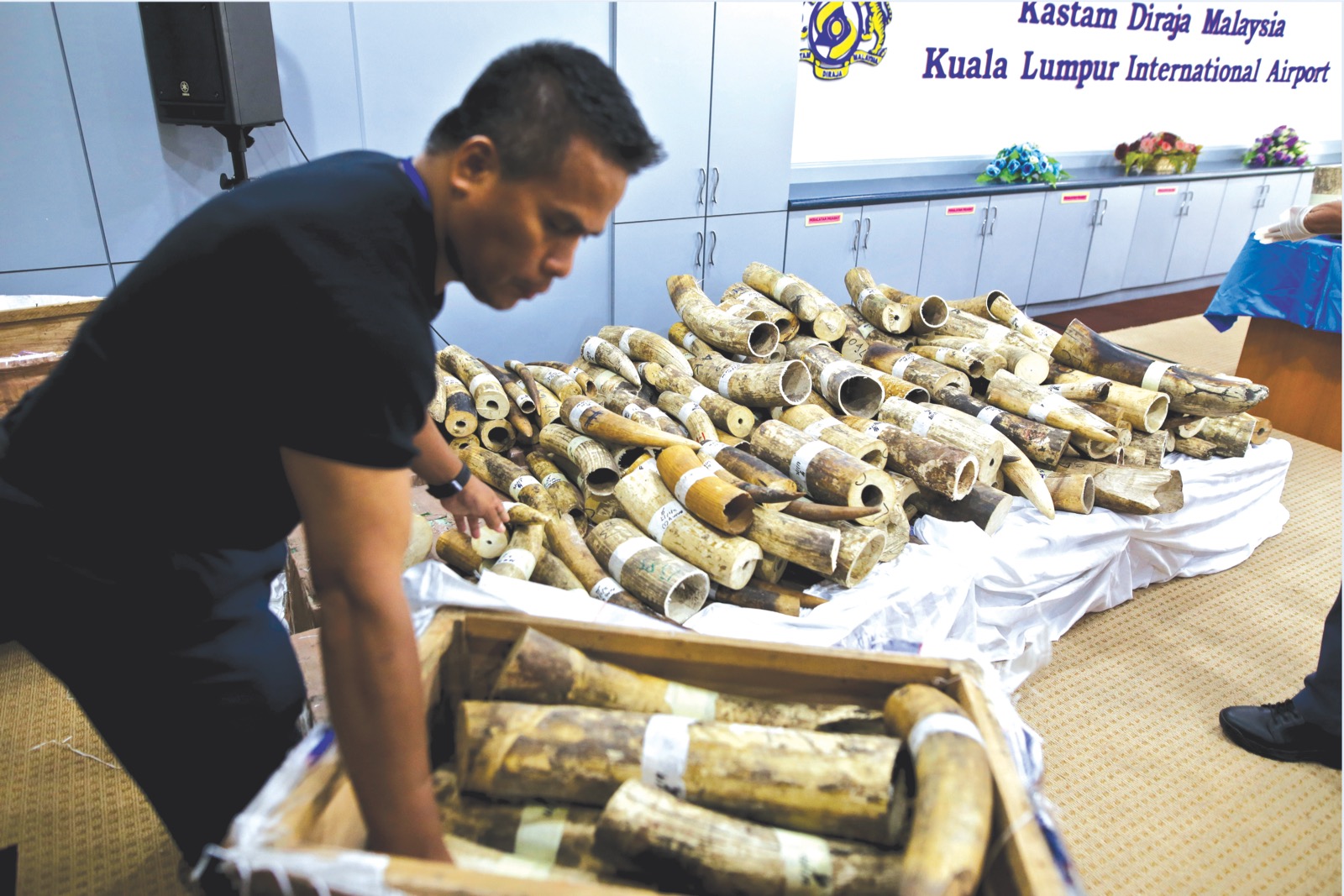
SEPANG, Jan 5 — Some 254 pieces of elephant tusks worth RM7.23 million were seized by the KL International Airport Customs Department from the airport’s free trade zone warehouse on Jan 1.
The tusks, weighing 846.2kg and packed in 17 boxes, arrived from the Kinshasa International Airport in the Democratic Republic of Congo after transiting at the Ataturk Airport in Istanbul, Turkey.
Department director Datuk Hamzah Sundang said the boxes, which were discovered following a public tip-off, left Istanbul at 2am on Jan 1, and arrived in Kuala Lumpur at 5.45pm the same day.
“We are still trying to locate the culprits behind the shipment, and are investigating the purpose and use of these tusks,” he said.
“The air waybill on the boxes had been labelled as ‘wood samples’ and were addressed to a non-existent address in Cheras, Kuala Lumpur,” he said.
Hamzah said Malaysia was not used as a transit point by tusk smugglers.
“Investigations showed the shipments were meant to arrive here,” he said.
The trading of elephant tusks is illegal under the International Trade Act Concerning Endangered Species 2008, as well as under the Customs Order (Ban on Imports) 2012.
Trade of such materials is only allowed with an accompanying permit, which can only be issued by the Department of Wildlife and National Parks.
Those who violate these laws can be subjected to a fine of up to 20 times the confiscated value, a prison sentence no longer than three years, or both.
“Last year, the department busted nine attempts to smuggle in tusks, weighing a total of 1.2 tonnes and valued at RM10.9 million,” Hamzah said.
He said the department had in 2015 thwarted six attempts involving 259.9kg of tusks valued at RM2.3 million.
Demand for such items were mostly from China and Vietnam, where they would be carved into decorative items or used for medicinal purpose.
Hamzah urged members of the public to contact the department at 1-800-88-8855 if they had information on smuggling activities.
He said the informers’ identity would be kept secret and they would be rewarded if the tip-off led to a successful bust.


