


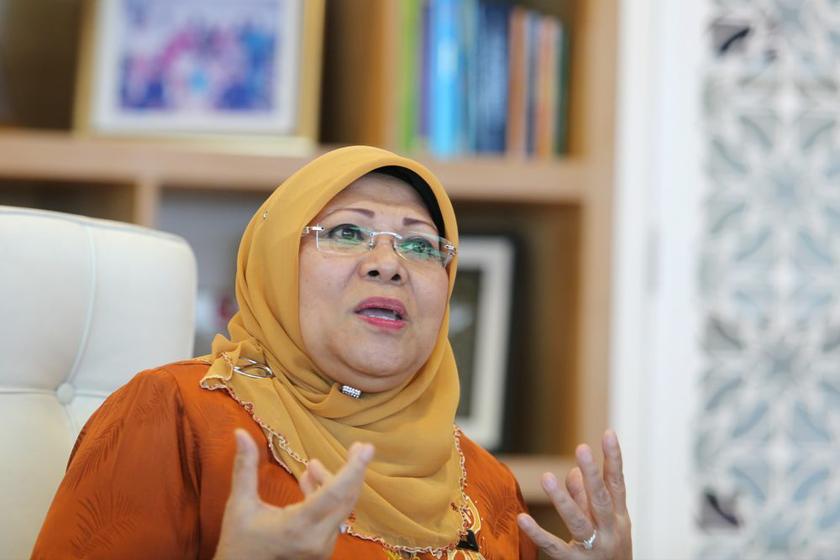


KUALA LUMPUR, June 1 — Datuk Seri Rohani Abdul Karim sought today to explain her call on Malaysians to have more children, saying this should not be taken to mean that living standards should suffer.
The women, family and community development minister said plans to expand one's family and ensuring quality of life should come hand in hand, as this would help slow down the decline on the national birthrate but in a sustainable manner.
"The Minister of Women, Family and Community Development DID NOT say that Malaysians should neglect quality of life and have a larger family.
"She stressed that the quality of life and the latter should be aligned for sustainable development of the nation," said a statement from her office today.
The statement noted that if left unchecked, Malaysia's fertility rate could one day match those of counties like Japan, South Korea and Singapore, all of which face problems of a rapidly ageing population and contraction of workforce.
To arrest the problem, the ministry said Malaysia has introduced several incentives to encourage couples to have more children, while at the same time enabling them to meet their career and family building goals.
For example, said the statement, civil servants are provided free fertility services if they suffer fertility problems. From 2011, those working in the civil service were also given 90-days of maternity leave and seven days of paternity leave.
The statement said the women's ministry has also collaborated with talent management firm TalentCorp and created "flexWorkLife.my", which is to facilitate the return of women to the workplace by encouraging best practices for the working mother.
Other initiatives include RM200,000 grants to government agencies that provide childcare centres at the workplace; the implementation of the National family Policy for the development of a strong and resilient family institution; a 10 per cent tax reduction per annum on the setting up cost of a childcare centre by private firms; and a 100 per cent tax exemption to any company on the expenditure of organising the family day for their staff.
However, the ministry noted that the desire to have more children still remains the choice of individual families.
In Parliament last week, Rohani called on Malaysians to reverse the trend of declining population growth by having more children, following the projected dip in the country's birthrate once it hits developed nation status in five years' time.
The minister said that United Nations has projected that Malaysia's national fertility rate will fall to 1.91 children per household by 2020, lower than the 2012 fertility rate of 2.1 children.
"That is why the ministry encourages couples not to be so focussed on quality of life, but to also have children for the long-term benefit of the country," she told Parliament during question time.
Based on the 2012 fertility rate, Rohani said Malaysia's population is estimated to reach 32 million in the next five years.


