


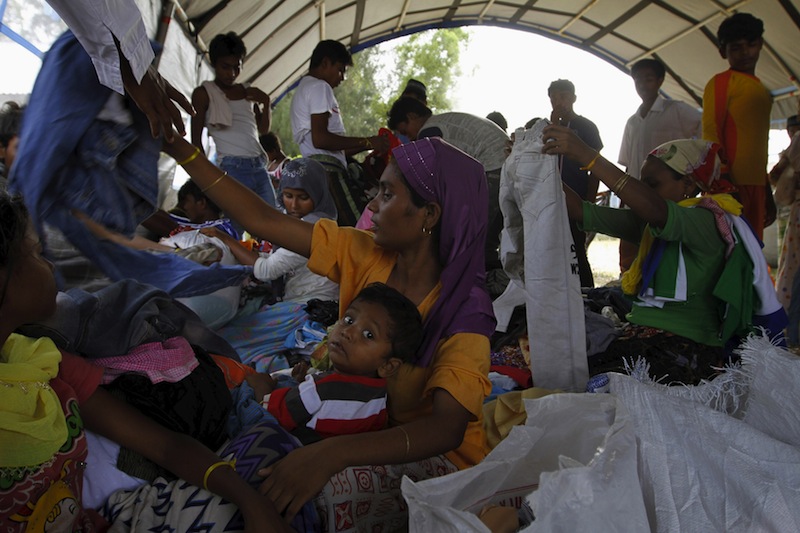


KUALA LUMPUR, May 18 — Human rights activist Marina Mahathir has called on the government to show leadership when it comes to dealing with the Rohingya migrants at sea.
Speaking at the launch of “Feed A Family 2015” organised by Malaysian NGO Carefugees, she said she would like to see Malaysia take more action.
“The government is in a leadership position and therefore, should show some leadership,” she said.
“As the chair of the Association of Southeast Asian Nations (Asean), they should be calling for an emergency meeting with fellow Asean countries to deal with this.
“I am disappointed the issue was not even mentioned in the last Asean summit.
“They cannot ignore the situation by denouncing them. They (the migrants) cannot be left to float forever.
“I realise there are legal implications but none of us want dead bodies washing up on our shores.’’
Marina said she was genuinely worried and hoped a humanitarian solution would be found.
The United Nations Children’s Fund (Unicef) also voiced its concern over the children stranded on the boats.
“Unicef shares the (UN) secretary-general’s alarm over reports that some countries are refusing entry to boats carrying migrants and children,” said Dan Toole, Unicef regional director for East Asia and the Pacific.
“Children who have fled their homes, either alone or with their families, are exposed to greater risk of abuse, exploitation and ill health.”
Given that all Southeast Asian countries have ratified the Convention on the Rights of the Child, he said, any action that may impact children must be guided by the best interests of those children, no matter who they are and where they come from.
The convention requires governments to ensure all children are cared for in a safe place, with access to education, health, social and legal services, irrespective of their status.
Article 22 of the Convention on the Rights of the Child specifically requires governments to take measures to ensure a child seeking migrant status receives appropriate protection and humanitarian assistance.
“The children currently stranded in boats need urgent, immediate humanitarian assistance to ensure their safety,” Toole said.
“They also need long-term help to determine their status and provide a safe environment where their rights are fully respected.
“Children should not be criminalised or subject to punitive measures solely because of their migration status, nor should they be detained for purposes of migration control.”


