


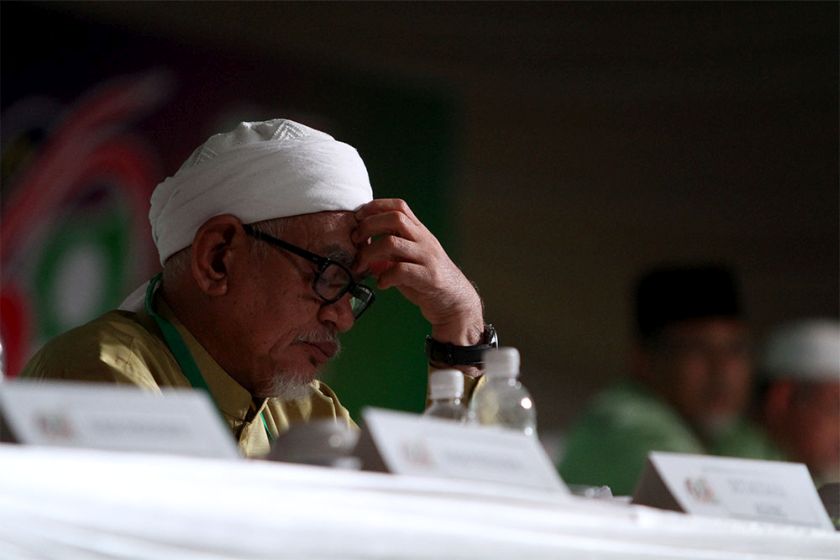


KUALA LUMPUR, Dec 16 — PAS members critical of party president Datuk Seri Abdul Hadi Awang’s leadership are “problematic” individuals who have contributed little to Islam, party leader Datuk Ustaz Nik Muhammad Zawawi Saleh has claimed.
Nik Muhammad also suggested that these detractors were unworthy of criticising Hadi, whom he categorised as well-recognised in the Muslim world.
“Actually they are problematic, they are dissatisfied with the party and all. So they make accusations and they push our president to retreat,” the secretary of PAS’s powerful Syura council said in an interview published by party organ HarakahDaily today.
Nik Muhammad, who was asked for his opinion on the disputes against Hadi’s authority, trotted out the oft-cited argument that the latter has impressive religious credentials when compared against the critics hurling allegations.
These included, among others, Hadi’s appointment as the deputy chief of the International Union of Muslim Scholars.
“So we feel that these people who criticise sometimes if (we) want to compare them with the existing PAS leadership, I can say it’s between the sky and the earth,” he said.
While insisting that PAS was open to all opinions, Nik Muhammad said that party members should use the proper channels instead of making public criticism using social media.
“Let us not use social media. We whack blindly and I view the criticism that is done as a hobby to attract the attention of readers of Facebook and others to draw others,” hes said, saying that party members should instead identify their real “enemy” and determine where their “bullets” should be aimed at to strengthen their struggle.
Hadi has come in for criticism from sections of his party over his apparent snub of PAS’s allies, PKR and DAP, in the Pakatan Rakyat pact.
The PAS president stood apart from and at times clashed with the two other PR parties over the now-resolved Selangor mentri besar crisis, and continues to be absent from the pact’s leadership meetings despite repeated reminders that his non-attendance prevented decisions from being made.


