


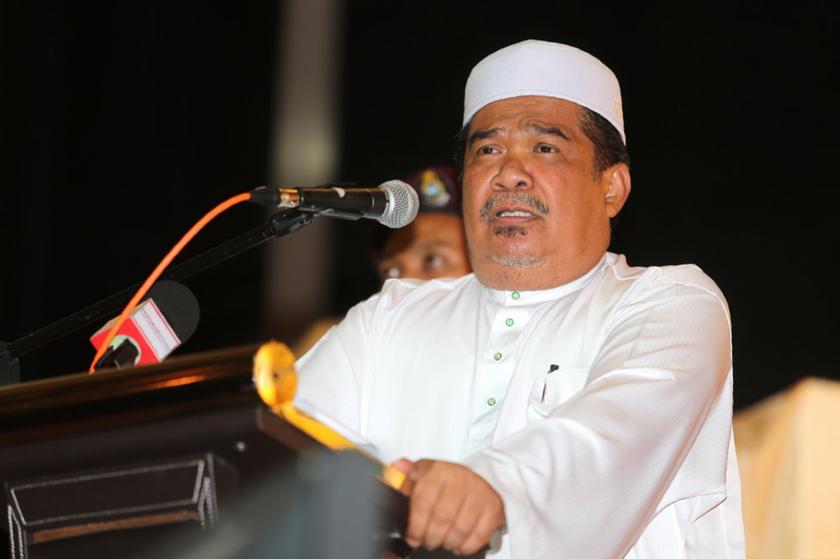


SHAH ALAM, Nov 24 — While clerics have advanced into PAS’s top leadership tier, Mohamad Sabu’s success in keeping his deputy president seat in heated polls yesterday proved the Islamic party is acutely aware it cannot steer straight in Malaysia’s current political reality propped up by one faction over the other.
The popular rally speaker, nicknamed Mat Sabu, faced a tough challenger in Datuk Mohd Amar Nik Abdullah, but managed to edge out the Kelantan deputy mentri besar by a 98-vote majority, which to Professor Datuk Dr Mohamad Abu Bakar showed equal support within PAS for both the ulama, the Islamic clerics who make up the party’s soul, and the so-called progressives faction, consisting largely of professionals and seen as its brains.
“Whether Mat Sabu or Nik Amar won, especially if it was a slim win, it shows that PAS depends on the strength and the support of both groups,” the Universiti Malaya political analyst told The Malay Mail Online.
“This also shows that PAS has remained the same since before, where there is a fair alliance of the ulama and the professionals,” added the history lecturer of two decades.
At PAS’s 59th annual muktamar (conference) held here since Friday, party president Datuk Seri Abdul Hadi Awang had insisted that the synergy between the two groups has been the “secret” to PAS’ success.
Delegates also spoke proudly of the evolution of PAS’s image, perceived previously as a party of yokels and religious teachers, to its present vibrant mix of clerics, political activists, and technocrats.
Abdul Hadi’s remarks also comes as the party’s ulama wing approved a motion on Thursday, calling for the posts of president, deputy president, and one of the three vice-presidents to be reserved for the clergy class.
According the wing’s chief Datuk Harun Taib, the ulama group understands the Islamist party’s struggle best as they are more knowledgeable in the Quranic teachings that form PAS’s core values.
Speaking to The Malay Mail Online, Professor Dr Shamsul Adabi Mamat from Universiti Kebangsaan Malaysia, said there are many in the party who wished for Mohd Amar to win instead of Penang-born Mat Sabu, noting the Kelantan deputy mentri besar was also an ulama, which would further boost the Islamist party’s religious credentials.
“He could have elevated the party higher by bringing in support,” Shamsul suggested, referring to Nik Amar.
“In the hearts of the Muslim community, they feel fond whenever the name ‘ulama’ is brought up. When ulama dominates the party, this could be PAS’s real identity that ought to be highlighted.”
The political science lecturer also claimed that PAS’s pact in Pakatan Rakyat (PR) — called “tahaluf siyasi”, which is Arabic for “political consensus” — is seen to have diluted its Islamic identity, and having Mohd Amar win would probably rein in the conservative Malay votes that the party seemed to have lost during the May polls.
However, Professor James Chin from Monash University disagreed with Shamsul, explaining that PAS had instead lost Malay votes in the 13th general elections due to its weaker machinery and rural voters’ lack of access to information.
Chin also praised Mat Sabu for being the “lynchpin” in the working arrangements between PAS and other PR component parties — PKR and DAP — a sentiment mirrored Universiti Malaya’s Prof Mohamad.
“All this while, the sharing agreement went on during the time Mat Sabu was deputy president. With him remaining, it validates the path that PAS has chosen, and will choose,” said Prof. Mohamad.
All this while, the sharing agreement went on during the time Mat Sabu was deputy president. With him remaining, it validates the path that PAS has chosen, and will choose. — Professor Datuk Dr Mohamad Abu Bakar
“Mat Sabu is well-liked by PAS’s PR partner and he is even more pragmatic than some of the other professionals in the party. Everyone says that he is easier to negotiate with,” Chin, who teaches political science, told The Malay Mail Online.
Chin also suggested that with Mat Sabu, PAS will have a smoother working relationship in PR, while a win by Mohd Amar might result in the conservatives within the party flexing more of their political muscle, leading to strained negotiations.
While the ulama wing have called for PAS to review its partnership it has with secular DAP and urban-centric PKR, party delegates came out strongly yesterday reaffirming their wish to stay in the federal opposition pact, citing success in the May 5 general election in which the ruling Barisan Nasional (BN) coalition were denied the popular vote for the first time since 1969.
However, there have been concerns that the alliance has not benefited Islam, with some suggesting that PAS should be in the “driver seat” rather than just “riding pillion” by implementing Islamic policies in PR-led states.
Among others, delegates have tabled a motion discussing a revision to the Federal Constitution to make the strict Islamic penal code become part of federal laws, paving the way forward for its implementation in Kelantan, Selangor, and Penang.
PAS’s conservative clerics have gained more clout within its central leadership, with the entry of its Youth wing’s two former top leaders, Nasruddin Hassan and Nik Abduh Nik Abdul Aziz.
All eyes will now be on the results for the vice-presidents’ fight, which will be announced this morning, where the three incumbent vice-presidents seen as progressives, were faced with two veteran challengers from the ulama group.


