


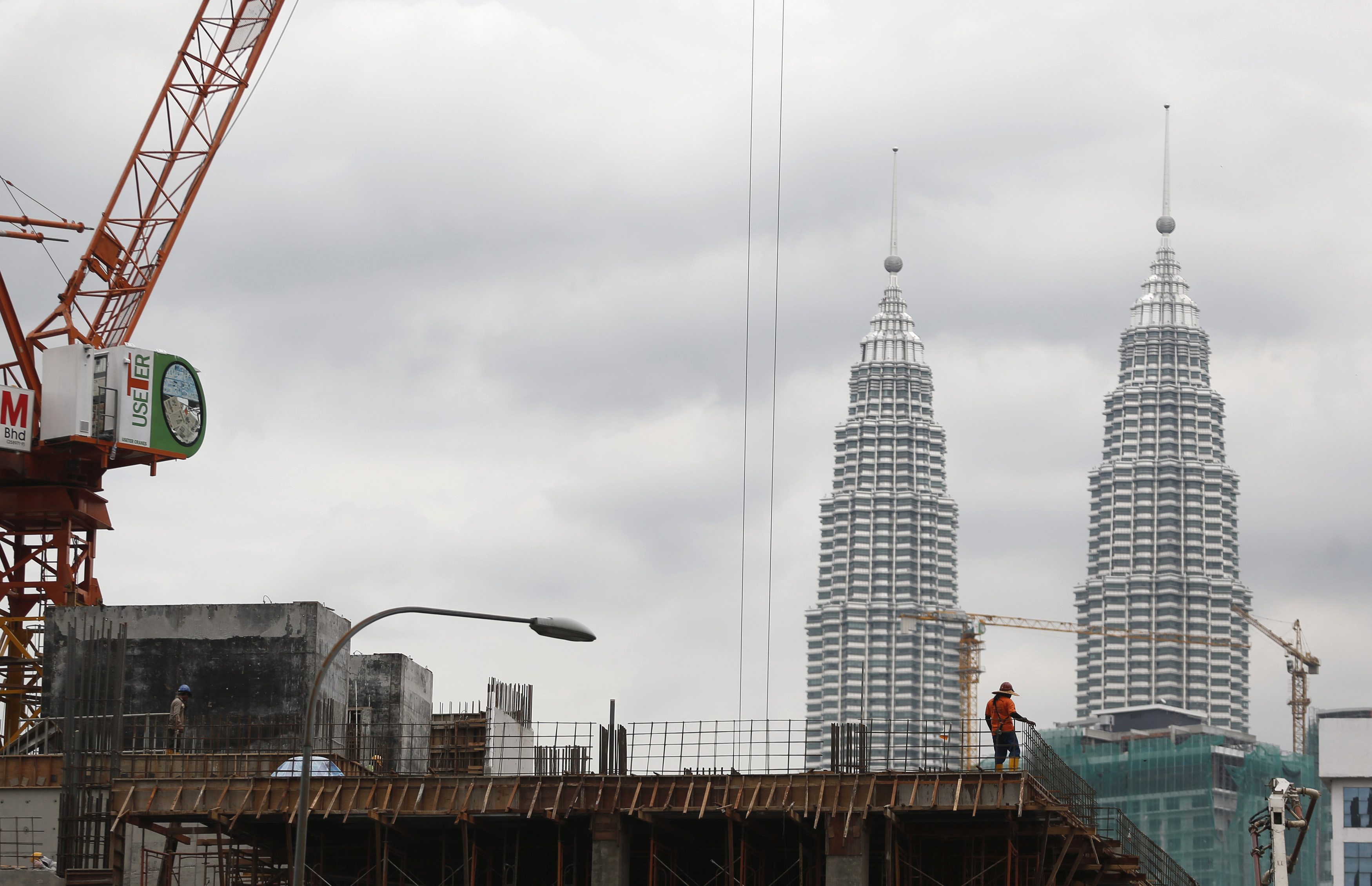


KUALA LUMPUR, Sept 26 — Fears of a “Dubai-style” property market crash in Malaysia are unfounded, but one analyst who said so urged Putrajaya to reconsider vanity projects that may lead to such a scenario.
Among others, Kuala Lumpur is set to be the location for the proposed 118-storey Warisan Merdeka that will be Malaysia’s tallest building once it is completed.
“Even without some of the largest mega projects like the PNB building and financial hubs, we are facing a potential oversupply,” said Gan Eng Peng, head of Equities at Hwang Investment Management.
“If you add those projects in, the picture is more worrisome,” he said, noting these are government and semi-government projects.
One way would be to impose a moratorium on the construction of new office buildings as undertaken a few years ago, he said.
“This will cut off new supply. They should also reconsider some of their iconic projects as they are compounding the problem.”
Despite recommending the intervention, however, Gan felt that Malaysia was far from going down the same path as Dubai.
Fundamental differences between the Gulf state and Malaysia essentially preclude the possibility of a similar crash here that saw property values nose-dive by over 40 per cent in the Middle Eastern country.
“The key difference between the crash of Dubai and potentially in KL is that in Dubai, there was massive overbuilding combined with a collapse in end-demand due to the credit crisis,” Gan said.
“Whereas in KL, yes, there is overbuilding but the demand picture is still there,” Gan said in an e-mail interview recently.
Another difference, according to Real Estate and Housing Developers’ Association of Malaysia (Rehda) president Datuk Seri Michael Yam, was that around 80 per cent of Dubai’s 2.1-million population were expatriates.
In contrast, Greater KL’s population was now 6.5 million and projected to grow to 10 million by 2020, he said.
“The demand for office space in KL is largely from the primary local market, Malaysia’s large homegrown corporates, medium size companies, SMEs and institutions.
“This is unlike Dubai where it relies heavily on regional and global MNCs such that any economic downturn in the source country of these companies will affect take up rate and worse still withdrawal of companies from Dubai,” Yam told The Malay Mail Online via e-mail.
Last week, a CIMB Bank report warned that KL could be heading towards a Dubai-style crash as both major cities have a penchant for building iconic “tallest” towers and Grade-A office space.
The report, published on CNBC’s website, noted that the current construction boom, particularly for commercial office space and big-ticket projects like the Warisan Merdeka tower, would likely create an eventual oversupply and overhang of properties.
Both Gan and Yam said that while prices for real estate may soften with the planned supply coming through, this is to be expected as office space growth was outstripping demand.
Prices, especially of the old buildings, will also suffer capital stagnation or even losses as tenants move towards newer buildings, they said.
But Yam believed the market would automatically correct itself before reaching a crisis similar to Dubai’s.
“As rental yields compress, those intending to build will need to reassess their return on investment and financial institutions would be reluctant to lend out of financial prudence.
“Hence, if the stakeholders in the market are rational, the supply and demand equilibrium would correct itself avoiding the painful lessons experienced by others,” he said.
Meanwhile, Yam noted that inadequate supply would have an even worse effect.
“Failure to plan ahead would lead to the reverse happening where rental and capital values would rocket if demand is acute and there is inadequate supply.
“So long as the banking system is not affected and taxpayers’ money is not exposed, the risk and poor return can be contained at the company that undertakes the project,” he said.
Prime Minister Datuk Seri Najib Razak recently announced that Putrajaya will review public projects more carefully, giving higher priority to projects with low-import content and high-multiplier effects.


