













WASHINGTON, Jan 6 — Following are key facts about the oil and mining sectors of Venezuela, whose President Nicolas Maduro was captured by US forces on Saturday.
Reserves
Venezuela has the world’s largest estimated oil reserves but its crude output remains at a fraction of capacity due to decades of mismanagement, lack of investment and sanctions, official data shows.
Venezuela holds about 17 per cent of global reserves or 303 billion barrels, ahead of Organization of the Petroleum Exporting Countries (OPEC) leader Saudi Arabia, according to the London-based Energy Institute.
Its reserves are made up mostly of heavy oil in the Orinoco region of central Venezuela, making its crude expensive to produce, but technically relatively simple, according to the US government’s energy department.
In 2019, Maduro and Delcy Rodriguez, who was then the country’s vice president and is now acting president, announced a five-year mining plan aimed at boosting mineral extraction as an alternative to oil production.
The year prior, Venezuela’s government released data on mineral deposits that used key mining industry terms interchangeably, including reserve and resource, making it difficult to ascertain whether Caracas knew its full mining potential.
A reserve is an estimate of the volume of a mineral that can be economically produced. A resource is the volume of a mineral estimated in an entire region, whether or not it can be economically produced.
The 2018 report, which was billed as a “minerals catalogue” for potential investors and published on Venezuela’s mining ministry website, estimated coal reserves of roughly 3 billion metric tons and 407,885 metric tons of nickel reserves.
That same report estimated a gold resource of 644 metric tons, an iron ore resource of 14.68 billion metric tons - while acknowledging much of that was a speculative estimate – and a bauxite resource of 321.5 million metric tons.
In 2021, Venezuela’s government published a map of mineral reserves based on data compiled in 2009. That map showed reserves of antimony, copper, nickel, coltan, molybdenum, magnesium, silver, zinc, titanium, tungsten and uranium, but did not list volumes.
The country does not appear to have sizeable reserves of rare earths, a grouping of 17 minor metals used to make magnets that turn power into motion. Rare earths are a subset of critical minerals.
Production
Venezuela was a founding member of Opec with Iran, Iraq, Kuwait and Saudi Arabia. Its struggles with electricity production have repeatedly hampered mining and oil operations.
The country was producing as much as 3.5 million barrels per day of crude in the 1970s, which at the time represented over 7 per cent of global oil output. Production fell below 2 million bpd during the 2010s and averaged some 1.1 million bpd last year or just 1 per cent of global production. That was roughly the same production as the US state of North Dakota.
“If developments ultimately lead to a genuine regime change, this could even result in more oil on the market over time. However, it will take time for production to recover fully,” said Arne Lohmann Rasmussen from Global Risk Management.
If regime change is successful, Venezuela’s exports could grow as sanctions are lifted and foreign investment returns, said MST Marquee analyst Saul Kavonic.
“History shows that forced regime change rarely stabilises oil supply quickly, with Libya and Iraq offering clear and sobering precedents,” said Jorge Leon, head of geopolitical analysis at Rystad Energy.
Trump told Fox News on Saturday the United States would be very strongly involved in Venezuela’s oil sector.
The operational status of the mines tied to Maduro’s five-year plan is not clear. However, Maduro’s National Council for Productive Economy last month said national production of gold, coal and iron ore grew in the first three quarters of 2025, without providing figures.
Venezuela nationalised its gold sector in 2011. The government also controls iron and steel maker CVG.
Reuters reported last October that Venezuela had restarted coal production and aimed to export more than 10 million metric tons of the mineral in 2025. It is not clear whether the government hit that target. In 2019, the US Geological Survey estimated that Venezuela produced 100,000 metric tons of coal from 731 million metric tons of reserves.
Much of the country’s production of minerals, including nickel, bauxite, iron ore, and gold, has fallen alongside oil in the past decade.
The latest available data on Venezuelan bauxite from the USGS, for 2021, put production at 250,000 metric tons, down from 550,000 tons in 2017, while iron ore output was 1.41 million tons on an iron content basis, and gold production was 480 kg.
Output of alumina, the substance refined from bauxite that is used to make aluminium metal, was estimated by the USGS to be 80,000 tons in 2021, having dwindled from 240,000 tons four years earlier. Aluminium production was estimated at just 20,000 tons, down from 144,000 tons in 2017.
Joint ventures
Venezuela nationalised its oil industry in the 1970s, creating Petroleos de Venezuela S.A. (PDVSA).
During the 1990s, Venezuela took steps to open the sector to foreign investment. Following the election of Hugo Chavez in 1999, Venezuela mandated majority PDVSA ownership of all oil projects. Exxon and Conoco departed Venezuela in the 2000s and their assets were expropriated.
PDVSA set up ventures in the hope of boosting production, including with Chevron, China National Petroleum Corporation, ENI, Total and Russia’s Rosneft.
Maduro threatened in 2023 to license mines in a region subject to ownership dispute with neighboring Guyana.
Maduro’s government since at least 2016 had supported artisanal gold mining in the Venezuelan Amazon to bring in revenue.
Exports, refining
The United States used to be the main buyer of Venezuelan oil but since the introduction of sanctions, China has become the main destination in the last decade.
Venezuela owes about US$10 billion to China after China became the largest lender under late President Hugo Chavez.
Venezuela repays loans with crude transported in three very large crude carriers previously co-owned by Venezuela and China.
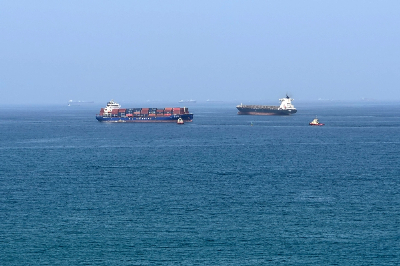
Two of those supertankers were approaching Venezuela in December when Trump announced a blockade of all tankers going in and out of the country.
About a dozen oil tankers loaded with Venezuelan crude and fuel have left the country’s waters since the start of the year in apparent defiance of the US government’s blockade on exports, according to documents seen by Reuters and industry sources including monitoring service TankerTrackers.com.
Trump told Fox News on Saturday that China would get the oil without elaborating. Russia has also loaned Venezuela billions of dollars but the exact amount is not clear.
PDVSA also owns significant refining capacity outside the country, including CITGO in the United States, but creditors are battling to gain control of it through longstanding legal cases in US courts. — Reuters