


JANUARY 7 — The global energy debate continues to recycle a powerful illusion: that natural resource abundance automatically translates into national prosperity.
History, however, offers a far more sobering lesson. Oil, gas, and minerals are not wealth in themselves; they are merely inputs.
Wealth is created only when resources are governed competently, developed by skilled institutions, protected by political stability, and embedded within a national strategy that transcends local pride, short-term politics, and episodic ambition.
This distinction matters because the world is full of countries that were rich in resources yet poor in outcomes. Venezuela remains the most visible cautionary example. Despite possessing the world’s largest proven oil reserves, it failed to convert geological fortune into durable national strength.
The problem was never geology. It was governance: politicised resource management, erosion of institutional autonomy, talent flight, fiscal indiscipline, and ultimately the loss of credibility that turned oil abundance into economic vulnerability.
Despite holding the world’s largest proven oil reserves, Venezuela produces under one million barrels per day today — less than a third of its output two decades ago — underscoring how institutional failure, not resource scarcity, determines outcomes.
This is not a defence of any external political action, nor an endorsement of any foreign leader’s approach. Venezuela’s oil sector was paralysed long before sanctions or geopolitics dominated the narrative. Internal disputes, sustained politicisation, and the breakdown of professional governance hollowed out institutional authority.
As credibility eroded, production collapsed, contracts lost standing, and the industry ceased to function as a reliable national asset. It is this loss of institutional credibility — more than ideology — that ultimately invites foreign intervention and external leverage.
By contrast, Malaysia has demonstrated the opposite proposition: that a country with comparatively modest reserves can still extract outsized national value, provided it gets the fundamentals right.
Petronas, political stability, and the architecture of team effort
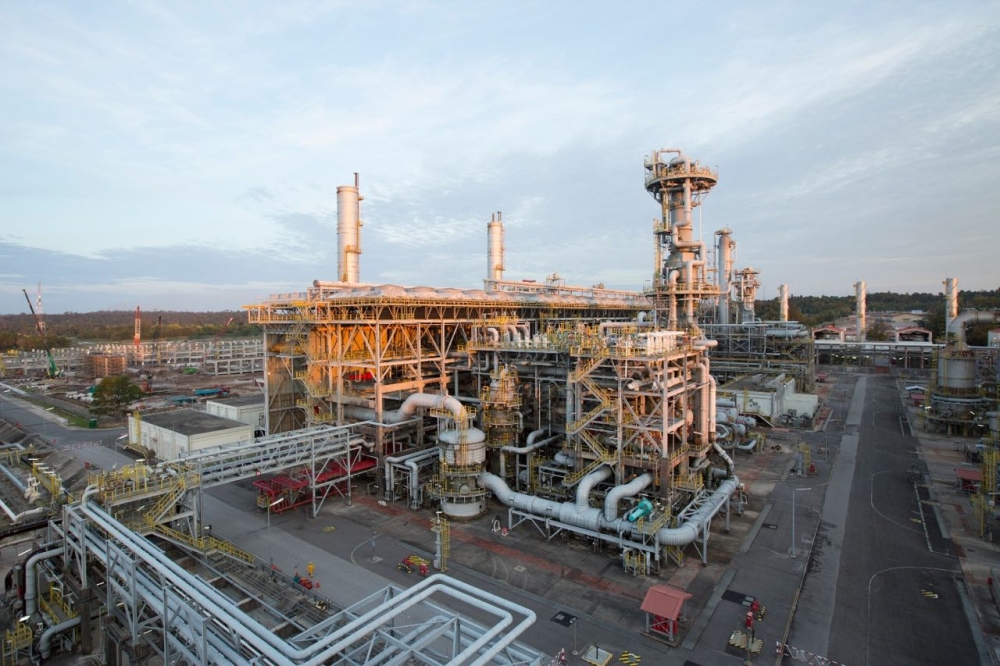
Malaysia’s experience under Petronas illustrates a rarely acknowledged truth: the success of a national oil company depends less on headline ownership claims than on institutional design, discipline, and credibility.
Petronas was deliberately built around principles that many resource-rich countries struggled to sustain. These included professional management insulated from day-to-day politics, commercial discipline rather than populist extraction, continuous reinvestment in human capital and technology, and alignment with a federal-level national strategy that prioritised long-term capability over short-term rent extraction.
None of this was accidental. It required political stability, policy continuity across administrations, and — critically — a genuine team effort across the federation. Federal institutions, producing states, regulators, engineers, financiers, and diplomats operated within a shared framework of roles and responsibilities. No single state, ministry, or political cycle could have constructed or maintained this ecosystem alone. It was precisely this cooperative equilibrium that kept Malaysia away from the classic “resource trap” that has ensnared so many commodity-rich nations.
Riding the global narrative — without owning it
Today’s global energy discourse has been sharpened by US political cycles and renewed talk of energy dominance, sovereignty, and resource leverage. Engaging with this narrative does not require endorsing any particular leader or ideology. It simply reflects the reality that external waves exist, and smaller and mid-sized producers must navigate them intelligently.
Malaysia’s approach has been pragmatic rather than ideological: ride the wave, but do not mistake it for the tide. Energy geopolitics can create openings, but only countries with coherent institutions can convert those moments into lasting advantage. Those without such coherence often become objects of competition rather than beneficiaries of it.
A subtle but necessary structural warning
Seen through this lens, it is worth exercising caution when resource-rich jurisdictions — anywhere in the world — begin to assume that possession of subsurface wealth automatically confers strategic autonomy.
This is not a denial of rights, nor a dismissal of local capability. It is a structural observation grounded in history. Without a strong national institutional umbrella, resource-rich regions face recurring risks: fragmented governance, uneven bargaining power against global majors, vulnerability to geopolitical pressure disguised as investment, and internal political capture of resource rents.
In federations, the most common and costly resource mistake is confusing subsurface ownership with strategic autonomy.
The distinction matters. Ownership determines entitlement; autonomy requires scale, capital depth, technological capability, diplomatic leverage, regulatory credibility, and security insulation. These are not easily replicated in isolation.
Where such conditions are absent, resource-rich territories risk becoming extractive spaces rather than strategic actors — precisely the condition that left countries like Venezuela exposed, penetrable, and attractive to major powers seeking leverage rather than partnership.
Malaysia avoided this fate not by centralising ownership for its own sake, but by pooling sovereignty, aligning interests, and maintaining Petronas as a nationally anchored, internationally credible institution. That arrangement gave every part of the federation a stronger negotiating hand than any part could plausibly have wielded on its own.
The real Malaysian lesson
The Malaysian experience ultimately suggests a quieter but more durable formula:
Resources do not make a nation rich.
Institutions do.
Oil without governance invites exploitation.
Autonomy without coordination invites fragmentation.
Wealth without political stability attracts external leverage.
Malaysia’s strength has never been that it had oil. It is that it built a system strong enough to manage oil — without being consumed by it.
The greatest danger in resource economics is not having too little, but believing one can go it alone simply because the ground happens to be rich.
* Samirul Ariff Othman is an analyst of global politics, business and economics. He is an adjunct lecturer at Universiti Teknologi Petronas (UTP) and a senior consultant with Global Asia Consulting.
** This is the personal opinion of the writer or publication and does not necessarily represent the views of Malay Mail.


