


JANUARY 4 — The US attack on Venezuela and capture of President Nicolás Maduro and his wife, bears no meaningful analogy to the fate of President Ferdinand Marcos Jr.’s parents in 1986.
Why Maduro’s arrest by the United States is nothing akin to Marcos Jr.’s parents’ fate in 1986 when the latter were chased out of the Philippines in less than 24 hours by the then President Ronald Reagan? Before one answers this, let’s turn to the events in Caracas first.
The world awoke on January 3, 2026 to astonishing headlines: the United States had launched a major military operation against Venezuela — including air strikes on Caracas — and, according to President Donald Trump, captured Venezuelan President Nicolás Maduro and his wife, Cilia Flores, and flown them out of the country.
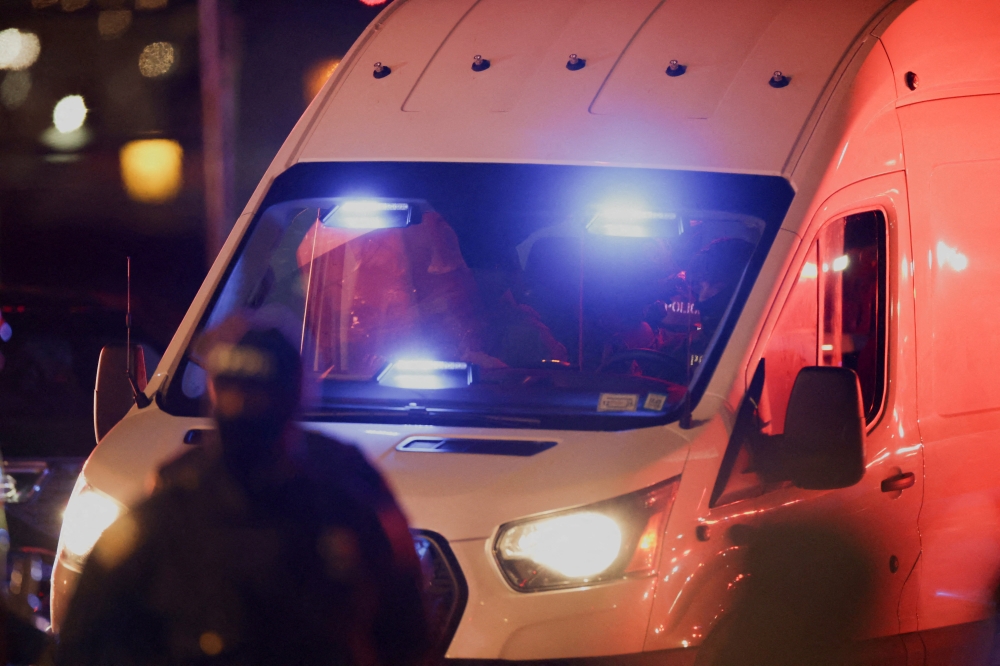
Trump declared that Washington would “run” Venezuela temporarily during a transition and hinted at deep involvement in the country’s oil industry. It is shocking news by any measure.
It is also being compared rhetorically — by some commentators and social media — to other moments when leaders were removed from power.
In the Philippines, for example, the plight and flight of President Ferdinand “Bongbong” Marcos Jr.’s parents, Ferdinand and Imelda Marcos, in 1986 have been referenced in some discussions as if it were morally or politically analogous. It is not. Not even close.
In 1986, the Marcos family left the Philippines after a largely peaceful popular revolution and intense domestic pressure driven by widespread public protests against corruption and authoritarian rule.
The removal of Ferdinand Marcos Sr. was, importantly, largely a domestic political transition — reflective of a Filipino people’s struggle for democratic restitution, not an external military intervention.
There was no foreign army that invaded Manila and seized the Marcos residence by force.
The change came through political and civic action rooted in Filipino sovereignty.
Contrast this with what just happened in Caracas in 2026: an outright military assault by a foreign power — the United States — against a sovereign nation.
According to multiple reports, the US executed airstrikes and a special forces operation on Venezuelan soil in the early hours of January 3, 2026, capturing Maduro and his spouse and transporting them overseas to face US legal charges.
This was not an internal uprising, a negotiated political transition, or a purely judicial process — it was a use of force across international borders.
The supposed analogy between Maduro’s seizure and the Marcoses’ exit hinges on a simplistic notion: a leader loses power and is taken away.
But losing power through internal democratic upheaval or domestic accountability measures — as in the Philippines in 1986 — is an entirely different matter from someone being militarily extracted by another nation.
Were there serious concerns about Maduro’s governance? Absolutely.
His tenure saw widespread economic collapse, allegations of human rights abuses, and long-standing disputes over the legitimacy of elections.
Yet external military intervention undercuts the very principles of sovereignty and self-determination that are cornerstones of the international order.
Indeed, critics have noted that the US strike likely violated fundamental norms of international law, including the UN Charter’s prohibition on the use of force without Security Council approval or valid self-defence grounds.
The Marcos family’s departure, by contrast, was rooted in the internal contestation of political legitimacy and the assertion of Filipino agency.
That is a far cry from an external power unilaterally deciding to overthrow or detain a foreign head of state.
What the US has done in Venezuela is not merely another chapter in Washington’s long history of involvement in Latin America; it is a watershed moment with far-reaching implications.
Analysts have described the operation as unprecedented — even when compared with past US interventions in Panama (1989) or Iraq (2003).
It raises questions not just about hemispheric politics but about the future of international norms if powerful states feel justified in using force to pursue criminal charges or geostrategic aims abroad.
This is not a debate about whether Maduro was a good or bad leader — the Venezuelan people and their institutions will ultimately judge that — but about who decides and how accountability should be effected in the 21st century.
Invoking the narrative of Marcos Sr. and Imelda Marcos as a comparison to Maduro’s forcible removal by US forces does a disservice to both history and political analysis.
It obscures the fundamental distinction between domestic political change and foreign intervention, and it risks normalising the use of military force as a tool of external political will.
If international accountability mechanisms are to function, they must do so within a framework that respects sovereignty, international law, and the agency of the peoples most affected.
Otherwise, the world risks sliding toward a norm where might makes right, and where leaders are judged not by their own citizens or impartial legal bodies, but by the gunships of foreign capitals.
The fate of Maduro and his wife in US custody, invariably, in New York is a dramatic and controversial event.
But to equate it with the Marcos narrative of 1986 distorts both events and blurs the line between external conquest and internal democratic renewal.
* Phar Kim Beng, PhD is the Professor of Asean Studies at International Islamic University of Malaysia and Director of Institute of International and Asean Studies (IINTAS).
** This is the personal opinion of the writer or publication and does not necessarily represent the views of Malay Mail.


