


NOVEMBER 14 — The corruption scandal engulfing Ukraine’s state-owned energy sector is not merely a domestic embarrassment. It has become a pivotal moment that could alter the trajectory of the war, reshape Europe’s political cohesion, and determine whether the rules-based international order holds — or frays under the weight of internal contradictions.
In a week dominated by intense fighting around Pokrovsk and Zaporizhzhia, revelations from Ukraine’s anti-graft agency have exposed something deeper: even during a war for survival, corruption continues to corrode the moral and institutional foundations of the state. And the world is paying attention.
This is not just about Ukraine’s vulnerabilities. It is about whether democracies defending themselves can demonstrate resilience, transparency, and credibility in the face of existential threats.
Ukraine’s National Anti-Corruption Bureau (NABU) revealed that several individuals had allegedly constructed a sophisticated kickback network siphoning between 10 per cent and 15 per cent of contract values from Energoatom — a critical pillar of Ukraine’s wartime energy infrastructure. NABU investigators reported coded conversations, blackmail threats, and a money laundering trail potentially worth up to US$100 million.
The shockwave came from the fact that some of those implicated include Timur Mindich, a former business associate of President Volodymyr Zelenskyy and a co-owner of his media company Kvartal 95. For a president elected on a mandate to clean up Ukraine’s notoriously corrupt institutions, the political symbolism could not be more damaging.
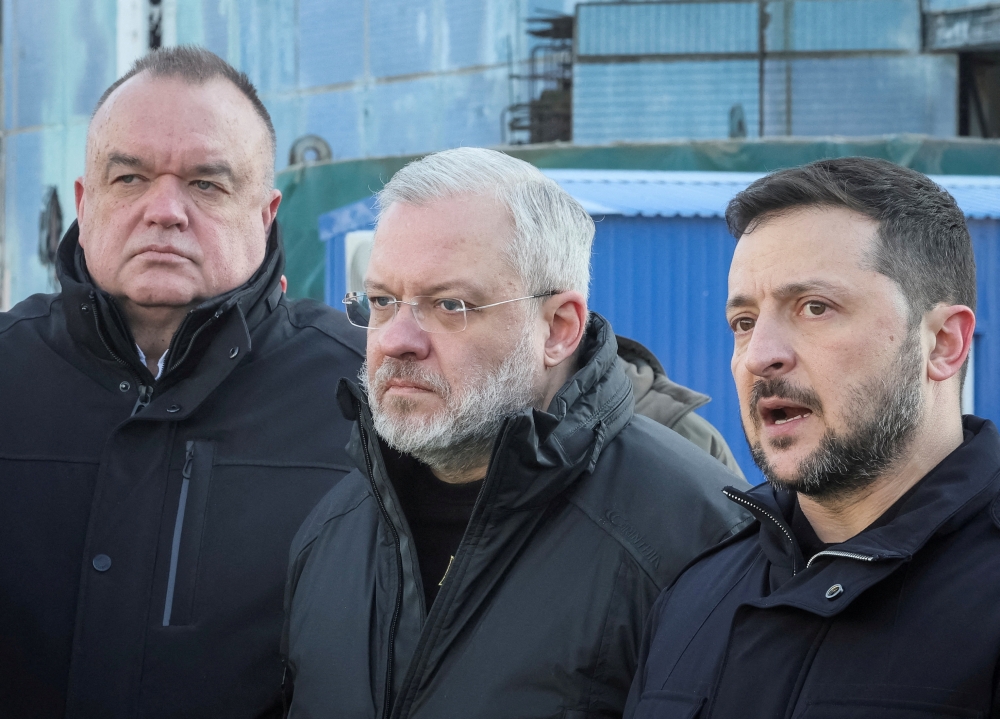
Zelenskyy reacted swiftly. His office imposed personal sanctions on Mindich and others named in the probe. Two ministers resigned earlier in the week. But the scandal has already raised troubling questions about the depth of entrenched interests within Ukraine’s state machinery and whether wartime urgency can overcome systemic graft.
These concerns are not confined to Kyiv. They reverberated across Europe. German Chancellor Friedrich Merz delivered an unusually blunt message to Zelenskyy: Ukraine must “vigorously pursue the fight against corruption” if it expects European taxpayers to keep funding its war effort.
The timing could not be worse. The EU had just confirmed a €5.9 billion loan to Ukraine, with ongoing debates about using €140 billion in frozen Russian assets to sustain Kyiv’s economy and military spending. Belgium continues to block consensus within the EU on this move, citing legal risks.
In Brussels, the scandal reawakened old anxieties about Ukraine’s readiness for deeper integration with Europe. Several EU member states — struggling with their own domestic political divisions — worry that continued support for Ukraine will become harder to justify if corruption persists at the top.
The political mood in Europe is shifting. Populist parties, including Germany’s Alternative for Germany (AfD), have gained ground by attacking refugee policies and foreign aid commitments. German policymakers now openly debate whether young Ukrainian men arriving in Germany should be discouraged from staying, urged instead to defend their homeland.
In other words, unity is no longer guaranteed. Public trust is thinning, and Ukraine cannot afford to give ammunition to those seeking to weaken the Western coalition.
Yet, the scandal’s implications stretch even further. They touch on the very nature of global order and the competition between governance systems — democratic, hybrid, and authoritarian.
Russia has already seized on the scandal for its propaganda war, presenting Ukraine as dysfunctional and unworthy of international support. Zelenskyy himself warned that Russia is preparing for a “big war” by 2029–2030, one that could extend beyond Ukraine into Europe if Moscow perceives weakness in the continent’s resolve.
Thus, Ukraine’s governance crisis is not a side story. It is part of a wider strategic contest in which political legitimacy is a crucial form of power. Democracies claim superiority not only because of their values but because of their capacity for self-correction. Ukraine’s ability to confront corruption — even during war — will be a litmus test for this claim.
For South-east Asia and Asean observers, the scandal also carries important lessons. It shows how governance weaknesses, when exposed during geopolitical crises, can undermine even the strongest alliances.
Asean member states often speak of “centrality” and “cohesion,” but in moments of crisis, everything ultimately rests on credibility, transparency, and the confidence of partners.
Ukraine’s case also reveals why external support is always conditional, even when existential stakes are high. The EU, like the United States, Japan, and Australia, knows that supporting Ukraine is strategically necessary. But political systems based on elections, public scrutiny, and fiscal accountability cannot endlessly support a partner whose institutions appear compromised.
There is another dimension that Malaysia and Asean must monitor. If Ukraine fails to reform, the world will absorb the lesson that democratic institutions are weaker than they claim. That would embolden authoritarian states and widen the gap between democratic ideals and governance realities.
Conversely, if Ukraine undertakes genuine, far-reaching reforms even while confronting Russia’s military machine, it will send an equally powerful message: that democracies can adapt faster, correct their mistakes more effectively, and emerge stronger.
That message would resonate globally — in Africa, Latin America, the Middle East, and across Asia — where hybrid regimes and fragile democracies confront their own internal governance challenges.
Ukraine’s corruption scandal is not an indictment of its people. It is a reminder of the long-term structural deficiencies that predate Zelenskyy and every president before him. What matters now is whether Ukraine can demonstrate to the world that the fight against corruption is as essential as the fight on the battlefield.
The war has reached a stage where perception matters as much as military performance. Kyiv’s credibility with its supporters will determine the flow of weapons, financial aid, reconstruction funds, and diplomatic backing.
If Ukraine responds decisively, it can reinforce the moral argument for its defence. If it hesitates, it risks losing the confidence of partners who have already stretched themselves economically and politically.
In the end, the stakes are not just about Ukraine’s future. They are about whether a world built on transparency, rules, and institutional integrity can withstand the pressures of war, crisis, and rising authoritarianism.
The scandal in Kyiv is therefore not a local drama. It is a global warning.
And how Ukraine responds will shape the future of the world order itself.
* Phar Kim Beng is Professor of Asean Studies and Director, Institute of International and Asean Studies (IINTAS) International Islamic University Malaysia
** This is the personal opinion of the writer or publication and does not necessarily represent the views of Malay Mail.


