












AUGUST 16 — While Malaysia is approximately 450 times larger than Singapore — one of the widest landmass disparities between two immediate neighbours in Southeast Asia, even more pronounced than the Malaysia–Brunei ratio — it is often overlooked that the leadership of both nations have mastered the art of peaceful coexistence.
Whether Singapore is framed as a “city-state” or, as Professor Kent Calder famously termed it, a “state city,” the reality is that neither Putrajaya nor Singapore has seriously contemplated war as a policy option.
This is not to suggest that relations have been free of friction. Historical disputes — over water pricing, airspace management, and territorial demarcations — have tested the diplomatic ingenuity of both sides.
Yet the fact remains that Malaysia and Singapore have chosen calm, structured negotiation over military confrontation. It is a shining example of how two post-colonial entities can live side by side, cooperate economically, and manage differences without threatening the regional equilibrium.
The strategic roots of trust
In the Southeast Asian imagination, Singapore is often seen as a gleaming city-state — efficient, wealthy, and confident. Yet behind this sheen lies a core strategic reality: Singapore’s leaders have long viewed their nation as inherently vulnerable. Dr Tim Huxley, in his seminal work Defending the Lion City: The Armed Forces of Singapore, lays bare this paradox. Prosperity is not a shield against threats; rather, it is a prize others might covet.
When Singapore became independent in 1965, it was surrounded by larger neighbours — Malaysia and Indonesia — whose own national narratives were still being shaped in the post-colonial churn. Huxley argues that Singapore’s defence strategy emerged from a “security dilemma”: every move to bolster its own protection risked being seen by others as a provocation, potentially triggering an arms race.
In the late 1980s, this dynamic was especially pronounced in relations with Malaysia, when the action–reaction cycle in military modernisation was real enough to register on the radar of both capitals.
Rather than shrink from this reality, Singapore embraced it with clear-eyed pragmatism. The solution was Total Defence — a comprehensive approach weaving together military, civil, economic, social, and psychological resilience.
In Singapore’s lexicon, every citizen was a defender, every workplace part of the national shield, and every community a node in the country’s survival network.
Central to this approach was the cultivation of a technological edge. Lacking manpower depth, Singapore invested heavily in precision munitions, modern fighter jets, advanced naval platforms, and integrated command systems.
Training agreements with partners such as the United States, Australia, and Taiwan allowed its armed forces to operate beyond the constraints of its small territory. The underlying message was simple: any military misadventure against Singapore would come at a cost far higher than any conceivable gain.
From security dilemma to mutual confidence
Defence analysts, notably Huxley, have documented how the security dilemma of the 1980s has since given way to a more balanced relationship. By the late 1990s, Singapore began layering its deterrence posture with cooperative security — active participation in Asean forums, military-to-military exchanges, and humanitarian missions. This helped ease neighbourly anxieties without compromising preparedness.
Malaysia–Singapore relations have since moved far beyond the fraught atmosphere of the 1980s. Leaders in Putrajaya and Singapore alike now understand that open hostility would be economically ruinous. Disputes over water, airspace, or maritime boundaries still occur, but they are managed through structured negotiations rather than sabre-rattling.
Even the former Prime Minister Tun Dr Mahathir remarked in 2003 that the idea of the two countries going to war was “highly unlikely.”
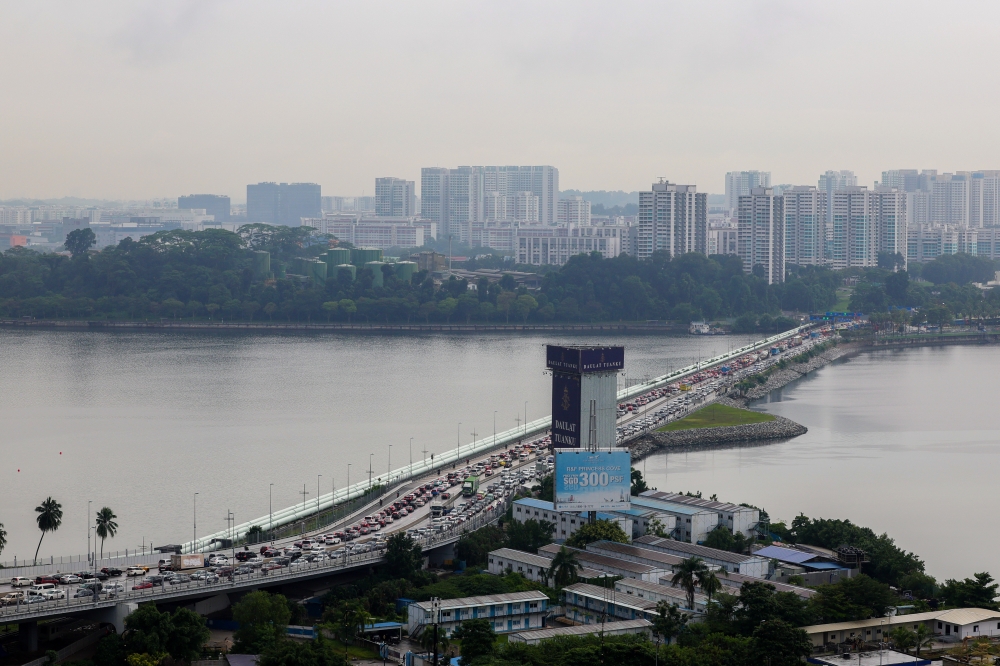
That assessment has largely held true. The bilateral relationship has matured into a strategic balance of competition and cooperation — one that now extends to joint economic corridors, tourism flows, and cross-border infrastructure such as the Johor Bahru–Singapore Rapid Transit System (RTS).
Singapore’s ongoing efforts to bolster its defence capabilities — through advanced air, naval, and cyber assets — are complemented by its determination to play a diplomatic “anchor role” in Southeast Asia.
Far from alarming Malaysia, such investments are understood as part of Singapore’s global positioning in an increasingly uncertain world. For Malaysia, this understanding is crucial: Singapore’s strategic culture is deeply defensive yet unflinchingly prepared, mirroring the best of what small states can achieve when clarity of purpose meets disciplined diplomacy.
The economic and diplomatic dividend
As two trading nations, both Singapore and Malaysia understand that their economies would suffer severe damage if they ever resorted to force. The very foundation of the Treaty of Amity and Cooperation (TAC), established through the Bali Declaration of 1976, enshrines the principle that disputes must be resolved through peaceful means.
Their cooperation in the Singapore–Johor co-development zone reinforces the reality that their destinies are entwined — whether in the semiconductor sector, the age of Artificial Intelligence, or the wider Fourth Industrial Revolution.
However, geographical proximity brings not only opportunities but also vulnerabilities. In recent years, the mushrooming of transnational digital scam syndicates — some using one country as a base to target victims in the other — has posed a new kind of threat to bilateral trust.
If left unchecked, these illicit activities could fray the very fabric of Malaysia–Singapore relations. The challenge lies in ensuring that law enforcement and cybercrime units on both sides work in close concert, sharing intelligence swiftly and dismantling syndicates decisively.
The aspirations of the Kuala Lumpur 2045 Vision, announced on May 26, 2025, require both countries to work closely not only with each other, but also with Brunei, Indonesia, and Thailand — the other founding members of Asean. Unless the original six can deepen their integration, Asean’s future will remain uneven.
A benchmark for Asean
Recent events in the region are a reminder that even strong bilateral relations cannot be taken for granted. The armed clashes between Thailand and Cambodia — despite decades of shared Asean membership — demonstrate how quickly disputes can escalate. In that case, it took the deft intervention of Prime Minister Anwar Ibrahim as Asean Chair to help broker a ceasefire.
Public sentiment in both Malaysia and Singapore remains clear: there is no appetite for conflict. Poll after poll indicates that the preferred path is peace, diplomacy, and economic interdependence.
This is where the two neighbours have quietly excelled, setting a regional benchmark for a “Prosper Thy Neighbour” policy — a recognition that mutual stability and prosperity are far more valuable than the fleeting satisfaction of a geopolitical point scored.
As Singapore marks its 60th National Day on August 9, 2025, and Malaysia prepares to celebrate Malaysia Day on September 16, 2025 — marking 62 years of its formation — there is a shared responsibility to strengthen their bonds further.
In doing so, they can serve as a bulwark of East Asian peace, reinforcing Asean centrality at a time when global flashpoints from the South China Sea to the Taiwan Strait test the region’s cohesion.
Seen in this light, Singapore’s military modernisation is not a threat, but a contribution to the global public goods of Asean — anchored in mutual trust, pragmatic statecraft, and the unwavering belief that war is not just undesirable, but unthinkable.
If the Lion City’s roar has been measured rather than menacing, it is because Singapore has mastered the art of making deterrence serve peace. In Southeast Asia’s volatile security landscape, that may be the most important lesson of all.
* Phar Kim Beng is a professor of Asean Studies and Director of the Institute of Internationalization and Asean Studies at the International Islamic University of Malaysia.
** This is the personal opinion of the writer or publication and does not necessarily represent the views of Malay Mail.