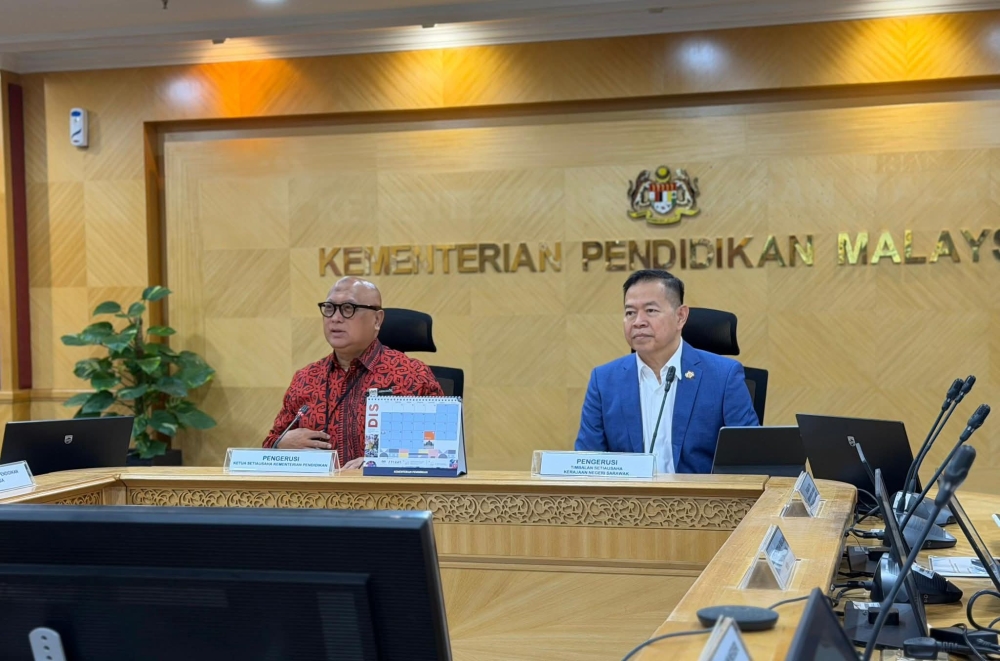
















DECEMBER 28 — The dichotomy of rankings and global evaluations has been deepening recently, where robust debates have been ongoing on whether university rankings are a vain pursuit, a “fame game” that distorts academic priorities or they remain a crucial yardstick for higher education.
While there would be different arguments and both the downsides and positive returns from this notion, rankings still matter not as end in themselves, but as a fundamental catalyst for confidence, accountability and alignment with the world’s highest standards in maintaining the quality metric.
In short, rankings have been an inalienable part of the global higher education landscape. They shape public perceptions of institutional quality for multiple stakeholders — from students and families to employers and governments, influencing enrolment, reputation and life choices.
The key is to approach rankings with a critical yet constructive mindset — to neither worship the rankings as the ultimate pursuit nor reject them outright.
Done right, they can push universities to meet the highest global standards in education and research, they provide an external benchmark as a measure against the world’s best. They act as benchmarks identifying areas for growth and maintaining the quality of offerings.
Most rankings assess a broad range of factors related to quality, from research impact to employer reputation. This signals the compelling need to rebuild strength across multiple dimensions, all areas that matter intrinsically to a university’s mission.

Singapore’s universities have penetrated the global top 10 by excelling in research output and global presence, and used as the main fundamentals for the country’s growth.
Genuine academic excellence and high rankings often go hand in hand. The world’s top-ranked institutions - MIT, Oxford, Stanford, Harvard, among others — did not reach the top just by playing the “numbers games” but by a hard fought and sustained excellence in scholarship, teaching, and innovation. Rankings, in these cases, are a byproduct of true quality and standard by merit.
Global rankings are not just a peripheral concern, they are taken seriously by the world’s top elite universities as a core essence of their strategic positioning. According to QS data, a university’s global ranking can influence up to 60 per cent of prospective international students’ decision-making, with academic reputation and graduate employability cited as top concerns.
Many global universities now have a dedicated ranking management team to align with the highest standards and performance goals. This is not about gaming the system, but about aligning with the best practices to ensure rigorous standards.
Rankings and ratings are not confined to the academia alone. From business and corporations to hospitals and sports, these provide a yardstick for excellence and to hold ourselves accountable to those high benchmarks.
Some concerns are raised and rightly so, including manipulations and academic dishonesty in gaming the system, including unethical practices such as “gift authorship” of research papers to boost rankings which have been rightly flagged by the ranking organisations, highlighting some gaps and loopholes.
However, to use these as an argument to abandon rankings altogether is far-fetched, where dishonesty in academia is not caused by rankings per se. The vast majority of scholars and universities maintain integrity even as they strive for excellence.
Strict obligations to integrity and norms and upholding these to the highest standards are the fundamental essence of any academic institution, and this goes in parallel with the pursuit of excellence through ratings and rankings. Both should not be at the expense of the other.
Unethical behaviours must be addressed through strong academic governance and a culture of integrity, rather than by discarding the ranking systems that, in fact, encourage improvement when approached ethically.
Ranking organisations themselves are becoming cognisant of these risks, and new initiatives and methodologies have been created, including tracking research paper retractions or unethical publication practices.
The key essence is to publish more quality research, not fraudulent research; to raise metrics by doing better, not by bending rules.
Another critique that persists is that rankings create undue pressure, enforcing a “publish or perish” environment and devaluing teaching or community service, but strategic balance is the key.
Leading universities have shown that it is possible to excel both in research and provide world-class education and societal impact in parallel. This must not be a zero-sum affair.
The very definition of a “great university” is one that is able to do all these while keeping the quality intact - to generate new practical knowledge, educate the new generation of students, and serve humanity.
This is the epitome of what we are embarking on here in Universiti Malaya.
In South-east Asia, the National University of Singapore (NUS) became the first Asian university to enter the global top 10, and it remains Asia’s highest-ranked. This success did not come overnight or by chasing rank for rank’s sake. It came from hard work, strategic investments in faculty, research, and innovation, facets that matter to the community and the world.
It cements the fact that the ranking was a reflection of real improvements. UM itself reached 58th in the world on the QS rankings, and we view that achievement not as an end, but as evidence that our efforts to improve research capacity, enhance real impact, foster global collaborations, and attract talent are bearing fruit.
None of the benefits of rankings should come at the expense of core academic values. We can and must pursue high rankings in parallel with our core fundamental mission to educate ethically and morally and advance knowledge responsibly.
Upholding quality with purpose and morality
As educators and researchers, we must never let the metrics alone drive us but instead, let quality drive the metrics.
When a university truly focuses on improving the aspects of teaching, research impact, and service to the world, the rankings will naturally rise as a consequence. Conversely, ignoring quality or forgoing values and fundamentals in pursuit of a good rating is a recipe for hollow success and reputational risk, and a success without a soul.
The true measure of a university lies in the quality of its graduates, the impact of these graduates and talents and their research on solving the world’s biggest challenges, and the ultimate contributions to the future of the world.
Used properly, rankings keep us on our toes and guard against complacency or apathy.
The spirit of rankings must be self-improvement and benchmarking, not envy or rivalry. It also is a needed assessment tool to ensure universities, especially publicly funded one including UM, to act as the catalyst and guardian of accountability and public service.
We bear the responsibility to fulfil the mandate of the people, the nation and humanity, and funding that also comes from hardworking citizens and the government must be rightly invested in the right channels in accordance to the highest quality and standards, ensuring that they translate to world class teaching and learning, research and nation building.
As such, our human capital must be measured to the highest measures, and thus the need for Key Performance Indicators is paramount. Its design is not to punish or to fulfil a utopian agenda, but to simply ensure that we carry out our mandate to the fullest responsibility in adhering to the highest expectations.
Thus, the compliance with the KPIs is not merely as a tool for the rankings, but as a constant quality adjudicator. Academic freedom and academic integrity must also not only be seen as a free for all without obligations and norms, but also be designed in such a way that the academicians have the compelling public duty, normative obligations, and the moral conscience to deliver responsibly and for the greater good of humanity.
They are not mechanisms of pressure for pressure’s sake, but frameworks that uphold the standards expected of a national institution. Every academic and researcher entrusted with public funds and trust must meet clear expectations and outcomes, not only in productivity, but in integrity and quality.
In a climate of tightening resources, rising risks and greater public scrutiny, it is upon us to demonstrate that Malaysia’s oldest and leading university is worthy of continued investment, and that we are unwavering in our mission to serve the people through excellence, equity, and impact.
This aligns with the strategic aspirations of the Ministry of Higher Education to empower a new era of mission-led, purpose-driven higher education - one where Malaysian talent is cultivated and global standards are integrated to chart a new dawn of future-ready expertise in both human capital development and knowledge creation for the nation.
Universities with purpose and conscience
At the end of the day, we must not evade the core reasons of why universities exist. Our ultimate purpose is not to top a chart, but to make a change to the lives of the people.
Great universities are defined by their contributions and intent to solving real-world problems - preventing diseases, tackling poverty, addressing climate threats, fostering peace and deterring conflicts, and educating the next generation. No ranking can fully capture a university’s moral conscience or humanistic core, and indeed, these should never be compromised for the sake of rank.
The essence of integrity, honesty, and compassion in academia are paramount and they form our fundamental humanistic education. A university must excel academically and never lose sight of ethical principles, moral conscience and social responsibility.
As the Vice Chancellor of Universiti Malaya, I am proud to say that our institution is embracing a renewed vision of being a “university with a purpose” This essentially means that we place humanity’s needs and hopes now and in the future, at the forefront of our strategy and mission.
Whether it’s pioneering research in our drive for cancer cures, developing new technologies for cleaner energy, or producing policy research to help resolve conflicts, we want UM to be part of the solution to global challenges, while upholding human dignity, justice, and compassion through education.
In this noble mission, where do rankings fit? They enable and support our journey by ensuring that our work is internationally benchmarked and of the highest quality.
High standards in research and teaching will essentially mean our breakthroughs and graduates can stand among the world’s best, ready to make an impact. Rankings also help us gain deeper visibility and credibility, which in turn attracts more strategic partners and funding for us to do more of the good work that defines our purpose.
Let me be clear: rankings are not the goal; they are a means. The goal is, and has always been, to create knowledge and graduates that make the world a better place. If climbing the rankings comes as a result of doing that goal well, then we should welcome it.
We must remember that our true rank is measured by the positive difference we make for humanity and the world, and as a compass of good, and that alone, remains the most noble of all.
* Professor Datuk Seri Ir Noor Azuan Abu Osman is Vice Chancellor of Universiti Malaya and Fellow of Academy of Science Malaysia.
** This is the personal opinion of the writer or publication and does not necessarily represent the views of Malay Mail.