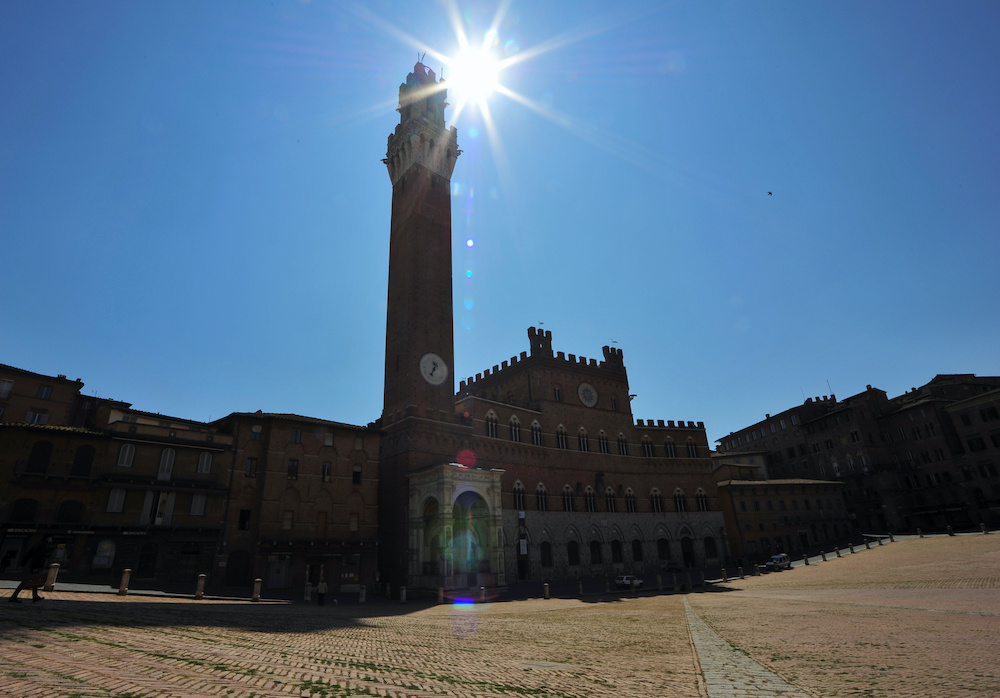
NEW YORK, Feb 3 ― David Bowie was a New Yorker for more than 20 years. In Bowie years, that is practically an eternity considering the multitude of lives he lived — musically, geographically and otherwise — since he first set out to become a star in the late 1960s.
“I can’t imagine living anywhere else,” Bowie, who was born in Brixton, in South London, and had stints in Berlin; Lausanne, Switzerland; and several other cities, said in a 2003 interview. “I’ve lived in New York longer than I’ve lived anywhere else. It’s amazing: I am a New Yorker.”
He somehow managed to settle into a domesticated life that resembled that of many others living in and around SoHo (though most do it without the supermodel wife and penthouse apartment), browsing the books at McNally Jackson and shopping for groceries at Dean & DeLuca, among other low-key adventures that he undertook in what the playwright John Guare called “this cloak of invisibility.”
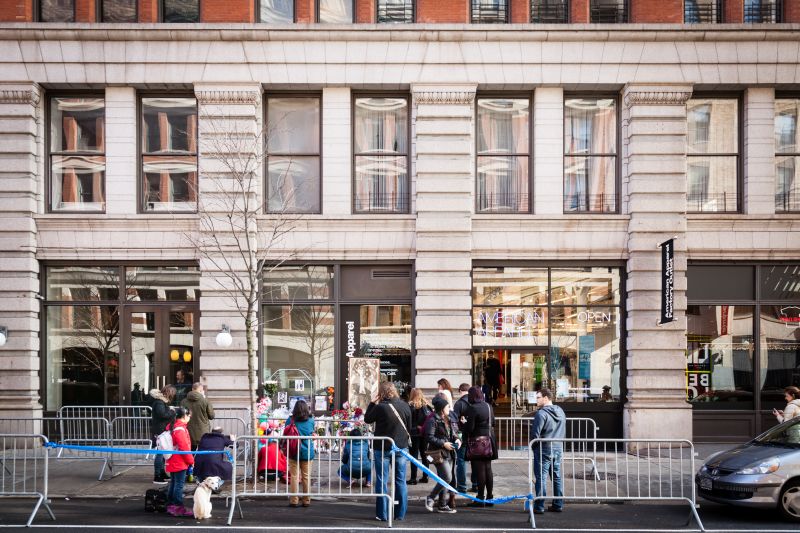
Soon after news spread of Bowie’s death on January 10, two days after his 69th birthday and the release of his album “Blackstar,” fans started a makeshift memorial outside the SoHo apartment where he had lived with his wife, Iman, since 1999, joined the following year by their daughter, Lexi. Bowie and Iman purchased their first city home in 1992, a ninth-floor apartment at Essex House Hotel on Central Park South, which they sold in 2002.
“Just as each and every one of us found something unique in David’s music, we welcome everyone’s celebration of his life as they see fit,” Bowie’s family wrote in a statement.
Should you be looking for a way to honour him in the city he called home, there is no shortage of activities to partake in, many of which Bowie enjoyed doing himself.
Take a walk
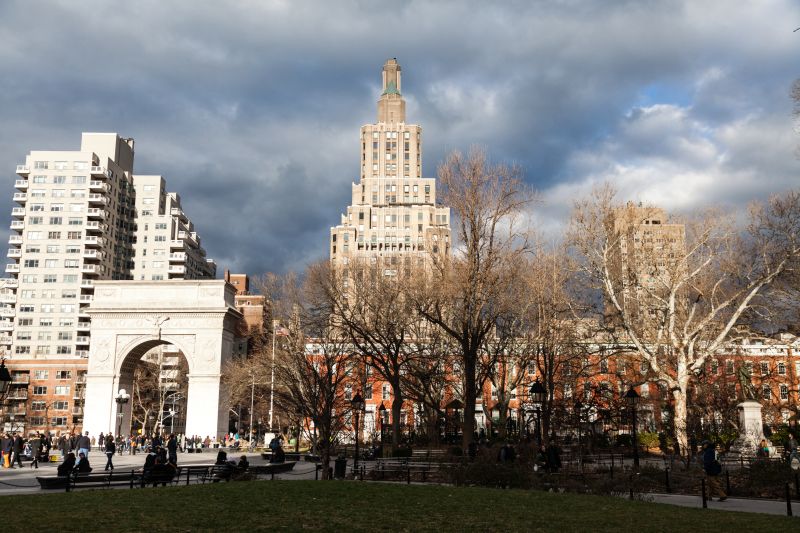
From his apartment building on 285 Lafayette St, Bowie was in walking distance of many of his favourite neighbourhood haunts. Topping his list, according to The Independent, was Washington Square Park.
He wrote of the park in a 2003 essay for New York magazine: “It’s the emotional history of New York in a quick walk.”
Walking in general (the earlier in the day the better) was a preferred way for Bowie to experience city life.
“The signature of the city changes shape and is fleshed out as more and more people commit to the street. A magical transfer of power from the architectural to the human,” Bowie wrote.
The park is about a 10-minute walk from the apartment on Lafayette, where fans continue to leave notes, photos and flowers outside of the building and where the musician Glen Hansard paid tribute last Tuesday with an acoustic performance of the Bowie classic Ashes to Ashes.
Buy a book
The Strand (828 Broadway) was another one of Bowie’s destinations of choice. He wrote in 2003: “It’s impossible to find the book you want, but you always find the book you didn’t know you wanted.”
He also frequented McNally Jackson Books (52 Prince St).
Consider one of Bowie’s many biographies, or you could try one of his favourite books, like A Clockwork Orange by Anthony Burgess, The Brief Wondrous Life Of Oscar Wao by Junot Diaz, or one of the 98 others that were posted on his website in October 2013.
See a band
Bowie first performed in the city in 1972, and made his Carnegie Hall debut later that year, and countless notable New York performances followed, including a memorable appearance at the Concert for New York at Madison Square Garden following the September 11 attack.
Before Bowie’s death, a concert at Carnegie Hall (881 Seventh Ave.) featuring the Roots, Perry Farrell and others was being planned to honour his career on March 31. It has since turned into a two-night tribute: an additional night of performances is scheduled at Radio City Music Hall for April 1 featuring Cat Power, Cyndi Lauper and others.
Tickets for both nights are pricey on the secondary market, so consider doing what Bowie was known to do and stop by the Bitter End (147 Bleecker St), the city’s oldest rock club, where live music happens just about every night.
Numerous tributes at city music venues have sprouted up since Bowie’s death, and are likely to continue in the coming months.
There will be a three-night performance by the Loser’s Lounge, a long-running revue that pays tribute to pop stars and cult artists and is led by the former Psychedelic Furs keyboardist Joe McGinty, at Joe’s Pub (425 Lafayette St.) from February 18 through February 20. Tickets are US$25 (RM106).
Buy a record
Bowie enjoyed shopping for rare vinyl at Bleecker Bob’s before it closed in 2013 after 45 years, only to be turned into a frozen yogurt shop.
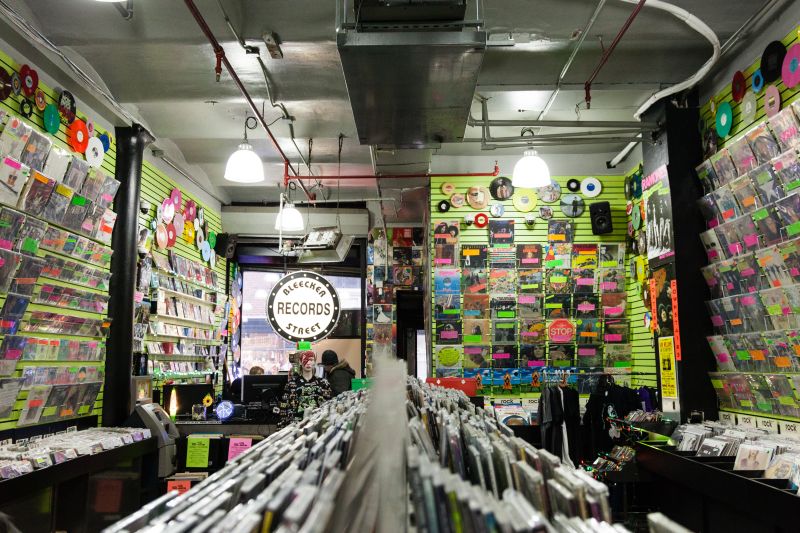
As sad as that was, there are plenty of fine vinyl purveyors still operating in and around Greenwich Village, including Bleecker Street Records (188 W. Fourth St.).
But if you’re stopping there for vinyl on your Bowie crawl, do not expect much from the man himself, at least not for a while.
Nino Perez of Bleecker Street Records said the store quickly sold out of most titles in the days after his death and they did not expect to have more copies of Blackstar until the end of February, because of the high demand.
It’s a similar story at Generation Records (210 Thompson St).
“I sold out of his new album right away,” Jason Primavera said, referring to the vinyl edition, though he added that customers were asking for it even before he died, as its positive reviews piled up.
Before stocks are replenished, consider taking home one of Bowie’s contemporaries, like Iggy Pop or Lou Reed, both of whom he met and befriended during a 1971 visit to Manhattan.
Reed and the Velvet Underground’s debut album was one of Bowie’s first exposures to New York music, in the form of a gift from his then manager, Ken Pitt, in 1966.
“Everything I both felt and didn’t know about rock music was opened to me.” Bowie wrote in 2003. “I was hearing a degree of cool that I had no idea was humanly sustainable.”
See a play
The theatre had long been part of Bowie’s creative world, dating back to his pre-stardom days working with Lindsay Kemp at the London Dance Center.
In 1980 he earned positive reviews for his performance in “The Elephant Man” at the Booth Theater (222 W. 45th St).
“Yes, more young people in designer jeans and leather now show up at the Booth Theater than before, and yes, they probably show up because Bowie is a celebrated rock star,” John Corry wrote in The Times in 1980. “Fortunately, he is a good deal more than that, and as John Merrick, the Elephant Man, he is splendid.
More recently, Bowie co-wrote Lazarus, a sequel to the 1976 feature film The Man Who Fell to Earth, in which Bowie, in his first major film role, portrayed Thomas Jerome Newton. The show closes at the New York Theatre Workshop (79 E. Fourth St) on January 20.
But there are other options. The Booth Theater has Hughie, starring Forest Whitaker, opening on February 8. You could also go see the comedy Noises Off, a Times Critics’ Pick featuring Andrea Martin and a Roundabout Theater Company production. The space formerly known as Studio 54 is also owned by the company, and Bowie may have spent a night or two at the famed disco during its heyday.
Have a bite
Bowie relished his ability to blend in and not be bothered by his fans and fellow New Yorkers during his years in the city.
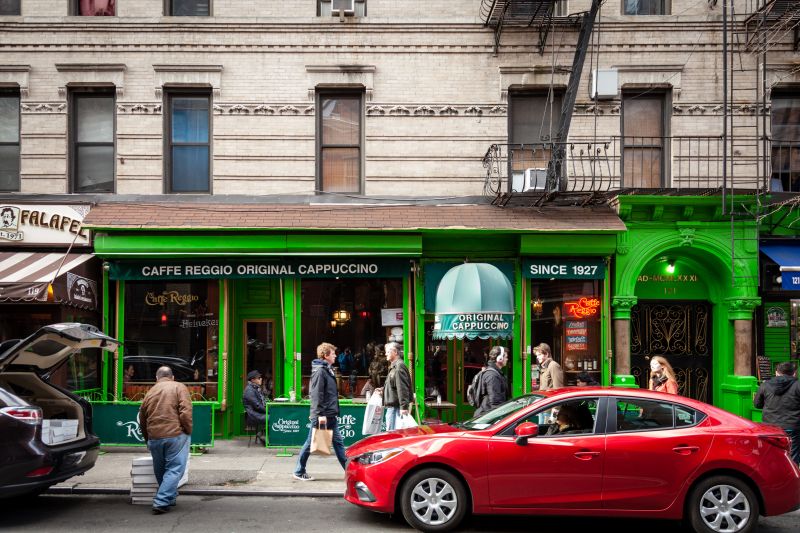
“It’s so easy to be a person here, a regular guy. The family and I have no problem going out and eating,” Bowie told The Miami Herald in 2003.Some of his usual spots included Caffe Reggio (119 Macdougal St) for coffee or breakfast and Olive’s (120 Prince St.), where a chicken sandwich with watercress and tomatoes was a favourite of his.
At Bottega Falai (267 Lafayette St), an Italian cafe and grocery that Bowie used to frequent, he would regularly order the prosciutto di Parma sandwich, a cappuccino and a bomboloni, the restaurant’s owner Danilo Durante said.
Bowie was also known to shop for weekly groceries at the nearby Dean & DeLuca (560 Broadway).
View art
Bowie was a well-known lover of art, between collecting the classics and applying his own skills to paint and brush.
“Art was, seriously, the only thing I’d ever wanted to own,” Bowie told Michael Kimmelman in 1998. “It has always been for me a stable nourishment. I use it. It can change the way that I feel in the mornings.”
To see some of Bowie’s favourite painters, your best bet is likely the Metropolitan Museum of Art (1000 Fifth Ave), which currently has several works from Picasso, Rubens and Tintoretto on view.
Stay at home
Ten years had passed between 2003’s Reality and 2013’s The Next Day, leaving some to speculate that Bowie had either retired or become a recluse.
Neither was really true, as he still made his rounds around SoHo and was secretly working on The Next Day, but he seemed to enjoy his alone time more in his later years.
“David is even more of a homebody than I am. At least I go to parties once in awhile,” Iman told The Guardian in 2014, adding that he liked his own company.
“I also think there is nothing that he hasn’t seen,” she said.
Therefore, if you want to honour Bowie with a quiet night at home, you have every right, and several of his movies and concert films are available on streaming services.
An entire generation of ‘80s kids were first introduced to Bowie via Jareth the Goblin King in Jim Henson’s Labyrinth (1986), available to rent on Amazon Video, iTunes and Vudu.
If you don’t have one already, you probably can’t get a ticket to the play Lazarus, but you can see the prequel, Nicolas Roeg’s The Man Who Fell to Earth (1976), in which Bowie “gives an extraordinary performance,” according to Richard Eder’s review in The Times. It is currently available on Vudu and Amazon Video.
Other Bowie-related titles available to stream include The Hunger (1983), The Last Temptation of Christ (1986) and The Prestige (2006).
The documentary David Bowie: Five Years (2014) can also be viewed on Hulu and Amazon Video via a Showtime add-on subscription. ― The New York Times