

KUALA LUMPUR, Nov 26 — In an age where perfect fairy tales are engineered by Disney and the internet is our first source for news, it’s important to keep our storytelling roots alive. Let’s take a nostalgic look back at some of our favourite Malay folk tales, passed down from generation to generation.
Mahsuri
The legend of Mahsuri dates back to the 1800s. Mahsuri was the daughter of a farmer named Pandak Mayah in Langkawi and was famed for her beauty. The representative for the Sultan of Kedah in Langkawi wanted to make her his second wife, but was not granted permission to do so by his first wife, Mahura. Instead, his son married Mahsuri under Mahura’s advice.
He was soon summoned to war to face the Siamese invasion in Kedah. Mahsuri, now pregnant with his child, stayed at her family’s home. One day, a poor man named Deramang visited Langkawi and Mahsuri’s family allowed him to work on their farm. Mahsuri eventually gave birth to a healthy baby boy.
Worried over the waning of her family’s influence and the growing influence of Mahsuri’s family, Mahura claimed that Mahsuri betrayed her husband with Deramang. Mahsuri was sentenced to death. Dragged and tied to a tree, they tried to kill her with spears. In other versions of the legend, they used daggers. Somehow, they couldn’t kill her.
Mahsuri, in terrible pain, revealed that she could only die if stabbed with a special weapon found only in her home. They quickly retrieved it and ended her life.
According to legend, she cursed Langkawi for seven generations of suffering before taking her last breath. Soon after her death, Langkawi was invaded by the Siamese and the representative from Kedah along with his family were slaughtered. Was it because of the curse of Mahsuri? We’ll never know.
Bawang Putih Bawang Merah
Known as Cerita Bawang Putih Bawang Merah, this Malay folk tale originated from Indonesia. The story has many similarities with the story of Cinderella. The awkward character names, evil stepmother and stepsister… we’re only missing the glass slippers and a fairy godmother.
The main character of the tale is Garlic (Bawang Putih) whose mother passed away from illness. Her father was a travelling merchant who, worried about his daughter feeling lonely at home, married a single mother who brought Onion (Bawang Merah) into the family. Unsurprisingly, Garlic is abused by her evil stepmother and stepsister when the father is away. Sound familiar?
There are several variations of how the story ends. In one version, Garlic marries a prince after being seen playing on a magical swing which moves on its own... another has the evil stepmother and Onion getting their just desserts, attacked by monsters that come out of a gourd. You can find the Indonesian version of the folklore in Indonesian language here.

Pak Pandir
Pak Pandir is the Malay folk tale version of Mr Bean. The stories of Pak Pandir were compiled by Sir R.O. Winstedt (1878-1966) and A.J. Sturrock during the British administration as Cerita Jenaka Pak Kadok, Pak Pandir, Pak Belalang, Lebai Malang dan Si Luncai.
Pak Pandir is a simple man who is often taken advantage of by others and scolded by his wife. Often the butt of a joke, Pak Pandir stories are told through poems and narrations. A few examples of a tale involving Pak Pandir is Pak Pandir bathing his child, betting on chickens and falling from coconut trees. They’re usually very short and involve him doing something silly, such as hiding a bag of salt in the river so that the thieves will not steal it.
Si Tanggang
The tale of Si Tanggang is about a poor boy who lives in a fishing village who dreams of being rich. He begs the captain of a merchant ship to let him be one of his crew. Seeing how well the boy navigates the waters, and how hardworking he is, the captain agrees to let him join the them. With heavy hearts, his parents let him leave with the captain.
As years pass, Si Tanggang worked hard and became an experienced trader. He marries a beautiful woman and achieves his dreams. He grows arrogant and proud of his wealth. On one of his trips, he returns to his hometown. Hearing the return of Si Tanggang from the villagers, his parents rush to meet him by rowing a boat to his ship.
Si Tanggang, seeing that his parents are still poor, was filled with shame and acted as if he didn’t recognise them and turned them away. When his mother reached the river, she prayed to God that Si Tanggang would recognise her. A swift wind blew and a lightning struck the boat, turning everyone on it into stone. There are three countries that claim his “rock form”: Malaysia, Indonesia and Brunei. Which of these rocks is the poor Si Tanggang?
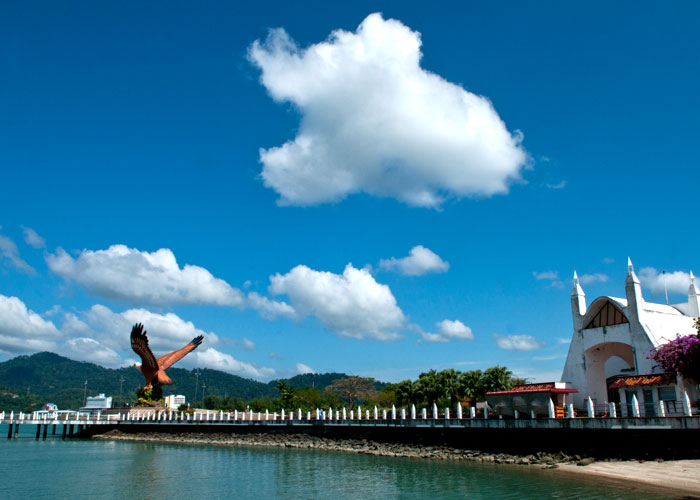
Wondering about the land where these tales come from? You can visit Mahsuri’s tomb in Langkawi or see the Si Tanggang stone formation in Batu Caves. Book cheap flights and explore Malaysia with Traveloka now!