


KUALA LUMPUR, June 14 — More than two decades after becoming the first Asian driver to win the FIA Production World Rally Championship (PWRC) title, Karamjit Singh is still doing what he loves most – racing.
But the reality facing Malaysia’s most successful rally driver today is very different from the one that carried him to the top of the world in 2002.
The man who once spearheaded Malaysia’s challenge on the global rally stage now finds himself carefully preserving an ageing rally car, unable to push it to its limits for fear of mechanical failure.
“Most of the parts of my car are old. I’m just driving it nowadays basically to save the car. I can’t drive the way I want to drive it because if I push 100 per cent, the car will break,” Karamjit told Bernama in a recent interview.
It is a far cry from the era of the Petronas EON Racing Team (PERT), when factory support, engineering resources and corporate backing helped propel Karamjit and Proton onto the international stage.
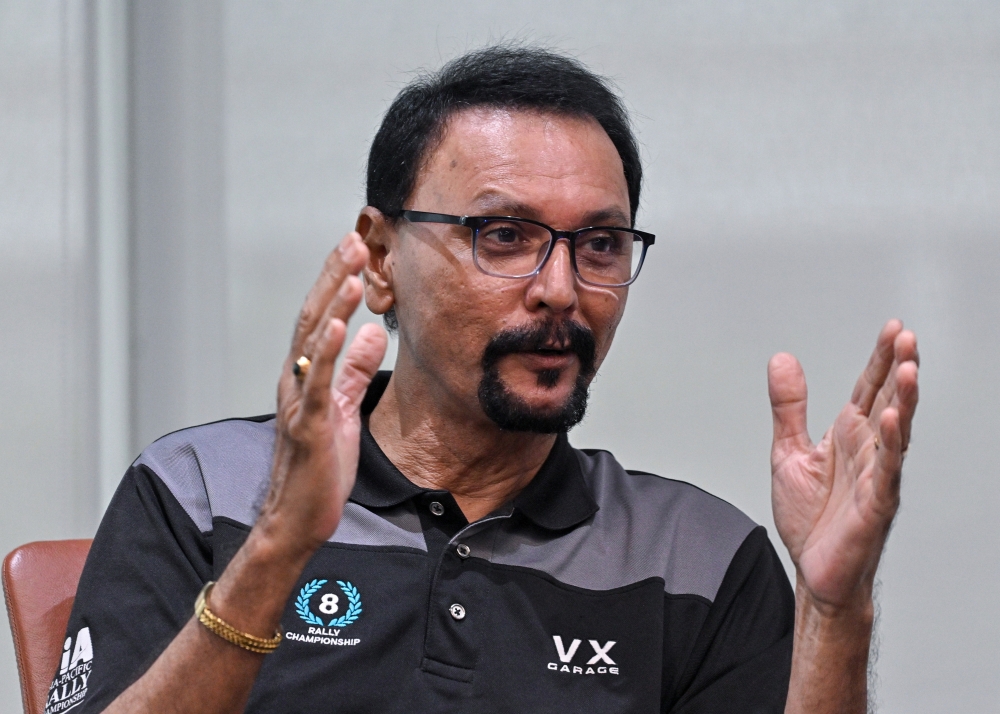
For former Proton Motorsport head Datuk Abdul Razak Dawood, Karamjit’s continued presence in the sport remains a reminder of an asset Malaysia has yet to fully utilise.
“What’s important now is we have a talent. A world-class talent. It’s not just Malaysia, but Asia-Pacific,” he said.
PERT and Malaysia’s rallying ambition
Abdul Razak believes motorsport’s value extends well beyond competition.
Drawing from his experience during Malaysia’s Formula One years and Proton’s rallying successes, he said major motorsport programmes generated significant economic and promotional benefits for the country.
“The business turnover to the country was so huge, not only directly, but in terms of the multiplier effect. You know, many, many people benefited directly, indirectly. Of course, the country itself has got the image, global image, airtime,” he recalled.
Abdul Razak noted that the team’s international success gave Proton global recognition that conventional marketing campaigns would have struggled to achieve.
That international success was built through PERT, an alliance involving Proton, Petronas and EON that carried Malaysia’s rallying ambitions onto the global stage.
Working closely with Mitsubishi’s Ralliart division, the team enjoyed considerable success in regional and international competition, culminating in Karamjit’s historic PWRC title in 2002 and multiple Asia-Pacific Rally Championship victories.
R3 and the business of performance
PERT was established in 1987, but the rally machinery it actively competed in was officially badge-engineered and homologated under the model name Proton PERT.
The programme later evolved into another chapter in Proton’s motorsport journey through the establishment of the Race, Rally, Research (R3) unit in 2003.
Tengku Djan Ley Tengku Mahaleel became a key figure behind the division and its public face during some of its most successful years.
Conceived as an in-house performance and engineering division, R3 sought to translate Proton’s motorsport experience into road cars while developing the company’s own engineering capabilities.
R3’s motorsport involvement spanned two distinct eras.
During the global rallying phase between 2003 and 2011, its biggest success came through the Satria Neo S2000 programme that swept all eight major titles in the 2011 FIA Asia-Pacific Rally Championship.
From 2012 onwards, R3 shifted its focus to domestic circuit racing, becoming a dominant force at the Sepang International Circuit.
The team went on to become the most successful outfit in Sepang 1,000KM history with five overall victories using race-developed Proton models including the Satria Neo, Suprima S, Iriz and Saga MTC.
Tengku Djan, who remains active in racing and business, said the objective was not merely to compete on track but to create value for the wider Proton brand.
“Proton wanted to tap into that. So how to tap into that and how to create a brand premium so that people want to buy your accessories versus the hundreds of other accessories out there. Hence, that’s why we created motorsports. So motorsports, if you do it right, it will generate a positive brand premium towards it,” he said.
One of the division’s most memorable projects was the limited-edition Satria Neo Lotus Racing model launched to mark Proton’s 25th anniversary.
“There was a time we created the Satria Neo Lotus Racing. At that time, Lotus was going back into Formula One. So we created, that was Proton’s 25th anniversary, so we created 25 units. We managed to sell all 25 units, and these cars are like local icons to this day,” Tengku Djan said.
For him, the project demonstrated how motorsport could be translated into commercial success.
He noted that R3 built a positive brand, which resulted in it becoming a premium brand that attracts enthusiasts to this day.
“So in terms of objectives, I think we achieved them,” he added.
While the R3 division was officially retired last year, he does not believe the chapter has been permanently closed.
As one of the individuals involved in building the brand, he acknowledged feeling saddened by the decision but viewed it as part of a broader shift in Proton’s business priorities.
“Being the pioneer of creating the brand, the team and all the activities we have done throughout the years, it is sad that it’s closed,” he said, adding that he believes the hiatus may be temporary.
He noted that it was a matter of time before Proton returned to motorsport, as the national carmaker already possesses the foundation for a future return through the legacy of Proton Motorsport and R3.
“They don’t have to start from zero. They already have a brand legacy of Proton Motorsports and R3,” he said.
Changing motorsport landscape
Yet sustaining momentum proved difficult.
Abdul Razak reckons Malaysian rallying gradually lost direction as sponsorship support declined and manufacturer involvement weakened.
“We lost our sponsors, we lost our direction, and there was no follow-up. Manufacturers also did not give support,” he said.
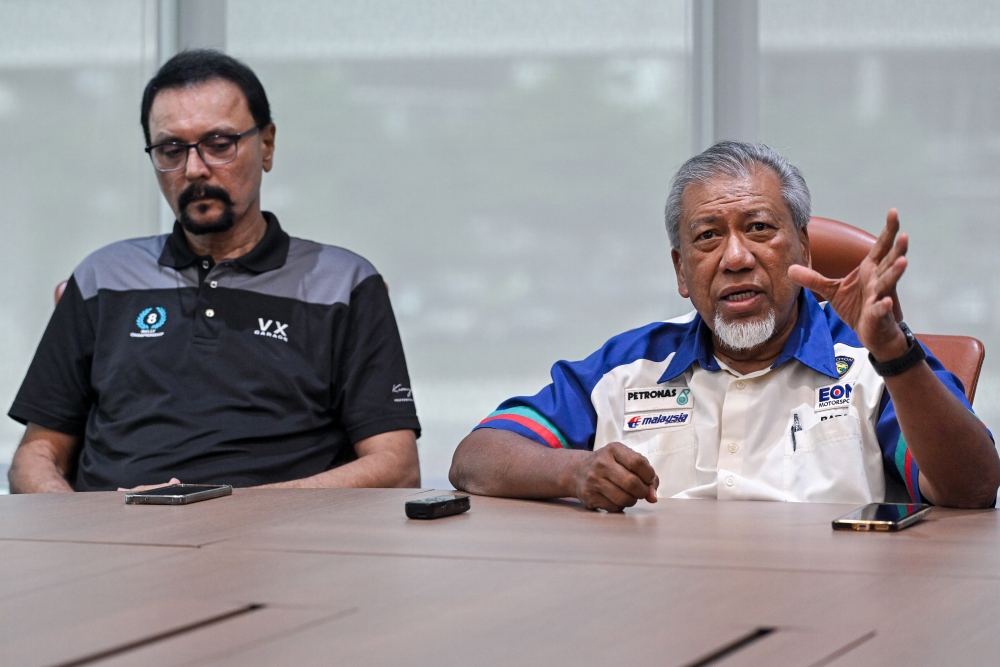
Karamjit said inconsistent support has also made it difficult for drivers to plan long-term international campaigns.
Drawing from his own experience, he said changes in leadership and priorities often disrupted initiatives before they could be be fully implemented.
He recalled a period after winning three consecutive rallies in Indonesia when the promised assistance failed to materialise following a change in ministerial leadership.
“Serious, until today, still paying off the debts. RM100,000 is a lot of money,” said Karamjit.
Abdul Razak also pointed to media coverage as an area that has struggled to keep pace.
“So, if the rally organisers don’t have a good media centre, a media person to disperse the news, they wouldn’t be able to have continuity in the news,” he added.
From factory backing to personal branding
While Abdul Razak views the issue through the lens of a former team builder and administrator, Tengku Djan sees it from the perspective of an industry that has fundamentally changed.
According to him, motorsport today can no longer rely solely on talent and results, with drivers increasingly required to think like entrepreneurs.
“I see a lot of young drivers today, they go out, they are very strong on social media, they promote the activities that they are doing. The companies, the corporates also go to social media platforms to see what’s happening there and who the strong individuals are that can pull eyeballs, for example,” he said.
The shift marks a significant departure from the environment that shaped Karamjit’s generation.
“Karamjit went out there, did well, but he also had some luck. For example, PERT and Datuk Razak saw potential in him, picked him up and then developed him further. While today, it is a lot more structured in that sense. If you have potential, there is an opportunity for you,” said Tengku Djan.
At the same time, competition for attention has intensified.
“Results are like a by-product now. You win or lose, maybe it doesn’t really matter anymore. But how you interact with your followers or how you interact with social media, in a way, is kind of more important,” he said.
Malaysia’s untapped rallying potential
Despite the challenges, Karamjit remains optimistic about Malaysia’s potential in rallying.
He said rallying can be contested on different surfaces, including tarmac and gravel, and believes Malaysia possesses natural advantages that remain largely underutilised.
According to him, the country’s extensive plantation roads make it particularly suitable for gravel rallying.
He also believes foreign competitors would welcome the opportunity to compete here and sees potential for greater corporate participation through partnerships with plantation companies.
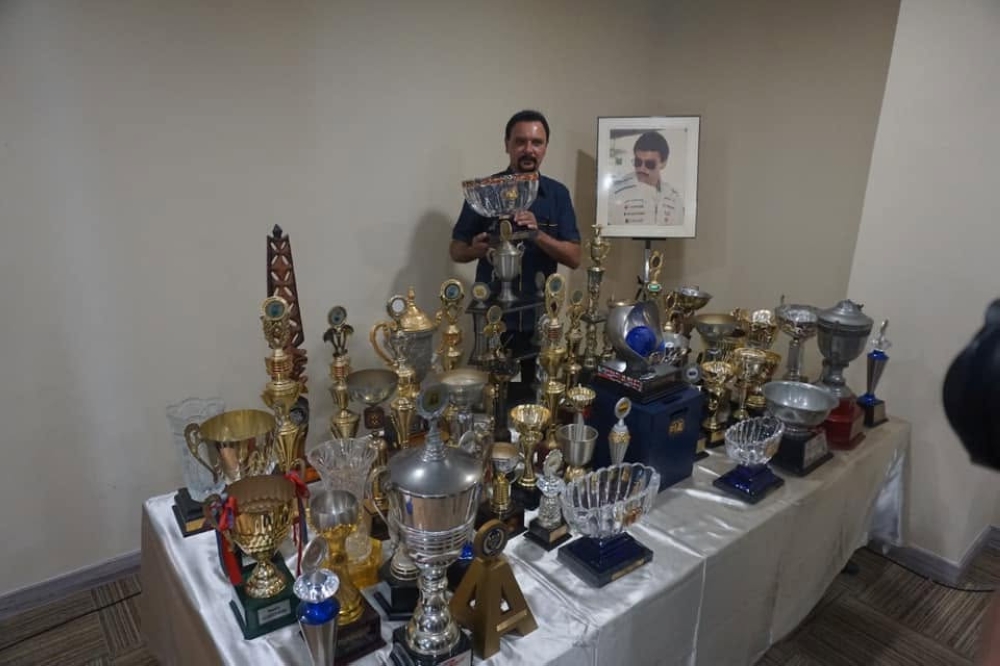
Abdul Razak agreed, citing Malaysia’s infrastructure, accommodation capacity and experience in hosting major motorsport events.
“Malaysia is definitely the preferred choice. Because we have got infrastructure, in terms of hotels, and all that. We are much better than what they have over there,” he said.
Looking ahead
Looking ahead, Abdul Razak believes one of Malaysia’s biggest priorities should be preserving and transferring the knowledge accumulated by one of the country’s greatest motorsport talents.
He revealed that a proposal had previously been submitted to establish a rally driving academy centred around Karamjit, but the idea has yet to materialise.
Abdul Razak suggested that a rally school involving Karamjit and several experienced drivers could be established with support from the Youth and Sports Ministry.
“Start a driving rally school here, with Karamjit and maybe supported by two or three other drivers, to do what they call a driving academy, rally school,” he said.
He pointed out that such an initiative would not require substantial investment, estimating that a modest programme could be launched with a budget of between RM100,000 and RM200,000, potentially involving Technical and Vocational Education and Training (TVET) students.
“We don’t need a big school. We just need him and a few drivers, and some space to do this,” he said.
Abdul Razak also expressed hope that Terbang, an upcoming film inspired by Karamjit’s rallying career and the PERT years, could help reignite interest in the sport.
“This whole thing revived because of Karamjit. I’m hoping that this movie will inspire another PERT team. A new PERT team,” he added.
However, Abdul Razak stressed that any revival would require a coordinated effort involving govt agencies, manufacturers, sponsors, organisers and motorsport governing bodies.
Karamjit, meanwhile, hopes Malaysians will remember not only the achievements of the past, but also focus on rebuilding the sport for future generations.
“I hope they remember all the good days, but I hope that they will look forward to the future. We want to revive our golden days, our golden era in the 80s and 90s where, like I said earlier, all of Asia actually came to Malaysia to learn from us how to organise rallies. That is my hope. I really hope that it happens for Malaysia because we deserve it,” he said. — Bernama


