




SINGAPORE, March 10 — Having grappled with manpower shortages since the start of the Covid-19 pandemic, rising electricity prices have proved to be the last straw for Pin Si Kitchen’s Safra Yishun restaurant.
Faced with an electricity bill that ballooned from about S$15,000 (RM46,235) a month to S$40,000 this year, the firm operating the Cantonese food business decided to cease operations at Pin Si Restaurant next month after 14 years.
They had previously been buying their electricity from Best Electricity, before the retailer exited the Singapore market late last year due to “unexpected volatile conditions” in the energy market.
Pin Si Restaurant’s account was then transferred to SP Group, said Ms Lim Seok Wai, its human resource manager and company secretary.
“We weren’t able to get any other utility supplier to take over,” she said, adding that the electricity bills started to soar from the beginning of this year.
Several eateries, still reeling from the effects of the pandemic and now confronted with doubling or even tripling electricity bills, told TODAY they have increased their prices or are considering shortening their operating hours to cut costs.
For many of them, their electricity bills started rising late last year after their former electricity retailers shut down and their accounts were transferred to SP Group.
Over recent months, Singapore’s electricity market has been rocked by volatility amid a global energy crunch that resulted in high natural gas prices.
Unplanned outages of power generation plants around the world as well as production issues in Indonesia’s gas fields that disrupted the piped natural gas supply have also fuelled a sharp rise in wholesale electricity prices.
To make things worse, officials in Singapore are expecting electricity rates here to rise even further as a result of Russia’s ongoing invasion of Ukraine.
At a coffee shop in Geylang, owner Johnny Ang, 50, used to pay about 15 cents per kilowatt-hour (kWh) under Senoko Energy.
But when his contract ended last year, the retailer said it would not renew his electricity plan and his account was transferred to SP Group. Under the new retailer, Ang was billed about 35 cents/kWh last December but that quickly rose to 50 cents/kWh in February.
“We had to increase our drinks prices by 10 cents but I don’t know whether that’s enough to cover the cost,” he said in Mandarin.
“If my retailer tells me that electricity is going to rise more because of the war in Ukraine, I don’t know how I’m going to run a business like that.”
Cheaper electricity to be available
“The rise in electricity prices is not a small amount,” said Mr Kenneth Lee, vice-chairman of Kheng Keow Coffee Merchants Restaurant and Bar-Owners Association.
He said that the steep rise in electricity costs for most coffee shops are a result of their current suppliers folding. Coffee shops now have to turn back to their previous supplier for electricity, which is more expensive and Mr Lee foresees that operators may have to pass on these rising costs to consumers if the situation does not improve.
The Government has acknowledged the difficulty faced by some businesses in securing fixed price electricity contracts.
In a statement today, the Energy Market Authority said that two electricity retailers, Sembcorp Power and Keppel Electric, will be offering lower cost long-term fixed price plans to consumers with an average monthly consumption of 4MWh to 50MWh.
The contracts will be for terms ranging from six months to three years, with the rates for two- and three-year contracts at 25 cents/kWh.
This is lower than the rate under the Temporary Electricity Contracting Support Scheme launched in December to help businesses with an average monthly consumption of at least 4 MWh secure one-month fixed prices plans, which cost 39.9 cents/kWh for March.
Farewell 24-hour eateries?
Over the past two years of the pandemic, the food and beverages sector has been overwhelmed by a barrage of disruptions — such as fewer tourists, a severe manpower shortage and repeated changes to dining regulations.
Inflation is also presenting a big challenge to eatery owners, with some saying that the price of cooking oil has jumped more than 30 per cent compared to last year.
With electricity prices this high, several supper spots are now weighing up whether it is worth staying open or shutting early to cut costs.
Popular dim sum restaurant 126 Wen Dao Shi made the news this week after it posted a notice on Facebook that its outlet in Geylang will no longer operate 24 hours and instead open from 10.30am to 3am due to a “shortage of manpower and the threefold increase in electricity prices”.
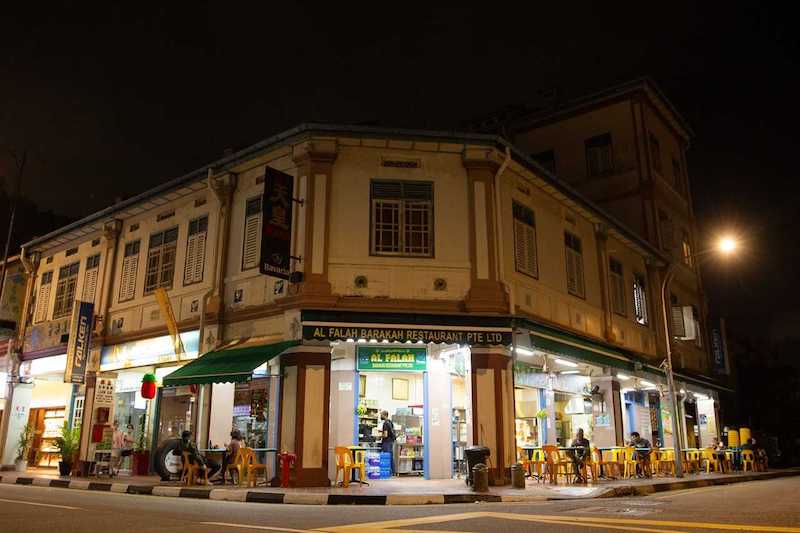
At Indian-Muslim restaurant chain Al Falah Barakah, business partner Mohamad Ali, 57, said he is considering shortening operating hours at the chain’s 24-hour outlet at Joo Chiat Road after the restaurant’s electricity bills rose more than 50 per cent over the past three months.
“If there are no customers after 11pm or 12am, maybe we’ll close early,” he said. “We’ll have to come to a decision whether to continue running 24 hours or cut short the hours to save electricity.”
Electricity bills have been growing even for some eateries that have not switched electricity providers and have been buying power from SP Group all along.
When Ken Lew, 40, got his bill from SP Group on Wednesday, he was shocked to be billed more than S$7,000 for electricity at his coffee shop at MacPherson when it used to cost only about S$3,000 per month last year from the same retailer.
“It affects not only us as the operator but also the stall owners. My stall owner used to pay S$400 for electricity but now has to pay S$800 — that’s at least 300 bowls of noodles,” said Mr Lew, the owner-operator of M171 Gourmet Street Coffeeshop.
ABC Restaurant Group’s business development manager, Andrew Karthikeyan, 36, said that electricity costs across the group’s 17 outlets have jumped threefold since December last year. The group, which runs several 24-hour outlets, has not made any changes to operating hours and food prices.
“At this moment we can’t raise the price of food because residents and consumers are not open to it so management has been taking it on themselves,” he said.
In the coffee shop business, where profit margins are small, the higher electricity costs as well as the rising cost of raw materials have put the group’s development and renovation plans at a standstill.
“It’s a game of holding on for as long as possible,” he said.
Lim, the manager at Pin Si Kitchen, said that the company will continue to sell food via delivery and frozen food online from its Woodlands headquarters even as it shuts its restaurant at Safra Yishun.
She said that the company will continue to search for a new electricity retailer as it plans to make a comeback to the restaurant business.
In a Facebook post on Monday announcing the restaurant’s closure, the company wrote: “This is not a ‘goodbye’, but a ‘see you again soon’.” — TODAY


