


DECEMBER 2 — I recall giving a talk at a secondary school in Subang Jaya years ago.
It was on stress management. Before the person in charge introduced me, she did something breath-takingly counterproductive: She told the students their entire future would be in dire straits if they didn’t do well in their SPM.
I mean, seriously? You want to say that kind of thing right before a talk on reducing and managing stress?
Isn’t that like feeding me a ton of doughnuts just before I attend a seminar on healthy eating?
However, the bigger tragedy is that such discourses and mindsets happen millions of times in Malaysian schools every day.
Coupled with the fact that approximately one million individuals aged 15 years old and above were found to be suffering from depression (according to the National Health and Morbidity Survey 2023: Non-Communicable Diseases and Healthcare Demand) this becomes a matter of grave concern.
In our town, academic culture (especially within an Asian context), anxiety goes hand in hand with achievement. Our schools are the first institutions in which a child gets immersed in an environment of worry.
Just like what happened in that Subang Jaya school, I’m tempted to say that schools explicitly instruct children and students to worry.
Worry about your future. Worry about not performing well enough. Worry about not being smart enough.
Worry about the government exams. Worry about getting into the best classes.
Worry that your friends will do better than you. Worry worry worry! If you’re not worried, there must be something wrong with you!
Isn’t this why many of the top students in educational institutions are also among the worst worriers?
Isn’t it revealing that the worst performers in class are often the most relaxed individuals, whereas the top five per cent “professor-material” folks always seem to be about three steps away from an emotional breakdown?
Are we also, therefore, shocked when schools are often the epicenter locations for mass hysteria in our country? (see Note 1)
To be clear, at no point do I wish to disparage how much teachers and principals have strived and worked for their students.
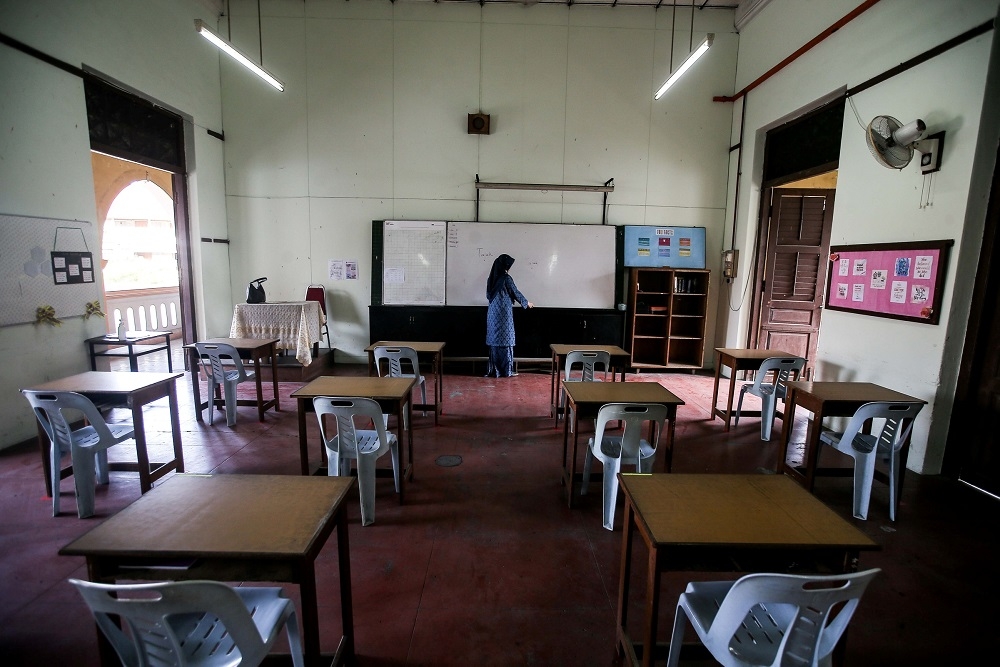
One could even say that given the stakes involved, some amount of worry may be necessary.
Still, I suppose the question I’m raising is whether a culture of worry is necessarily the best form of environment to learn?
Do you remember the movie Monsters, Inc? In that show, a community of monsters had to extract screams from children to produce energy to run their city.
The “top dog” among the monsters was whoever was able to scare kids the most so he or she would yell in terror and fill the energy tanks.
The creative twist at the end was how it was eventually discovered that laughter produced more energy than screams.
So I’m guessing the key perennial question is: What produces better learning and more adaptable students? A culture of worry and fear or one of, say, enthusiasm and joy?
Note 1: The astute observer would notice that my concerns apply mainly to university and secondary school, somewhat less so to primary schools and almost not at all to kindergartens (which, I’m glad to say, are practically the opposite of worry factories).
* This is the personal opinion of the columnist.


