


OCTOBER 2 — It’s a curious spectacle. The abuse rained down on Transport Minister Anthony Loke over his take on child seats or child restraint systems in the wake of the Bukit Kajang Toll crash on September 27, 2025.
The minister, unlike most of his colleagues, is willing, literally, to die on the hill by refusing to recant. He feels it needs to be said, perhaps even more because of the tragedy.
On a Saturday morning, a three-tonne lorry allegedly with failed brakes careened into three private vehicles at the toll plaza, injuring eight and killing one, a year-old toddler. Amir Husayn Amirul Ridzuan has since been laid to rest at Sungai Kantan Muslim Cemetery.
The public perception is that rather than directing his ire at the lorry — its brakes, its owners, its inspection regularity or its driver — the minister turns his attention to Amir Husayn not secure in a child seat. It is offensive for Loke, in their learned view, to campaign for compulsory use of child restraint systems after a tragedy.
Dominant is the sloppy-think that to question safety aspects observed by the vehicle occupants is to excuse the lorry’s destructive role. Three cars would not be swatted aside if it was not a three-tonne lorry which barged into them. The lorry is not being exempted, defended or explained. The inquest by the Road Transport Department will inform law enforcement and advise on next actions.
But since the tragedy, millions of children below 12 have been transported all over the country. In five days, more than 7,500 motor accidents are expected to have occurred with 70 fatalities. In how many of those accidents were children involved and ended up as fatalities?
Already this year, this column spoke about the post-Raya Haji Kedah crash which killed undergraduates and unbuckled FRU personnel killed in Perak. The safety debate is not moot. It is urgent.
The minister’s urgency is praiseworthy, and not fit for castigation. Far from it.
What better way to honour the dead than to commit to actions to stop it from happening again?
The transportation of goods and misery
This is not a place to miss the forest for the trees.
Loke and his party DAP are aware that the business of transporting people and goods involves plenty of their supporters. That lorry is part of that chain.
The Malaysian people should also be made aware that their daily lives carry on pleasantly because of these transporters. From commercial vans to trailers. Buses which help us be together during festivities. Lorries which fill up supermarket and store shelves.
There is a symbiosis between providers and recipients, and every measure to up safety — newer vehicles, stricter SOPs, substitute drivers, housing and unionisation — costs, affecting the bottom-line.
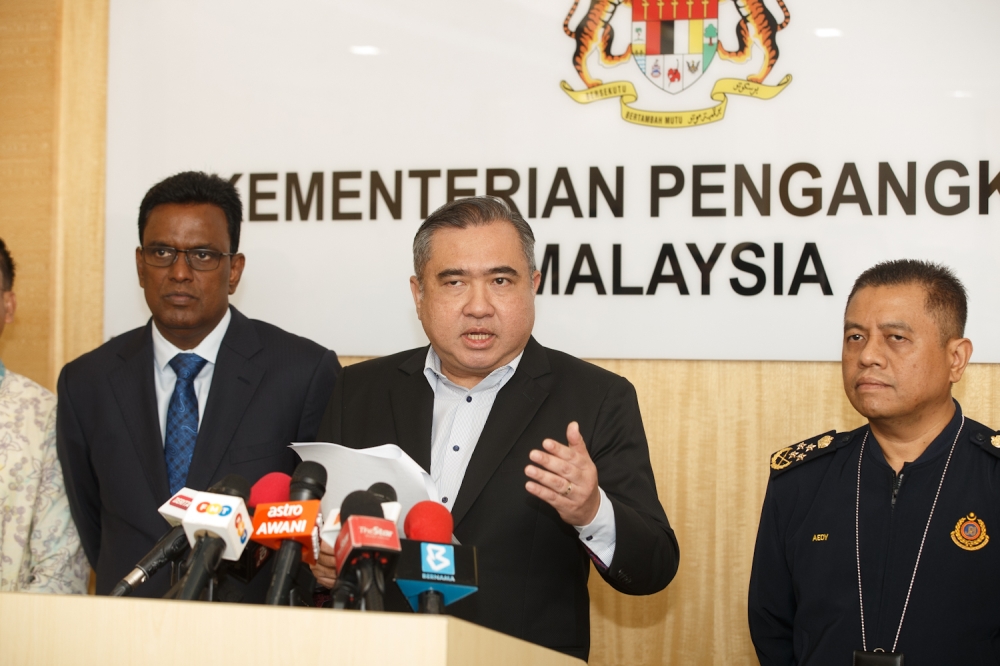
This column points to the paradox faced by a party which champions a minority which has a large economical stake in the transportation business. Go too hard, and DAP risks upsetting its friends. But the result of doing nothing is a higher death count. The number one minority party of the country has to find its own equilibrium.
Balance is where all of it sits.
It’s our interest not to jeopardise our logistics industry. As it is also in our interest to have safe roads since we use them.
The children need the adults to be adults
Two things can be true at the same time. While the efforts to regulate commercial transportation continue, the larger community can do its job.
Amir Hasan Amirul Ridzuan was discharged from hospital the same day of the crash. He is 15 seconds older than his deceased twin. His brother was flung out of the vehicle during the collision. It is unclear whether Amir Hasan was in a child seat but statistics support that both would have a higher chance to remain inside the vehicle if they were restrained.
The Malaysian Institute of Road Safety Research (Miros) issued a statement post-crash that properly installed age-appropriate child seats cut mortality rates for children below four by up to 71 per cent.
Young children cannot make determinations, that is the role of the adults supervising them. Child seats are within the realm of adults doing right by the children. Few toddlers are excited about reduced mobility when inside a motor vehicle. Fewer adults are excited by dead toddlers, especially their own. It’s time the adults acted like adults and protect the young with child seats.
Malaysia’s low child seat compliance is criminal.
A campaign to enforce it surely will annoy millions of Malaysians. I cannot ignore the feeling that many who attacked Loke are guilty of not using child seats for their own children. It is far more convenient to deflect than to own up.
Reminds me of how my friend explained to me about why he does not use a seatbelt when he drives. He said you only have to worry about them if you have an accident, otherwise you are OK. Since he is a super safe driver, he concluded with aplomb, it is unnecessary.
The premise to conclusion transition was a very eat my shorts, Aristotle, moment.
But it does explain how road safety debates in the country have been conducted, in misguided ways.
That other able cable just in case
Society is protected by us confronting all our weak points. So that there are redundancies which act as buffers.
Like how hoist cables serve elevators.
There are four to eight hoist cables which support any given elevator. Usually, six. Each cable can support the lift unit on its own. The other five are redundant. But they are cared for and maintained as diligently. The goal is to have all six in the best working condition at all times.
Although only one is necessary, lifts or elevators vertically transport humans. If all six cables fail at the twentieth floor, all occupants crash to the bottom. It’s a fiendish price to pay. Which is why requirements are stringent and demand functional cables, otherwise the lift is declared unsafe.
Improved and newer lorries, better trained drivers with adequate support, well maintained roads, emergency escape lanes, locating toll plazas not at the end of a lengthy downward slope and yes, adults buckled-up with children strapped in their child restrained systems, are all different hoist cables which keep our roads safe.
When all are in place, the likelihood of all of them failing simultaneously is remote.
That is no guarantee the unimaginable can still happen. But in our scenario, a far larger number of young people who ride in vehicles live to be adults. For that only, it is a hill worth dying on, Loke.
* This is the personal opinion of the columnist.


