

JUNE 26 — Your protests, better than mine?
The students from Universiti Malaysia Sabah, maligned for their pyrotechnic antics in Kota Kinabalu over the weekend, tossed back the question to national leaders.
Those who characterise the Kota Kinabalu protest as foreign to local customs and rife with offensive behaviour, therefore wholly unacceptable, might want to remember — not too long ago they too were accused of the same sins.
Back then, not ancient history, Pakatan Harapan leaders lined up with civil society leaders to protest. The Badawi and Najib administrations labelled them then as dangerous and a threat to the Malaysian way of life.
And just to add the cherry to the cake, the students unfurled a picture of the prime minister as a student leader joining others to light up their own protest in the early 70s, the Razak administration.
To the prime minister’s credit, he asked the government to stand down.
Protests here, protests there
Twenty-one years ago, in the Badawi era where few had the appetite for protest, my letter to the editor read this, “The change we seek, may only be found in the marches we make for freedom.”
The subject recurs, protest.
In view of the SST, subsidy rationalisations and strings of court cases pending, the people’s voice is firmly on the agenda.
The thing is, and often it's a misconceived notion, the assumption is the people’s voice is singular. It’s not.
A bunch over there want to say this, and the bunch at the other end say the complete opposite, and both welded to their thinking. And a slew of people in the cusp, overlaps and partial support to views and stands. A democracy is a marketplace of ideas equally respected, by the law.
A classic display was shortly after the first change of government in 2018. Those aligned to deposed prime minister Najib Razak were loud. And so were those in vociferous anti-Najib groups still celebrating his demise.
Umno Supreme Council member Lokman Noor Adam and friends charged at those protesting Najib speaking at Universiti Malaya on March 22, 2019. They were later charged in court.
Protest and violence, they are neighbours, let’s not kid ourselves.
When emotions are physically gathered, there is every chance of trouble. That is just human nature.
There is the other side of the coin. This column stated “the right to protest is sacred. It has its downsides but without it democracies suffer.” That was eight years ago.
Which is why Article 10 of our Constitution spells out our right to associate, to speak out. Which is why our civil servants, law enforcement especially together with local councils, must assist with protests, not impede them.
The government’s new challenge is to facilitate the people’s voices, not adjudicate them. It is for the rakyat to view these protests, these exclamations of objections or support. There is no right or wrong reasons for protests, just whether there are those who are willing to join it and accept to operate with civility.
Rules are drawn, and referees have to be firm but fair.
They must restrain from striking at the weakest chains of gatherings. For it is too easy to do.
If 10,000 assemble to say they do not like Najib, today, to remain in prison and want him in house arrest conditions, there will be 10 who will seriously misbehave. That’s not poor discipline, that’s just expected. Idiots are everywhere.
To judge the many on the very few is to act in bad faith. This is the same for any protesters, that they exhibit weaknesses.
They who choose to stand out
But they will protest every week!
No, they won’t. In any country, to get action out of the people who spend 70 per cent of their non-working/family time looking down at a smartphone sits squarely in the improbable zone.
It's a bummer to spend a day out to support an idea, a position.
There’s the iconic picture of Anwar Ibrahim standing outside in the city in the days after his sacking from government in 1998. The masses standing there in and around Dataran Merdeka.
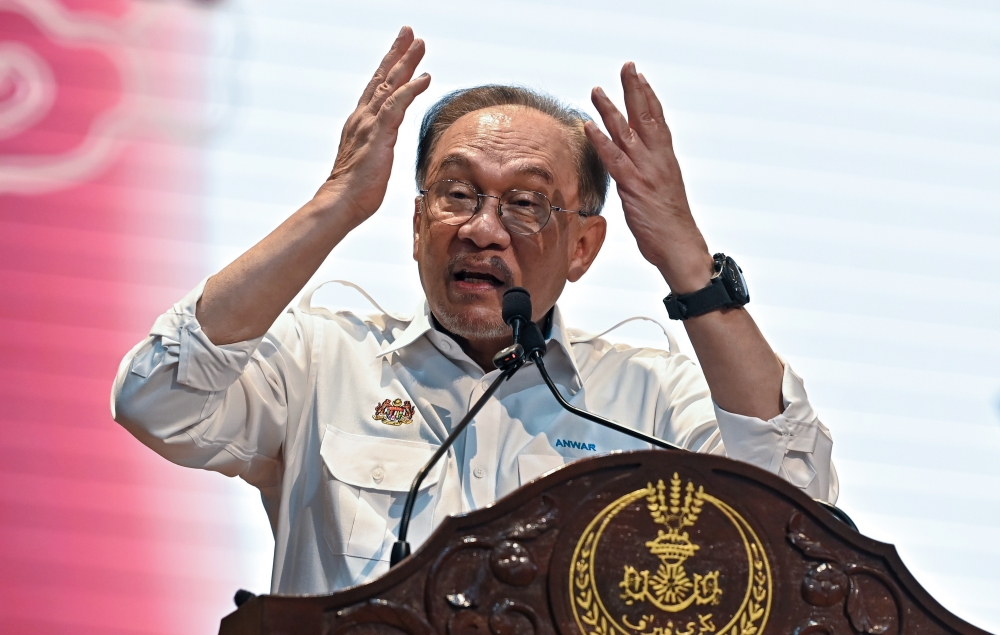
Anwar is prime minister, and that long road to the office was not by accident nor without the people. The people in the background, the unnamed faces were the wind for his sail.
It is easier to convince the ambitious to fight for power.
It is tricky to invite the indifferent to show up for the eventual benefits of others.
They say no.
They ask, what will happen to me if the protest goes south?
They might ask, as in the case of the students with Suara Mahasiswa UMS, are we risking 17 years of education, from primary to a bachelor’s degree, just to say NO to the prime minister.
The student leaders may end up as MPs or even ministers when co-opted by the very people objecting to the demonstration. But for the regular dudes and dudettes making the numbers, standing up to show conviction?
Not everyone ends up as Anwar, Adam Adli or the just freed from criminal charges, Syed Saddiq Syed Abdul Rahman.
To risk expulsion from university and social condemnation from friends and family just to attend a protest. To have a PTPTN loan and only a cashier job to pay for it because the engineering degree has gone bye-bye.
The jeopardy is grief-stricken just thinking about it.
There were no national protests in my undergraduate days in Bangi. I attended them in Manila when I lived there later. But would I have if Bangi roared back then against Mahathir Mohamad? The working-class kid from Cheras choosing to gamble his degree, his future?
I cannot answer for sure. There were union and socialist protests, squatter evictions, small screams of injustice and I did not show up there in the early 90s. There are those who did then, and still do today.
Circumstances are different today, but the risks are always the same. So, for those young people to stand up regardless if most Malaysians agree with their opinions, full props to them.
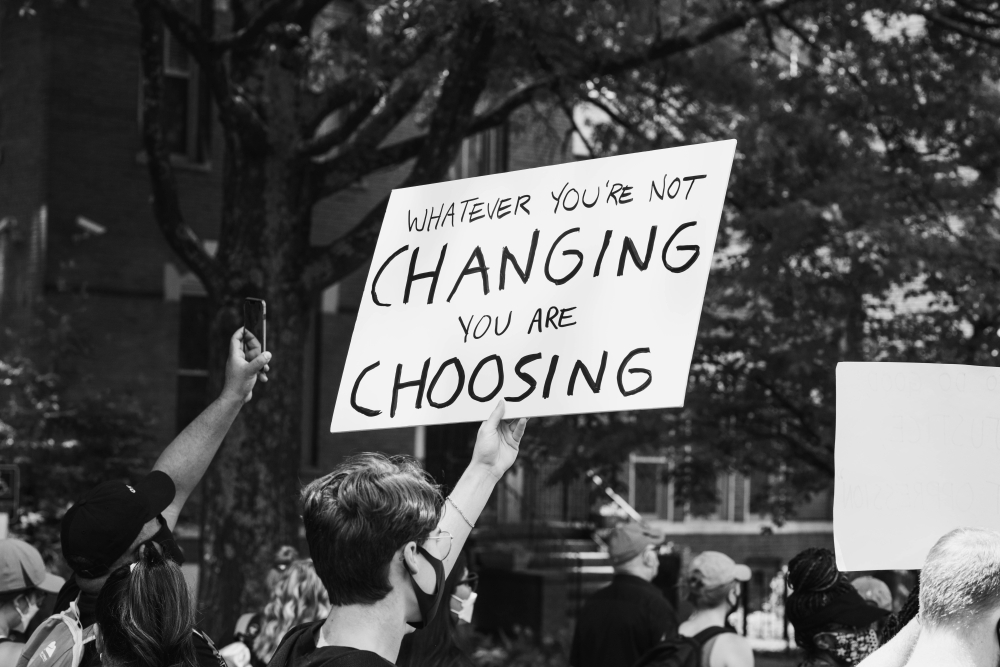
It takes a lot to believe. It takes even more to stand for what you believe.
At a time, this country is confronted by so many uncertainties, letting young people with courage and character carry on with their journeys with our explicit or implicit permission is not the worst outcome.
They are the ones we might turn to in the future. Because they have experience, to stand up, not cower in the corners, even in the face of danger.