


KUALA LUMPUR, March 23 — The Philippines, Vietnam and Malaysia are the top three Asean countries most exposed to supply risks stemming from the West Asia conflict, as the region continues to depend heavily on crude oil from the Persian Gulf.
However, Malaysia stands out as a net energy exporter (1.1 per cent of GDP in 2025), a position that will help cushion the impact of West Asia shocks.
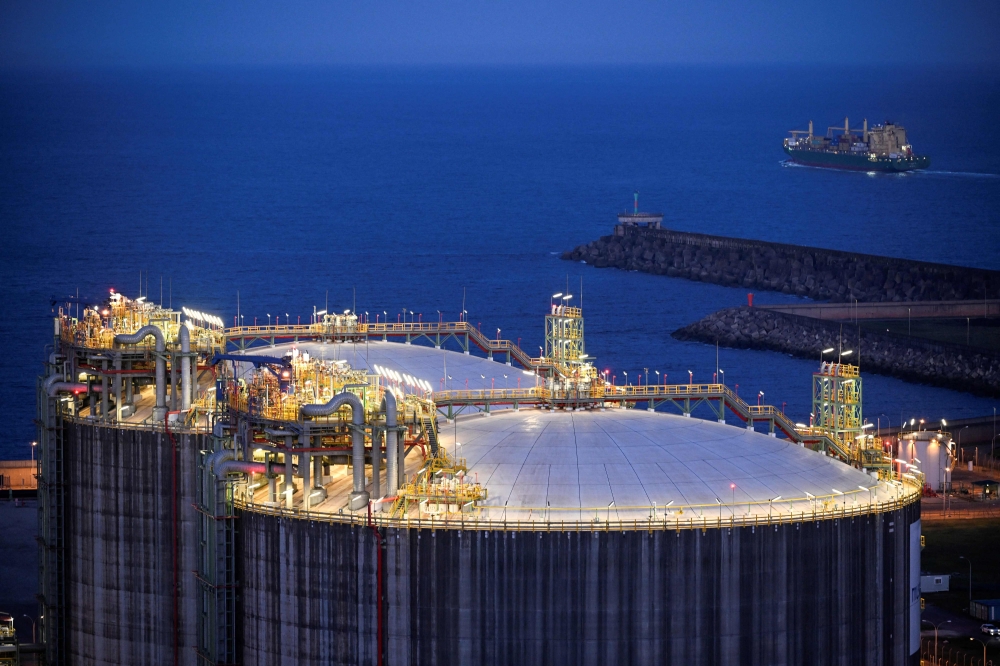
A large share of the crude oil and liquefied natural gas (LNG) shipments passing through the Strait of Hormuz, which is now directly affected by the ongoing conflict, is destined for Asia, with China and India accounting for the largest share of these flows.
In a research note, Maybank Investment Bank (Maybank IB) said among Asean countries, the Philippines’ crude oil import exposure stands at 95 per cent, followed by Vietnam (88 per cent), Malaysia (69 per cent), Thailand (59 per cent), and Singapore (52 per cent).
It said, however, that Indonesia has a more diversified import profile, with 20 per cent of its crude sourced from Gulf countries.
“The Philippines is considered the most vulnerable, given its near-total reliance on imported oil and its overwhelming dependence on Persian Gulf suppliers,” it said.
Compounding these risks is China’s move to curb exports of refined petroleum products such as diesel, petrol and jet fuel, said Maybank IB.
While most of its output is consumed domestically, China exported 5.8 million tonnes of refined products in 2025, with key markets including Singapore, Vietnam, Japan and South Korea.
In Malaysia, government subsidies have risen from around RM700 million to RM3.2 billion in less than a week following the surge in global oil prices caused by the conflict in West Asia.
It has recently increased the unsubsidised fuel price to match the increase. However, subsidies for the general public remain through Budi Madani RON95 (Budi95) and Budi Diesel.
On other developments, Maybank IB said Singapore plays a critical role as a leading international jet fuel hub, making any disruption to refined product flows particularly impactful for regional supply chains.
In terms of diesel imports, Singapore has the highest dependency among Asean countries, sourcing 16 per cent from Gulf nations. Indonesia follows at 8.4 per cent, while Thailand stands at 6.8 per cent.
Maybank IB said the region’s reliance on external energy sources underscores its exposure to supply shocks, particularly in scenarios where major producers or refiners impose export restrictions to safeguard domestic needs.
“As for gas, Vietnam is the most dependent, with some 49 per cent sourced from Gulf countries.
“Most of this is reflected in Vietnam’s liquefied petroleum gas (LPG) imports, with around 70 per cent originating from the Middle East,” it said.
Meanwhile, the Gulf accounts for 37 per cent of Indonesia’s gas imports, with Gulf-produced LPG accounting for 30 per cent of total imports.
Thailand imports 28 per cent of its gas from the Gulf. Singapore imports about 17 per cent of its gas from the Gulf; specifically, nearly a quarter of natural gas imports came from Qatar. Singapore relies on natural gas for 95 per cent of its power generation needs.
Beyond oil and gas, Maybank IB highlighted that the Persian Gulf is a major global source for several critical commodities that feed directly into petrochemical, mining, construction, transport and agricultural supply chains.
Thailand is heavily reliant on nitrogen fertilisers from the Gulf, with Saudi Arabia its biggest supplier, it said, adding that 67 per cent of Thailand’s nitrogen fertiliser imports were sourced from the Gulf (as of 2024).
“An even larger 74 per cent of urea fertiliser (the most widely used nitrogen fertiliser) came from the Gulf countries. Other Asean countries are less dependent on Middle Eastern nitrogen fertilisers, with the Philippines (10 per cent) and Malaysia at seven per cent,” Maybank IB said. — Bernama