


KUALA LUMPUR, March 23 — Cable thieves are becoming increasingly sophisticated, though not quite reaching Money Heist-levels in targeting rail infrastructure, causing widespread inconvenience for commuters and complicating authorities' efforts to curb a crime fuelled by a global electrification boom.
Unlike a cinematic heist, these criminals are not after money bags — their real prize is the highly sought-after copper inside power cables running along Klang Valley’s sprawling 207.5km-long mass rapid transit network.
In recent years, these criminals have escalated from stealing low-risk earthing cables to targeting live cables, putting their own lives at risk while creating serious hazards for passengers and disrupting train operations through power outages or signal failures.
“In the past, they used to steal many earthing cables. These cables don’t usually impact operations directly, but without them, you cannot dissipate voltage to the ground when lightning strikes.
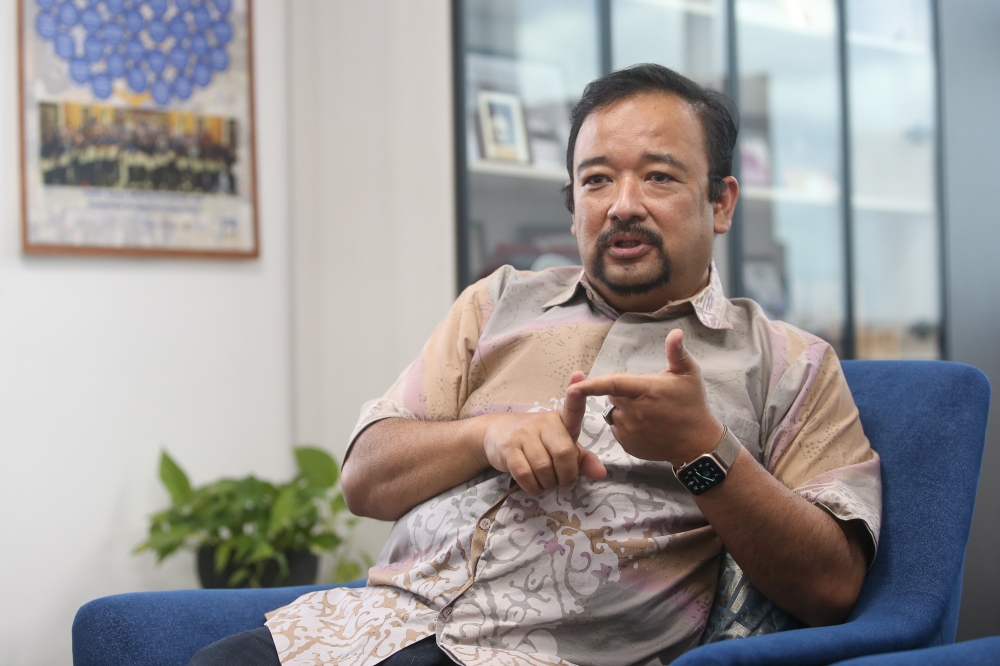
“What we have noticed is that since last year, they have already started attacking the power cables that power the trains,” Prasarana Group chief health, safety, security, environment and sustainable development officer Idzqandar Abu Bakar told Malay Mail in a recent interview.
Striking gold with copper
The surge in copper prices — fueled by constrained global supply and rising demand from electrification and data-centre projects — is a primary factor behind the thefts.
Reported cable thefts have steadily climbed since 2023, rising from 29 cases in 2023 to 42 in 2024, and reaching 72 last year — with Prasarana’s losses and damages estimated at RM6.63 million, while reinstatement costs reached RM7.03 million in 2025 alone.
In just the first two months of 2026, 14 incidents have already been recorded, underscoring growing concern, Idzqandar said as Prasarana ramps up both security and manpower to curb the rising thefts despite environmental hazards and resource constraints.
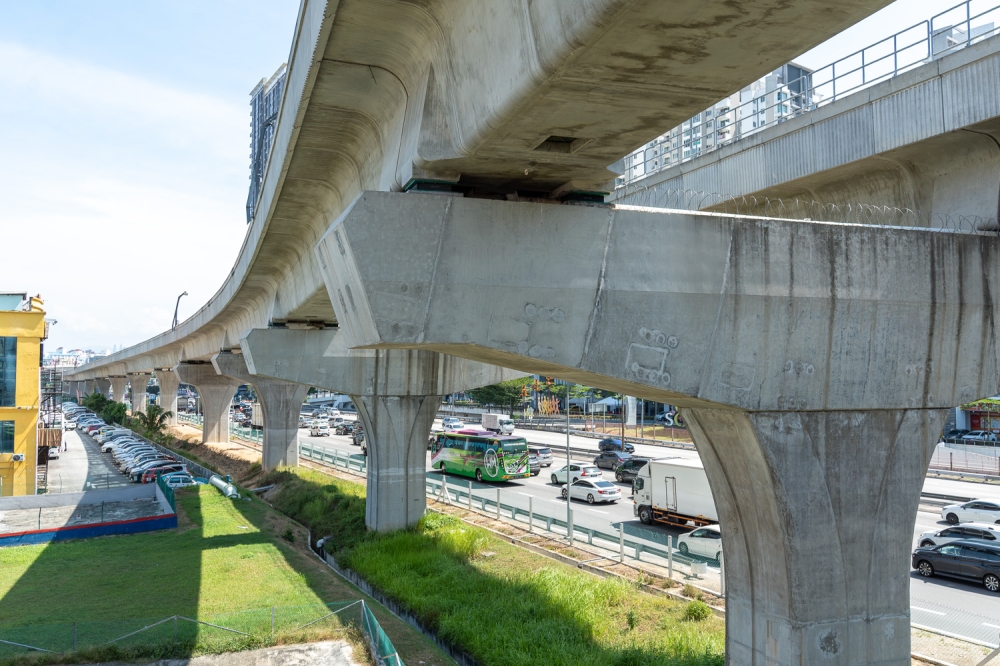
He said Prasarana saw a huge spike in January — 10 cases in total for both the MRT Kajang and Putrajaya Line — after thieves altered their modus operandi, exploiting new entry points along the rail lines, including ground breaches, hillside access, low piers and adjacent infrastructures.
Sophisticated and well-prepared
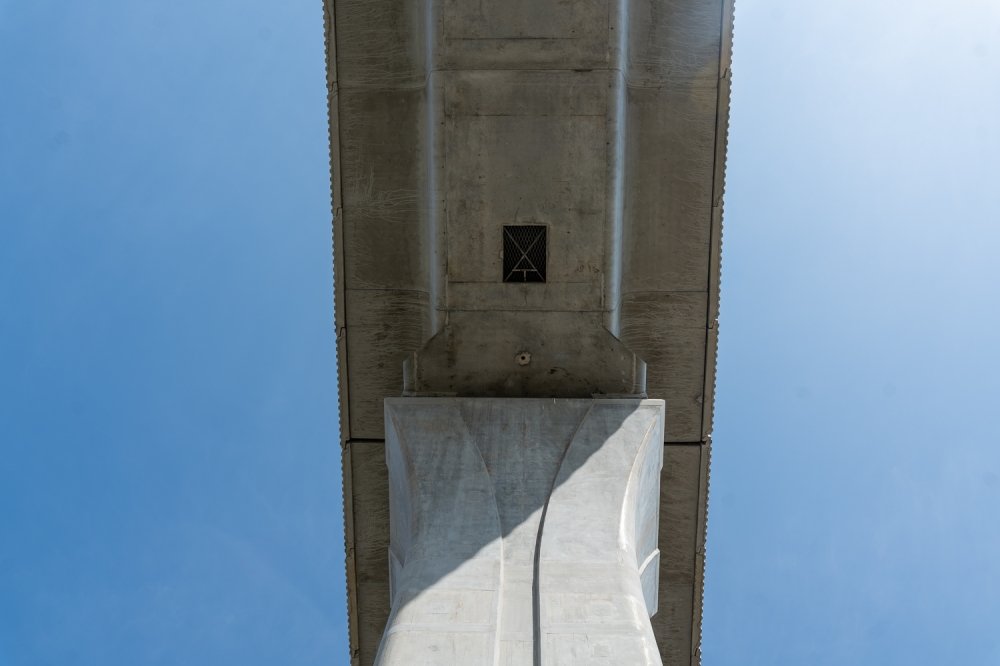
Once inside the rail infrastructure, Idzqandar explained, thieves enter the viaduct system — hollow structural sections beneath elevated tracks — through small openings on the underside of the concrete structure, using these confined spaces to move unseen and remain hidden at all hours.
They would then camp out for two to three days, lying low in hopes of evading security patrols that might have detected signs of trespassing.
"We found mattresses, instant noodles, drinking water and clothing, so we know they have been camping inside (the vertical crawl space between the adjoining pier sections).
"For us, this area is not easily accessible because of the risk of oxygen deprivation in the tight spaces," he said.
"Once you gain access (to the viaducts), you are no longer visible and then they wait for the right opportunity to emerge from the covers before climbing up to the elevated tracks at night.
Idzqandar said security measures such as barbed wire, locks and spikes have done little to deter the thieves, who simply ‘brute force’ their way through the installed barriers with their array of tools.
“We put up anti-climb fences, they cut them. We put barbed wire, they cut that too. Even when we install spikes, they remove them.
“And there are limitations to where we can place barbed wire or razor coils because they could endanger others, especially motorists, in the event of a collision near our tracks,” he said.
Canine counter measures
Since last September, the company has deployed a dedicated K9 unit — 18 dogs in total — trained to flush out concealed tools in undergrowths and detect unauthorised individuals in viaducts during routine sectorial patrols conducted at night, most of which are carried out by its auxiliary police personnel.
The specialised dogs were deployed following 14 reported cable theft incidents in a month, five of which disrupted operations last August.
“We tried, even with a robotic dog as a pilot initiative, but it is not effective because the viaducts have uneven and confined spaces; while the K9s also cannot remain in them long due to dehydration from the heat.
Nevertheless, Idzqandar said additional spotlights and closed-circuit television (CCTV) systems installed in theft-prone areas since last September, along with other mitigation measures, have helped foil several attempted thefts.
Since last November, several permanent roadblocks have been erected at identified hotspot locations to prevent vehicles from collecting stolen cables at trackside access points.
He added that instead of conducting patrols solely on the ground, K9 units are now also deployed along the elevated tracks to carry out security sweeps after trains are taken out of service during non-operational hours.
At times, some auxiliary police officers have had to work in harsh conditions, manning security posts along the extensive rail line at various points, including piers beneath elevated tracks and other remote locations with limited access to amenities.
“It’s a deterrent, but it will not stop them from stealing,” he said, adding that said measures are unsustainable long-term given the combined 116km stretch of the Kajang and Putrajaya MRT lines.
Long-term fixes underway
Idzqandar said Prasarana has held several engagement sessions with key stakeholders including MRT Corp as the asset owner and highway concessionaires, to discuss potential long-term actions.
He also said Prasarana has held similar discussions with federal and state law enforcement authorities like the Royal Malaysia Police to further strengthen preventive measures that has led to several arrests and attempts foiled over the years.
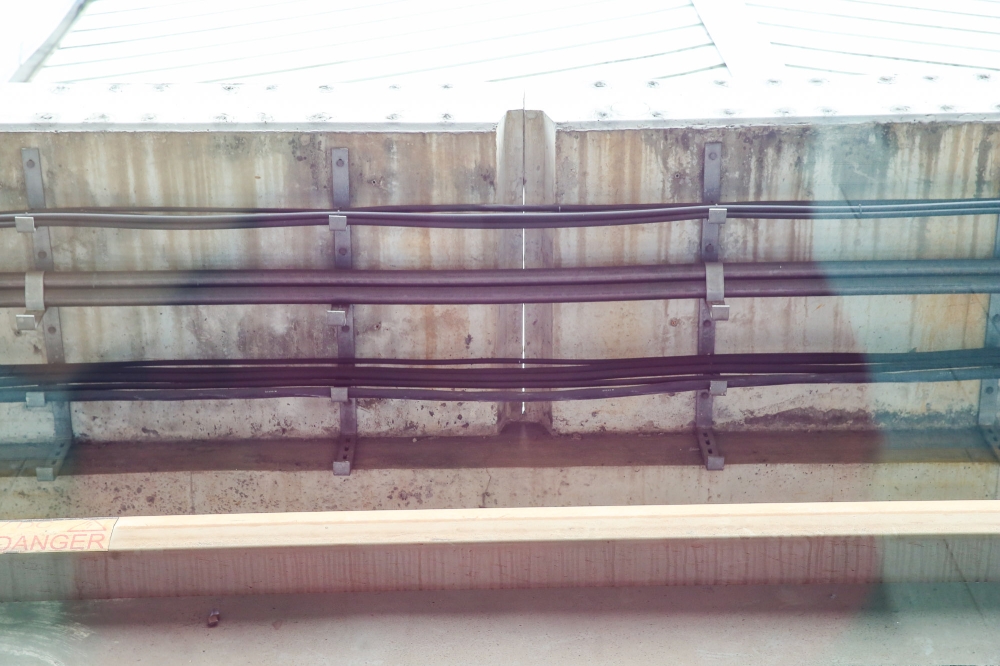
These measures include erecting barriers along highways adjacent to MRT infrastructure to make traversal more difficult, sealing off existing viaduct entry points and relocating stray current cables to composite metal hanger systems — upgrades that could take two to three years and cost hundreds of millions in refurbishment.
However, these long-term deterrent measures depend on government funding, and no implementation timeline has been confirmed.
But until then, Idzqandar said Prasarana Malaysia is focused on staying one step ahead of the thieves as they continue to adapt.


