










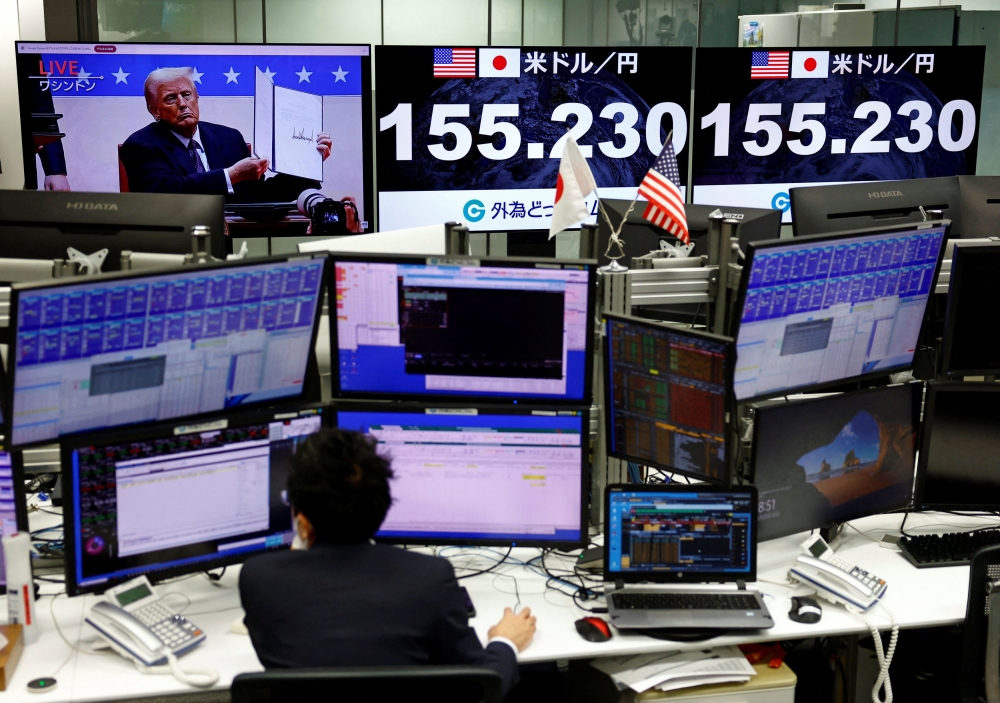
NEW YORK, Jan 21 — Financial markets swayed and wobbled at the beginning of Donald Trump’s second US presidency after he made a softer start on China than many had anticipated, but then signalled punitive tariffs on North American neighbours within hours.
A wave of relief that swept across markets — as his speech and slew of executive orders imposed no new trade levies — was stopped in its tracks when Trump told reporters in the White House’s Oval Office that he was thinking about 25 per cent tariffs on Mexico and Canada from February 1.
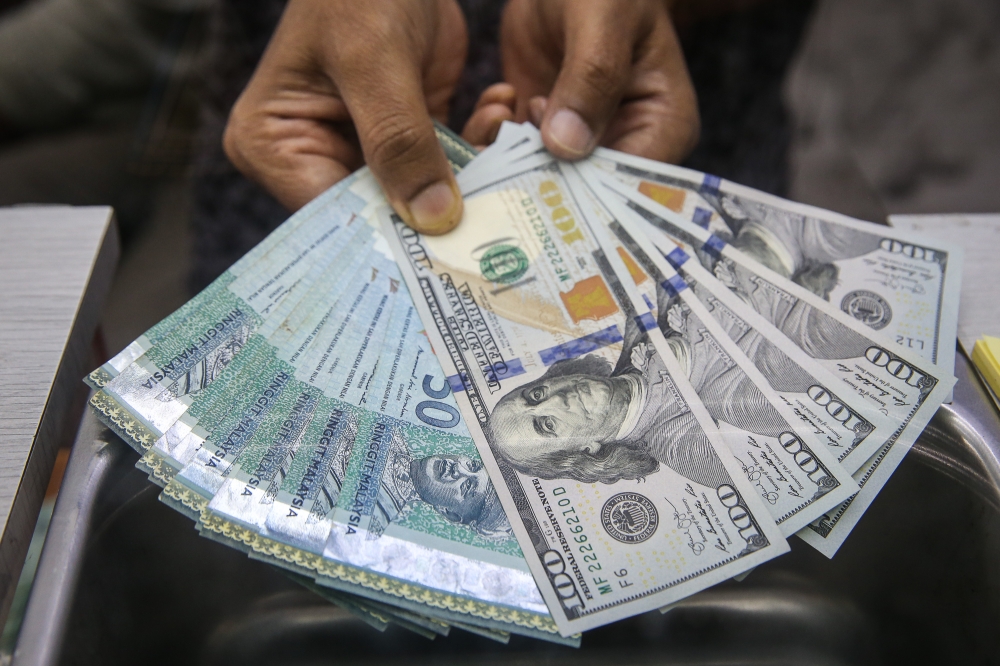
The dollar, which had slipped, reversed course to hit five-year highs on its Canadian counterpart.
Hong Kong shares rose, battery stocks fell and the trading day was a neat reminder of both the rollercoaster that markets rode through Trump’s first term and how, this time, investors feel more sanguine about the risks.
“Prepared remarks and what’s off the cuff — both of them will move markets,” said Tai Hui, chief market strategist in Asia at J.P. Morgan Asset Management, at a briefing in Singapore.
“Rather than basing all our investment decisions on what is announced...we just have to maybe take a step back and just absorb,” he said.
“What was said on the campaign trail...and what is now being studied and researched and implemented there’s still going to be a significant gap.”
Trump had vowed to immediately impose steep tariffs of 10 per cent to 20 per cent on global imports into the US and 60 per cent on goods from China, but a memo he issued after taking office only directed agencies to research and investigate the US trade deficits.
The dollar hit a five-year high of 1.452 Canadian dollars before steadying around CUS$1.44. It rose but stayed below last month’s highs on the Mexican peso.
Treasuries rallied and S&P 500 futures ESc1 rose 0.2 per cent. European futures STXEc1 slipped 0.4 per cent. Chinese stocks and the yuan tentatively rose.
“Tariffs are necessarily an overhang,” said Vis Nayar, chief investment officer at Eastspring Investments in Singapore.
“I think we should expect volatility. But there is hope that there is some pragmatism. We have to assume that he’s not going to do anything that just brings up US inflation without paying attention to that.”
Pro-business, but at a cost
Trump enters office with an ambitious agenda spanning trade, immigration, tax cuts and deregulation which has the potential to boost US corporate profits but which could also reignite inflation and put upward pressure on interest rates.
In his inaugural speech, Trump pledged to bolster the US oil, gas and power industries and to crack down on immigration.
He pardoned supporters who attacked the Capitol four years ago. He also withdrew from the Paris climate pact and declared an emergency to clear the way for more oil and gas production.
Battery stocks in South Korea fell after he revoked an order that had sought to ensure half of new cars sold in the US after 2030 were electric vehicles. A US holiday on Monday means that US equities will react on Tuesday.
“Most of what he has been talking about will help spur growth and corporate profits,” said Jack Ablin, chief investment officer at Cresset Capital.
“But many will come at a cost. We will need to see a lot of earnings growth to make up for even a minor increase in interest rates that could follow higher tariffs” and other proposals, he said.
Cryptocurrency markets, which have soared in the run-up to Trump taking office, came under pressure as the lack of any instant crypto-friendly announcements stirred some disappointment. Bitcoin, which came close to US$110,000 on Monday was trading around the US$100,000 mark and a Trump-branded memecoin that hit almost US$75 on the weekend fell to US$36.
During the first year of Trump’s first administration, the S&P 500 rose 19.4 per cent, following a 5 per cent rally in his first 100 days.
For the entirety of his first term, the S&P 500 rose nearly 68 per cent, but saw bouts of volatility, stemming in part from a trade war Trump fought with China.
“The big question on investors’ minds right now is going to be ‘how’ — how will he cut costs and lower inflation and lower interest rates,” said Josh Strange, president of Good Life Financial Advisors of NoVA, a financial advisory firm. — Reuters