


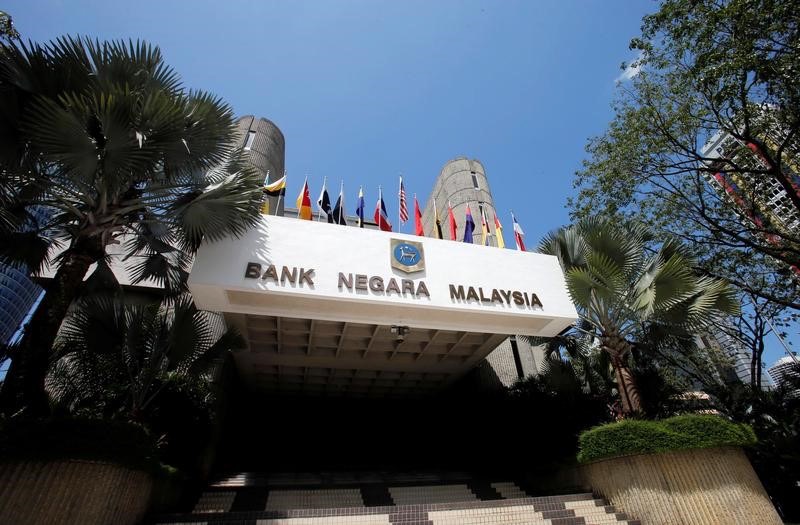
KUALA LUMPUR, April 12 — The model of international banking must evolve to become more desirable and beneficial for the needs of the future, said Bank Negara Malaysia (BNM) Deputy Governor, Shaik Abdul Rasheed Abdul Ghaffour.
He said the evolution was already taking place as international banking is now increasingly open to a larger group of market participants compared with previously when it was dominated by the elite few, in this case large global banks.
On the one hand, he said the circle of banks was also expanding, from large global banks to smaller regional banks.
“The world is also seeing a shift in the financial landscape through the usage of technology.
“Digitalisation is ushering in a new era, expanding the borders of international banking to now include non-bank financial technology (fintech) players,” he said in his opening remarks at the World Bank Group and BNM’s joint launch of the Global Financial Development Report 2017/2018: Bankers without Borders here Thursday.
Abdul Rasheed said these fintech players had the distinct potential of transforming global banking as it is known today; around US$13 billion (RM50.3 billion) was invested by venture capital players in fintech startups in 2017, the third highest annual total this decade.
Among these, he said the most impressive transformation was perhaps in cross-border payments.
“As fintech companies expand to other markets and enable seamless cross-border payments for other users, one can already imagine a future where one can travel the world with just a smartphone in hand.
“Not only that, another related consequence of such a future is that essentially, all we know of ‘international banking’ today could be performed without an actual bank,” he said.
Abdul Rasheed said a more regional and digital banking ecosystem could lead to increasing localisation, personalisation and efficiency of financial products and services.
While these are welcome developments, he said they had to be accompanied with the necessary financial education to enable safe and effective participation in the financial sector.
From the regulators perspective, it meant ensuring the regulatory and supervisory system was robust enough to cater to the evolving needs of the financial system, whilst at the same time safeguarding financial and economic stability, he added. — Bernama


