


IPOH, April 26 — Ipoh natives who work in neighbouring states are reducing how often they travel back to their hometown on weekends after the government capped RON95 fuel under the BUDI Madani Programme (BUDI95) to 200 litres per month.
Those who previously returned almost every weekend are now cutting back, as a single trip to Ipoh can push them beyond the BUDI95 eligibility limit.
People interviewed by Malay Mail said their overall travel costs have risen by about 20 to 30 per cent per month, depending on how frequently they travel to Ipoh.
Sarawana Raj, 37, a banker currently working in Selangor, said his travel costs have increased since the implementation of the 200-litre monthly cap.
“Previously, fuel expenses were more manageable under the subsidy, but exceeding the monthly quota now requires paying the full market price, which has added to my overall travel expenditure.
“My travel costs have gone up after the subsidy change, but the increase is less than 50 per cent, depending on how many trips I make in a month,” he said.
Despite the higher costs, Sarawana said he still prefers travelling back to Ipoh as spending time with his family remains a priority.
“I used to travel back to Ipoh two to three times a month, but now I tend to reduce my trips unless it is really necessary in order to better manage my expenses,” he added.
He also hopes the government will provide targeted assistance for frequent interstate travellers until fuel prices stabilise.
Tough choices
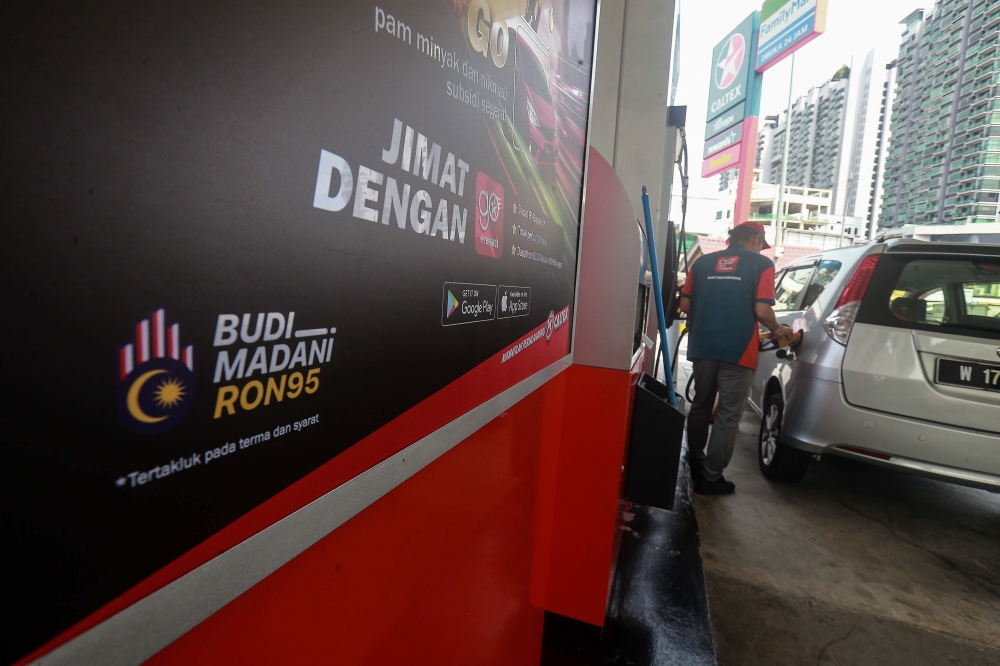
The BUDI95 subsidy programme was introduced in stages beginning September 27, 2025, before being fully rolled out nationwide on September 30, 2025.
However, the policy was later adjusted in response to rising global oil prices linked to the West Asia conflict, as well as fiscal pressures.
On March 26, Prime Minister Datuk Seri Anwar Ibrahim announced that the monthly quota would be reduced from 300 litres to 200 litres, with the change taking effect on April 1.
Similarly, Edwin Prashath, 31, who works in Kuala Lumpur, said his travel costs have increased by 20 to 30 per cent since the cap was reduced.
“Since I frequently travel between Kuala Lumpur and Ipoh, my monthly fuel usage can sometimes exceed the 200-litre cap.
“Once that happens, I have to pay the market price for petrol, which makes each trip back more expensive than before. When you include toll costs as well, the total travel expense becomes quite significant,” he said.
Edwin said he has considered alternatives such as using public transport for work, but noted that he still needs his car when travelling back to Ipoh to manage personal matters.
Judeus Bartholomew, 27, who works in the banking sector in Selangor, said he has started using his motorcycle for daily commuting to reduce fuel consumption.
“Right now, this is the best option for me as my overall travel costs have increased. If I use my car for everything, especially with Klang Valley traffic, I think my expenses could increase by more than 50 per cent,” he said.
He added that he now only travels back to Ipoh for urgent or important matters.
“I think twice before travelling back to Ipoh under the current situation. I even skipped attending my cousin’s baby girl’s first birthday because I had already exceeded my quota last month,” he said.
Judeus also said he is reluctant to rely on public transportation for important trips due to potential delays.
“If I take a bus or train, I have to get to the station earlier and wait, which is time-consuming.
“I once missed attending a prayer in Ipoh because the bus I booked was delayed by two hours. So for important matters, public transport still carries some risk,” he said.
He hopes the government will consider reducing toll rates by at least 25 per cent for frequent long-distance travellers to help offset rising costs.
More conscious spending
Meanwhile, a 40-year-old sales manager who only wanted to be known as Chew said he did not travel to Ipoh this month after exceeding his BUDI95 quota following a trip to Negeri Sembilan for a family function.
“My wife doesn’t have a driving licence, so I am the only one eligible for the BUDI95 subsidy. I also run a small business that requires frequent travel, and I’m now paying the market price for petrol as I’ve reached my limit.
“So this month, I decided not to visit my parents in Ipoh,” said Chew, who works in Penang.
Chew admitted he initially underestimated the impact of the subsidy changes, but is now feeling the financial strain.
“Starting next month, I will plan my travel more carefully and reduce outstation trips. If that doesn’t work, I may have to skip visiting my hometown for the time being until the situation improves,” he said.
A. Harvansh Rao, 38, said he has already begun planning his trips more carefully as his job requires frequent travel around Kuala Lumpur.
“Right now, just like financial planning, I am also doing fuel planning. I understand why the government had to make this decision due to uncertainties in the Middle East and possible economic shifts.
“We are entering challenging times, but we must be resilient enough to plan ahead and learn to say no to certain things,” he said.
Harvansh added that he will only travel back to Ipoh in emergencies if he exceeds the 200-litre limit.
“I still need to return to Ipoh for my loved ones in case of emergencies. However, I will try to reduce car usage by walking or cycling to nearby places.
“This way, I not only save fuel but also stay fit,” he said.
He also said he has adjusted his driving habits by maintaining optimal RPM levels, adhering to speed limits, and driving more patiently, especially on hilly roads, to improve fuel efficiency.
Similarly, Ili Aqilah, 37, a senior communications officer, said she now plans her trips more carefully following the revised quota.
“If I return to Ipoh once or twice, I don’t think it affects my BUDI95 much because the distance from my home to my office is only about 15km.
“Plus, I share the usage with my husband’s BUDI95, and so far we haven’t exceeded the limit,” she said.
“Our car’s fuel consumption also helps — it can go up to 18km per litre. It really comes down to how we manage our travel. If we plan to go back to Ipoh or balik kampung elsewhere, we reduce our other car usage,” she added.


