


- The Global Risks Report 2025 highlights economic downturn as Malaysia’s top risk, alongside concerns over labour shortages, inflation, food supply issues, and unemployment.
- Malaysia is identified as vulnerable to potential US trade measures, underscoring the need for strategic risk management to ensure resilience in a fragmented global landscape.
- Global risks highlighted include state-based armed conflict as the top immediate threat, environmental challenges dominating the long-term outlook, and misinformation eroding societal trust.
KUALA LUMPUR, Jan 17 — The latest World Economic Forum’s (WEF) Global Risks Report 2025 released recently has listed economic downturn such as recession or stagnation as the biggest concerns faced by Malaysians.
It also flagged Malaysia as one of the countries at risk of being targeted by United States trade measures, highlighting the importance of strategic risk management to ensure the country’s resilience.
“Rising geopolitical tensions, a fracturing of global trust and the climate crisis are straining the global system like never before,” said Mirek Dušek, Managing Director of the WEF.
Dušek stressed the urgency of fostering collaboration to build resilience, warning that “the stakes have never been higher” as interconnected crises demand coordinated action.
The report also highlighted four other top worries of Malaysians from its survey:
- Labour shortages
- Inflation
- Food supply issues
- Unemployment or lack of economic opportunity
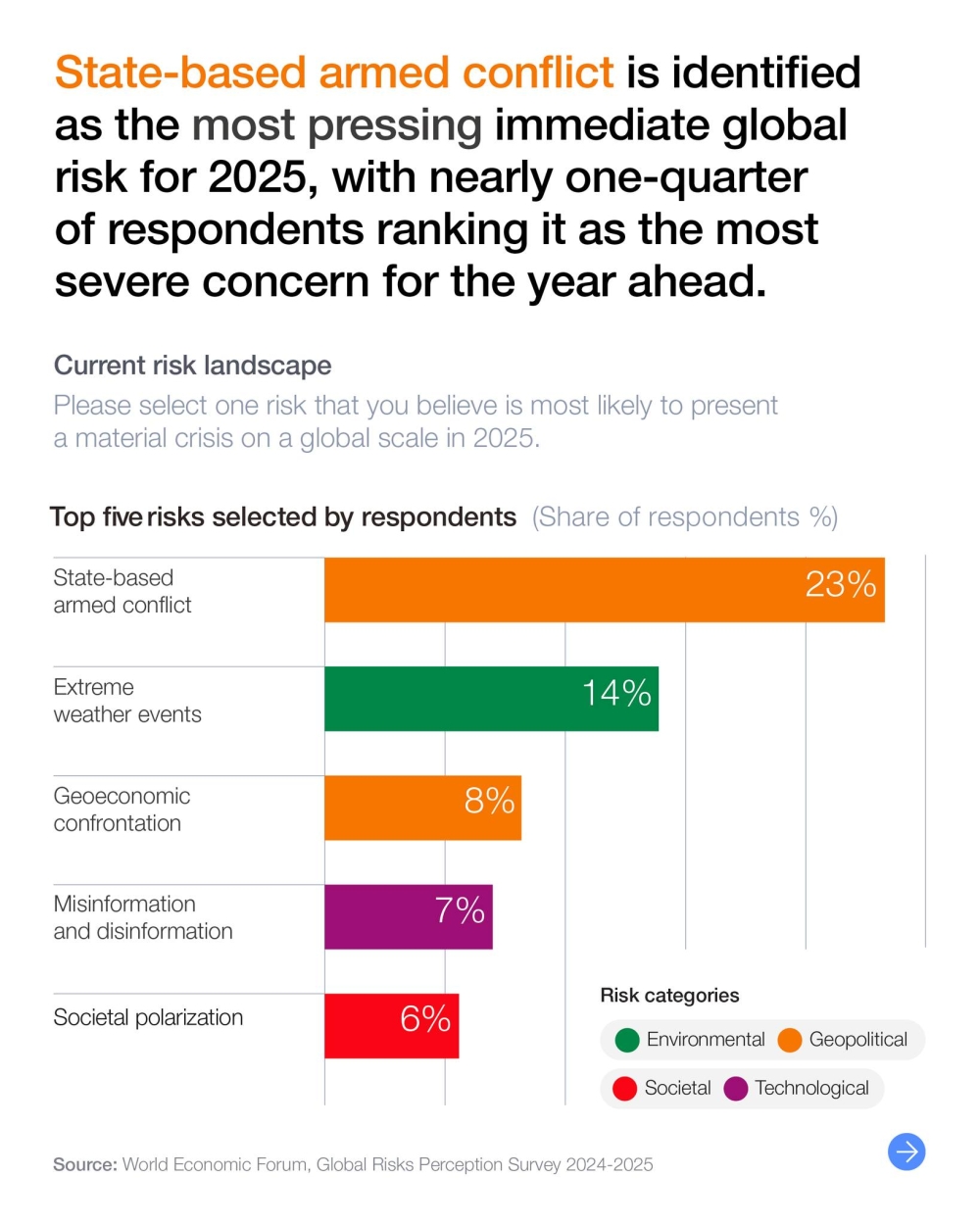
This comes as the report identified state-based armed conflict as the most pressing immediate global risk for 2025.
Nearly one-quarter of respondents ranked geopolitical tensions as their top concern, showing the increasing fragmentation of global systems.
Mark Elsner, Head of the Global Risks Initiative at the World Economic Forum, emphasised the need for renewed collaboration.
“From conflicts to climate change, we are facing interconnected crises that demand coordinated, collective action,” he said.
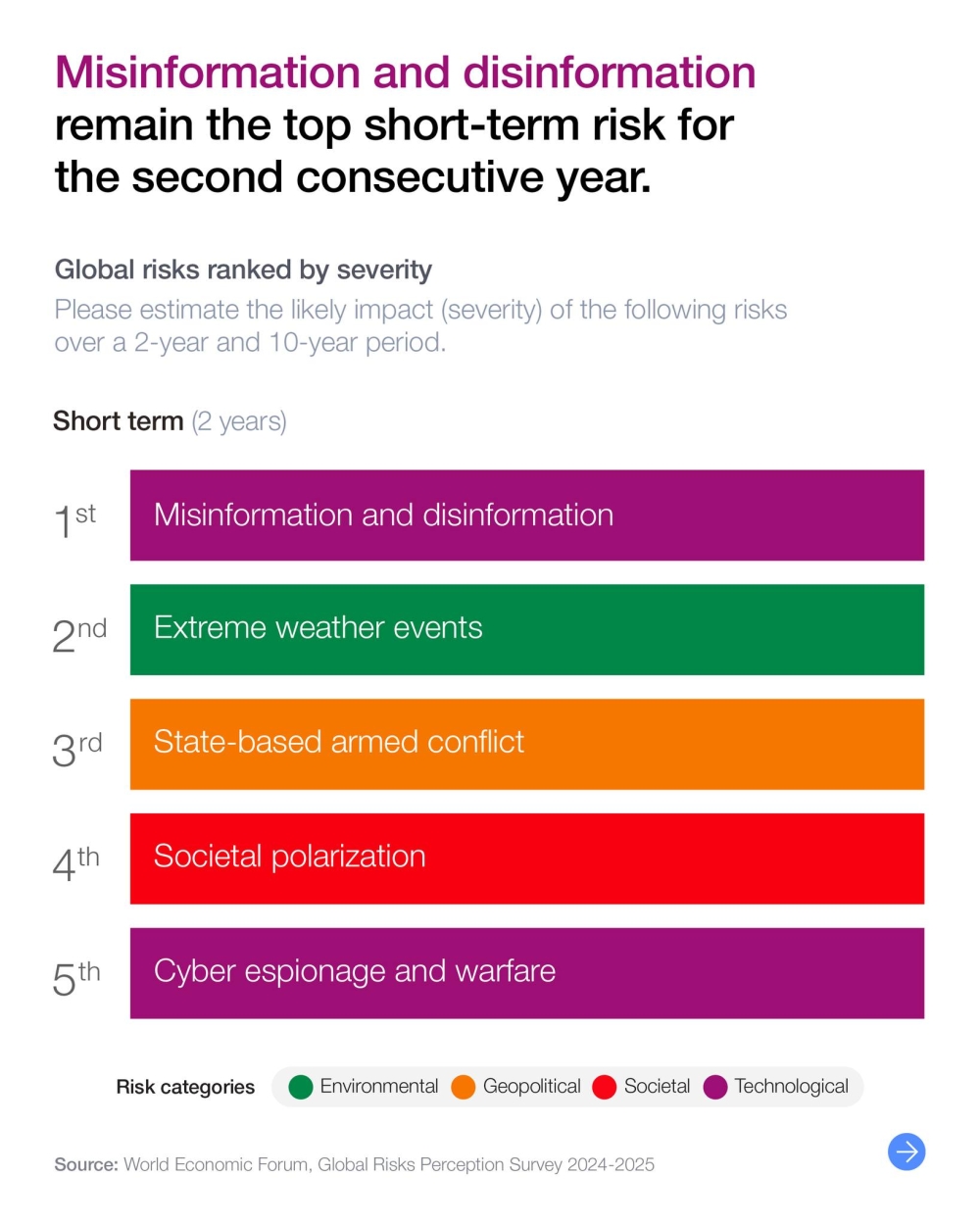
The report, based on a survey of over 900 global experts and policymakers, also named misinformation and disinformation as persistent short-term risks, threatening societal cohesion and trust in governance.
Environmental risks dominated the longer-term outlook, with extreme weather, biodiversity loss, and ecosystem collapse among the top concerns. These were compounded by technological risks, including challenges posed by artificial intelligence.
Over half of respondents anticipate instability within the next two years, with global leaders increasingly pessimistic about the decade ahead. The report predicts escalating challenges to international cooperation and governance structures.
The report is based on the Global Risks Perception Survey (GRPS) involving over 900 experts across academia, business, government, international organisations and civil society ran between September 2 and October 18, 2024.


