










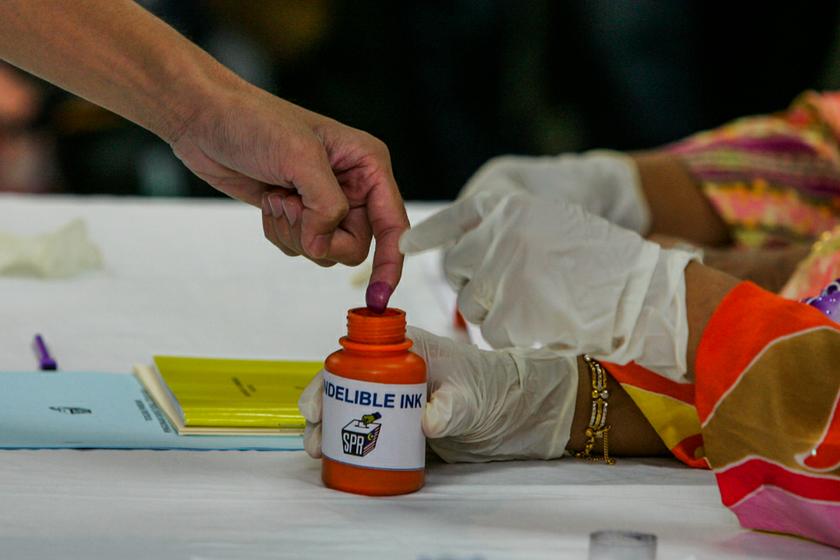


KUALA LUMPUR, Sept 27 — Spoiled votes or abstention as forms of voter protests will benefit the incumbent administration that has the benefit of entrenched support and better machinery, according to analysts.
They were responding to a recent Malay Mail Online report about young voters possibly not voting in the 14th general election due to unhappiness with both the ruling Barisan Nasional as well as the Pakatan Harapan opposition pact.
“[By] not voting in a not yet two-party electoral system, they are essentially ensuring the victory by the ruling party, which has more wherewithal to organise mass voters turnouts in their favour,” political analyst Oh Ei Sun said.
The adjunct senior fellow at the S. Rajaratnam School of International Studies in Singapore also suggested that protest votes be reserved for when a country’s democracy was more established and mature.
Analysts also noted that BN has traditionally brushed off drops in voter turnout while the Opposition’s recent success coincided with higher participation at the ballot boxes.
Election 2008 was the first time since 1969 that BN lost its supermajority in Parliament. Voter turnout was 76 per cent then.
When this rose to 86 per cent in 2013, BN also lost the popular vote to the defunct Pakatan Rakyat pact, but was able to retain power.
Comparatively, in Election 1999 when the turnout fell to just 69 per cent, BN still won 56.5 per cent of the votes and 148 seats in Parliament.
UUM vice-chancellor Datuk Seri Dr Mohamed Mustafa Ishak explained that the ruling BN was less susceptible to protest votes as its support base was both bigger and more established.
He said that protest voters were also more likely to be fence-sitters, possibly younger voters without strong political affiliations yet — the segment that is customarily more likely to be anti-establishment.
According to the Election Commission, there are over four million youths who are eligible to be voters but are not registered to do so.
“Only those who are uncertain with PH will choose to abstain, and this will give BN a bigger majority win because BN has a ready pool of supporters,” he said.
Universiti Sains Malaysia’s Prof Sivamurugan Pandian also believed that the bulk of protest votes will likely come from younger voters.
“High voters turnout will be an advantage for the Opposition but if voters choose to protest, it will most likely come from the younger generation.”
Malay Mail Online previously reported that some middle-class young voters were considering not voting or spoiling their ballots in the next general election due to unhappiness over the perceived similarities between BN and PH.
In a recent survey titled “Youth Perception on Economy, Leadership and Current Issues”, Merdeka Center also found that only 30 per cent of the youths polled cared about politics, while the rest were more concerned about the economy.
The 14th general election must be held no later than August 2018.