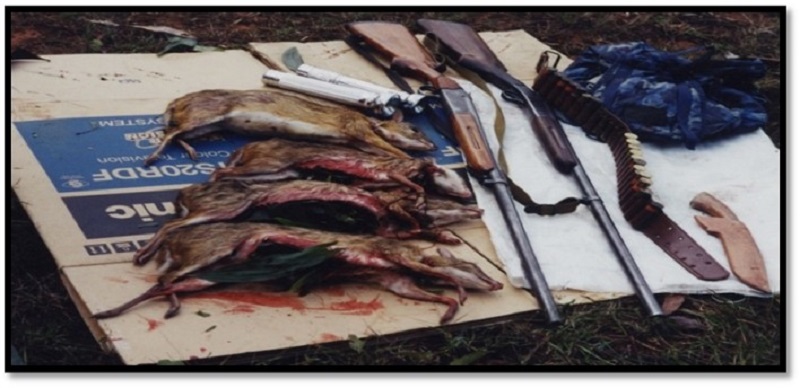
KUANTAN, Sept 27 — A slow but steady number of foreigners are illegally hunting for endangered species in Malaysia’s jungles, according to the Department of Wildlife and National Parks (Perhilitan).
Its enforcement division director, Salman Saaban, said an increasing number of foreign poachers were being picked up by his officers.
Salman said 41 poachers were arrested between 2011 and last year, with the majority caught in 2015. Most of them were Vietnamese, Laotians and Cambodians.
“A decade ago this was almost unheard of but we are now picking up an increasing number of offenders from Indo-China in our jungles and state parks, especially in Taman Negara,” he said at a recent “Combating Obstacles in Wildlife Crime Prosecution” workshop in Taman Negara, 215km from here.
“We believe this is partially due to the shortage of game in their countries and they have turned to coming here to hunt.”
Salman said 23 arrests were made in the first half of this year, involving 11 Cambodians, 11 Indonesians and one Vietnamese.
This represented a surge, as between 2014 and 2016, a total of 19 Vietnamese, 20 Cambodians and one Thai were arrested for encroaching on national parks, compared to 17 Malaysians.
He said the foreign poachers were particularly skilled at surviving and operating deep in the jungle, typically for months at a time.
“They operate with simple equipment such as machetes, axes and steel wires to make traps. Rations are basically rice and they catch deer, frogs and other animals for food,” he said.

“We have not found any with firearms yet but the foreigners are aggressive, which is why we collaborate with the armed forces when on patrols.”
Salman said the wire snares were particularly destructive to wildlife as they were indiscriminate and killed and maimed other wildlife not on poachers’ lists.
“These traps are silent and pack a great amount of force, and are even capable of severely wounding animals that manage to break away. Some animals chew through their own limbs to escape,” he said.
“We are concerned the foreigners may join forces with local poachers who have firearms and other methods of trapping animals. These are worrying developments.”
Although Malaysians formed the bulk of poachers arrested by the officers, this could not be taken to mean the majority were locals.
“The foreigners could just be better at evasion. The individuals are not simply factory workers looking for additional income. It is difficult work and requires certain skills,” Salman said.
He said it was possible they had entered the country in illegal fishing vessels.
We are doing the best we can with what we have but unless new resources and legal tools are made available, we run the risk of losing more of our irreplaceable fauna,” he said.
* This is the first of a two-part series on the state of the illegal wildlife trade discussed at a recent seminar in Taman Negara, Pahang.