


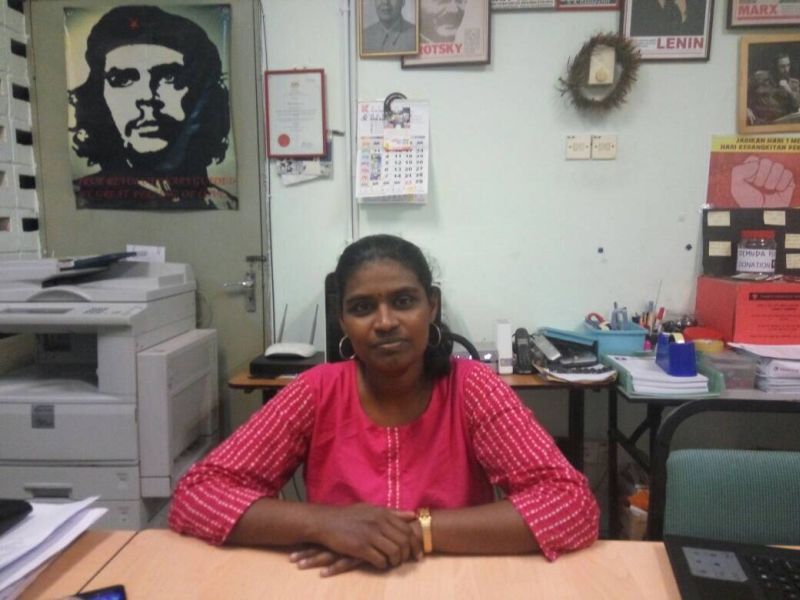
KUALA LUMPUR, Aug 7 ― A Parti Sosialis Malaysia (PSM) leader has rued Putrajaya’s decision to delay the Employment Insurance System (EIS) Bill to the next parliamentary meeting for further consultation.
PSM workers bureau chief M. Sivaranjani said the party was sorely disappointed after the Bill that was to provide unemployment benefits fell through.
“We were promised this Bill will be tabled for second reading on Monday and subsequently passed in the same sitting.
“But now the government has made a U-turn,” Sivaranjani told Malay Mail Online in a text message when contacted for response yesterday.
Sivaranjani previously said representatives from the Ministry of Human Resources and the Social Security Organisation (Socso) had assured the Opposition party in a meeting last week that the Bill would be passed so that it can be implemented from January next year.
“Even though we had a number of concerns on this Bill, which needs amendment, but we still wanted this Bill to pass as many workers are losing jobs now.
“They would have something, rather than now nothing,” she said.
Other PSM leaders contacted by Malay Mail Online declined comment on the matter, promising that the party will instead explain at length in a press conference tomorrow.
The EIS, which would allow retrenched workers to claim a portion of their insured salary for between three and six months of unemployment as well as allowances, was tabled for the first reading in the Dewan Rakyat last week.
Contributions to the Employment Insurance Fund, which will be based on the worker’s salary, are split equally between the employee and the employer. The contributions based on fixed rates range from 20 sen for workers earning RM30 monthly to RM59.30 for employees earning RM4,000 and above a month.
Employers have since expressed misgivings over the proposed law that would provide a safety net for retrenched and unemployed workers, citing the added cost as well as apparent redundancies.
The Malaysian Employers Federation also questioned the rationale of collecting an estimated RM1.6 billion annually for the EIS, or over five times the compensation for all workers retrenched in the Asian Financial Crisis.


