


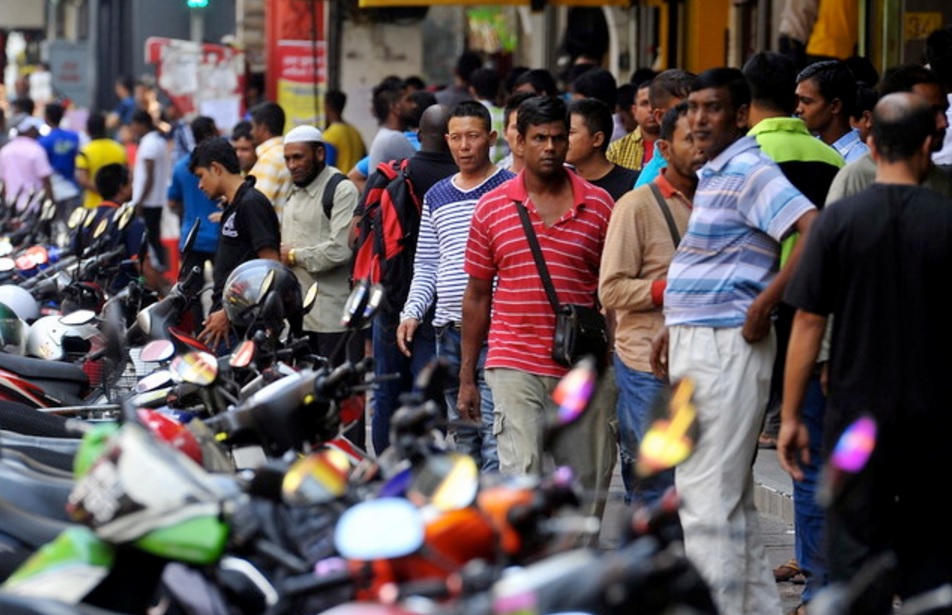
KUALA LUMPUR, Jan 18 — The Malaysian Economic Association (MEA) has warned the country today against its dependence on foreign unskilled labour, explaining that continued reliance will adversely affect the country’s gross domestic product (GDP) growth in the long-term.
The body of professional economists said foreign unskilled labour will not only drive a low wage culture and low purchasing power, but also replace local labour.
“The substantial growth of foreign unskilled labour has raised concerns of driving a low wage culture and a low purchasing power syndrome which has longer-term implications on GDP growth,” its deputy president Datuk Latifah Merican Cheong said in a statement.
“Indeed, migrant workers do fulfill a gap in labour shortages, especially in jobs shunned by Malaysian workers, the 3D of Dirty, Dangerous and Difficult. However, the substitution of low skills and low wages has proven detrimental to economic growth prospects through perpetuating low productivity,” added Latifah, a former assistant governor of Bank Negara Malaysia.
MEA said Malaysian employers have been accustomed to “easy, cheap, low-wage labour” leading to resistance, among others to the implementation of levy payment on foreign workers by employers under the Employer Mandatory Commitment (EMC) which has now been postponed to next year.
On December 31, Deputy Prime Minister Datuk Seri Ahmad Zahid Hamidi, who is also home minister, had announced employers would be responsible for paying the levy of their foreign workers which would be enforced under the EMC.
The body said the move must continue next year despite calls for its abolishment, while Putrajaya must use the grace period to implement a more comprehensive policy and ecosystem so employers can receive incentive to leverage on foreign labour to raise their productivity.
“There is also inadequate incentive, fiscal or otherwise to incentivise firms to raise productivity with a better balance of use of capital and skilled labour. The competition playing field is also not developed for firms to increase dependence on equipment, machinery and technology and pay higher wages in a competitive labour market,” it said.
According to MEA, Putrajaya must introduce a viable system that is efficient and corrupt-proof to regulate foreign workers, which include very strict rules on foreign labour recruitment.
MEA also urged appropriate incentives to increase automation and subsequently reduce such dependency, for example a reward system for progressive reduction in employment of low skilled foreign labour.
“Malaysia’s economic growth is dependent on the quality of its workforce, and this applies also to the foreign labour recruitment policy and skills development for foreign labour. This means that the foreign labour policy must go beyond a policy on recruitment.
“It must be part of the overall strategy for a well-functioning competitive labour market with enough incentives to increase capital investments to support higher productivity of labour,” it said.


