


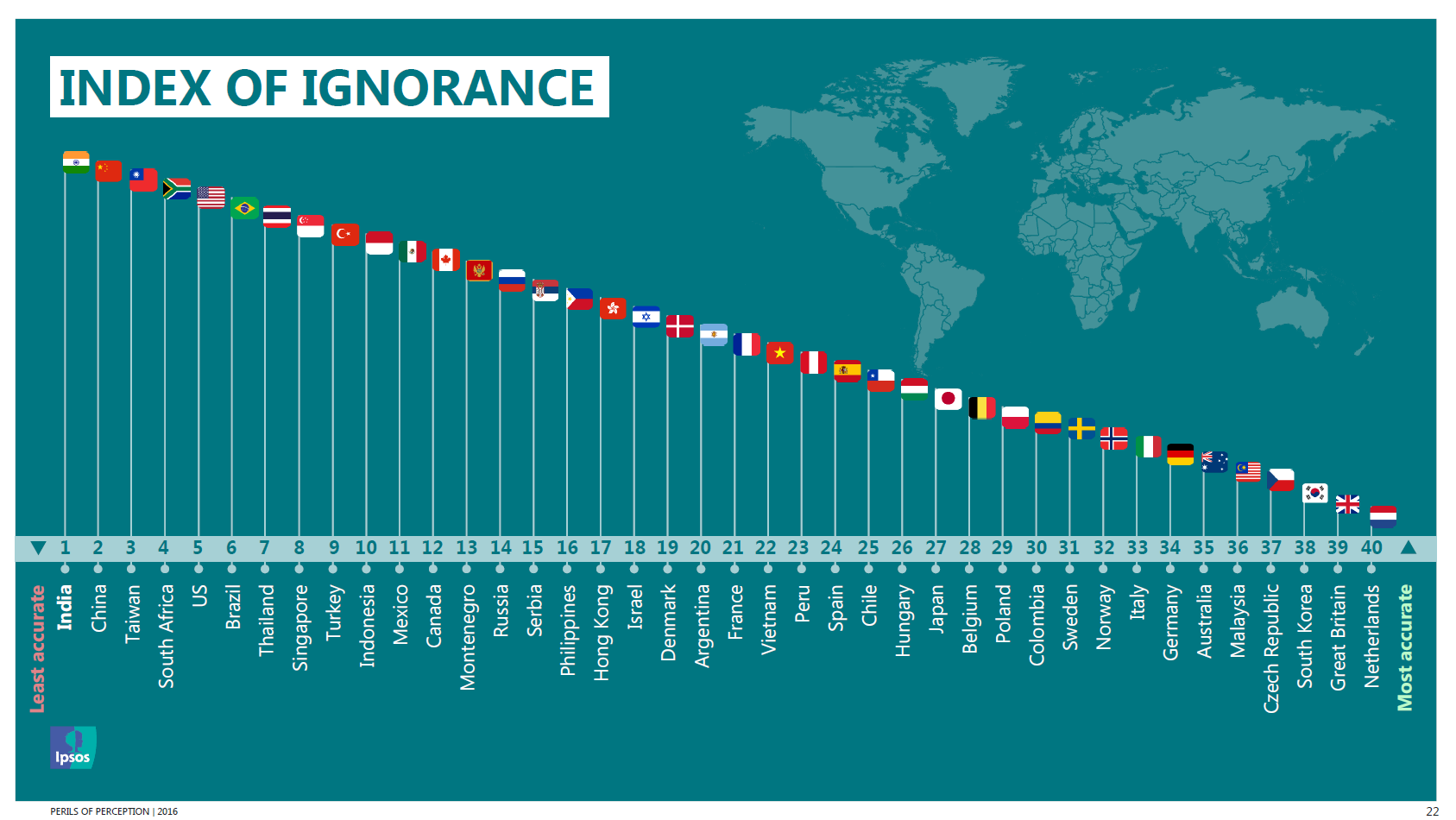
KUALA LUMPUR, Dec 20 — Malaysia ranked 36th in a global ignorance index conducted by consultancy group Ipsos, doing fairly well in discerning perception from reality on key universal issues out of 40 other countries surveyed.
Despite that, the “Perils of Perception” survey found Malaysians to be among the worst in telling apart reality from perception in several issues like home ownership and healthcare expenditures.
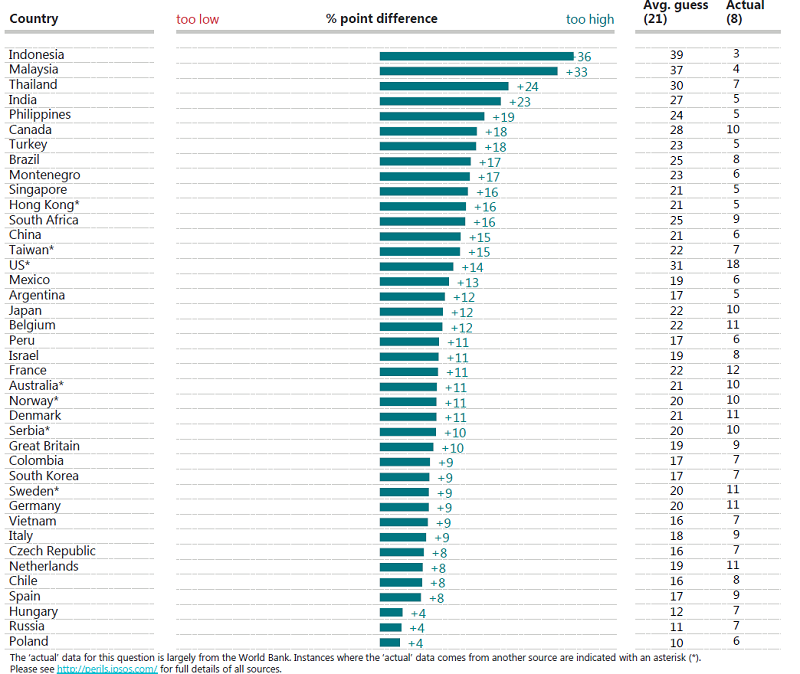
“On health spending, we think we spend nine times as much as we actually do on our health. We think we spend 37 per cent of our total GDP on health expenditure when in fact we only spend 4 per cent. If our guess was right, this would be the equivalent of an extra RM350 billion spending on health,” Ipsos said in a statement accompanying the survey.
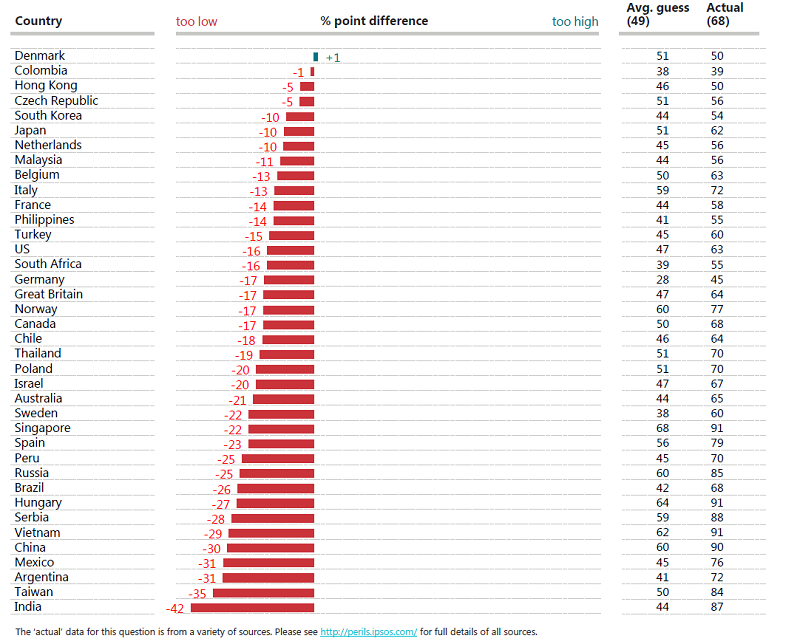
On how many Malaysians owning homes, the firm found that most of the respondents felt that only 44 per cent of Malaysians own homes, when actually more than half of the country’s 30-plus million population are homeowners.
“Most countries tend to massively underestimate how many households own or are buying their own home. We think just 49 per cent of people own or are buying their home, when in fact 68 per cent are owner-occupiers across these countries,” the report said.
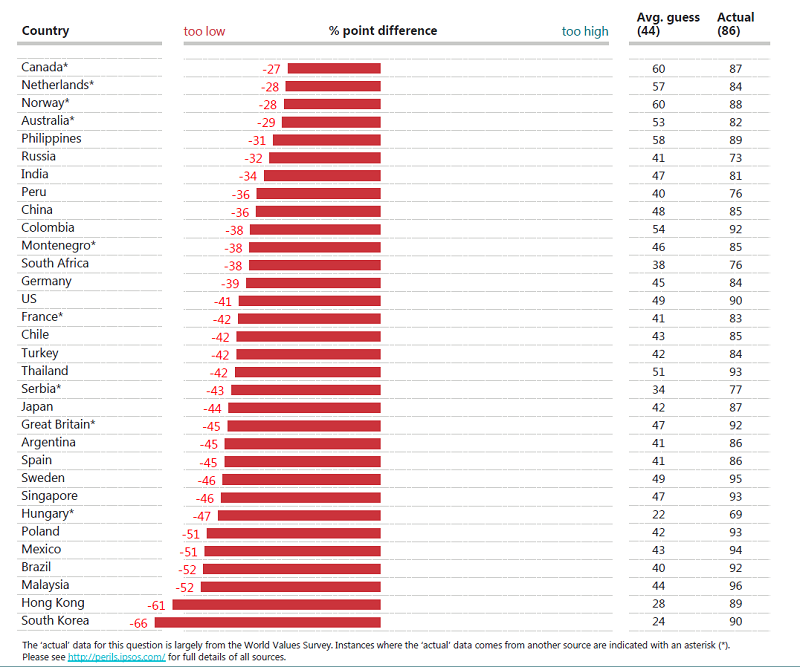
Malaysians were also found to be among the top 10 most pessimistic countries.
“We think our fellow Malaysians are much more miserable than surveys of happiness show. We guess that only 44 per cent of Malaysians would say they are very or rather happy, when actually 96 per cent say they are in a recent representative survey,” the report said.
Malaysians were also found to be the most ignorant about its population number. While in most cases people were within 5 per cent of the actual figure, less than 1 per cent of Malaysians knew that the country’s actual population is 30.33 million.
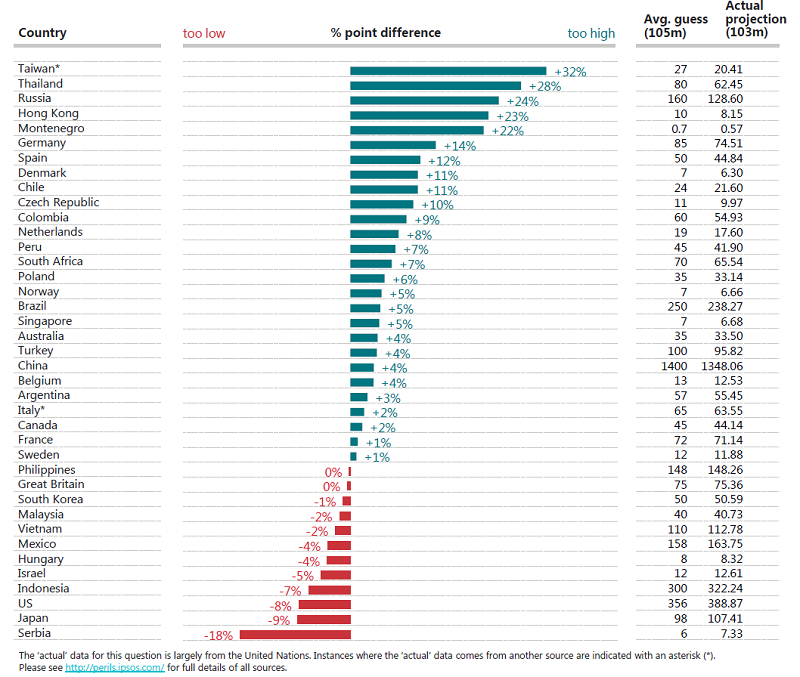
At the same time, the report found that neighbouring Singaporeans underestimated their country’s population by at least 10 per cent.
Bobby Duffy, managing director of the London-based Ipsos MORI Social Research Institute said the survey was crucial in understanding just how far people are able to differentiate reality from perception, noting that most were completely off the mark when it comes to issues discussed in the media.
“Across all 40 countries in the study, each population gets a lot wrong. We are often most incorrect on factors that are widely discussed in the media, such as expenditure on health. We know from previous studies that this is partly because we over-estimate what we worry about.
“But in this new study we also show that we’re often unduly pessimistic about how happy people are. In many countries, particularly in the West, we have a picture of our population that is unduly miserable and intolerant. This is important: we know what people think of as the norm is important in affecting their own views and behaviours,” he said.
Duffy also pointed out that when people get their facts wrong, they tend to give overt focus on some issues, which could contribute to a skewed policies.
“We also get facts wrong that will make us focus on some issues more than they perhaps deserve: for example, we tend to think our populations are much less likely to own their own home than they actually are.
“In many countries we have received the message loud and clear that pressure on housing and affordability are serious issues, but we’ve underestimated how many still own theirhome”.
The Perils of Perception survey is held yearly and highlights how wrong the public across 40 countries are about key global issues and features of the population in their country.
* A previous version of this article erroneously stated that Malaysia was ranked at fifth place in the survey instead of 36th. The article has since been corrected.


