


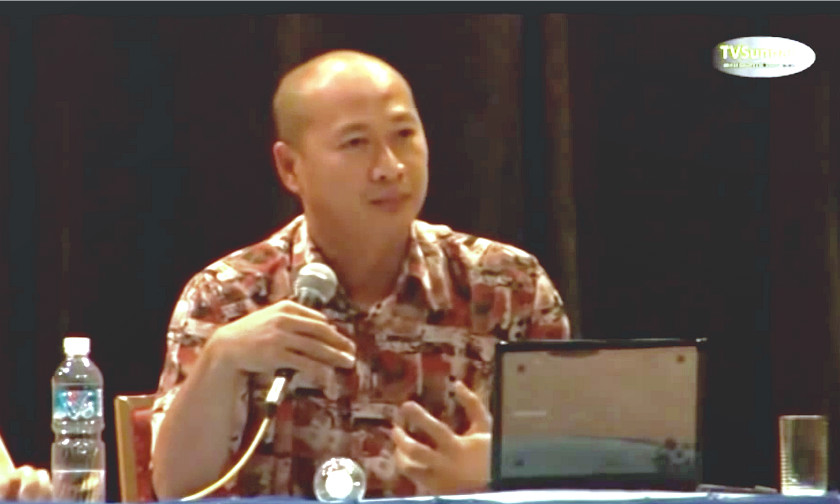
KUALA LUMPUR, Aug 15 — The “national agenda” relating to the Malay language and Islam as the country’s language and religion cannot be compromised, controversial columnist Ridhuan Tee Abdullah wrote today.
He said being tough on both matters would help instil greater patriotism when facing external threats, and alleged of ongoing attempts to undermine what he described as the national agenda and identity.
“If possible, there is desire to eliminate both, simply because they are linked to to the national language and religion, which are Malay and Islam.
“These two national agendas should be understood and embraced by all, without exception. Oddly, not only is it not being mastered, but it is being belittled and mocked,” he wrote in his column in local daily Sinar Harian, in apparent reference to the Malay language.
He stressed there should be no concessions made in matters relating to the “national agenda” as it involves the country’s sovereignty.
“The national agenda cannot be used as fodder for trial and error testing. It must be carried out without fear,” he said, saying Malaysians would otherwise be enslaved in their own country.
Ridhuan Tee then took aim at the “ultra kiasu” — a label he has used on various groups including the ethnic Chinese community — noting their continued opposition to PAS’s attempt to change the law to enhance the Shariah courts’ powers in meting out punishments, which seen by some as a backdoor way to allow enforcement of hudud laws.
“Why? Because they are afraid their illegal businesses will be affected,” he claimed when noting that the government had said the proposed law changes is not for hudud.
He also claimed the government was recently forced to concede to the “ultra kiasu” who banded together to oppose the segregation of the awards into Bahasa Malaysia and non-Bahasa Malaysia categories at the 28th Malaysia Film Festival.
Commenting on allegations that both Malay and non-Malay students were uninterested in attending national schools that were too Malay and Islamic, he claimed that there was a proposal to dilute these two characteristics in order to attract non-Malay students.
“Oddly, SJKC/T are not advised to dilute any their Chinese and Indian characteristics to better appreciate the national education philosophy and national agenda,” he said, referring to Chinese and Tamil vernacular schools by their initials.
Among other things, Ridhuan Tee said it was unfair to demand for national schools to be more liberal when their vernacular counterparts allegedly continue to be communal.
He then insisted that the command of the Malay language must be improved in such schools, with more class time for the subject.
He also said there must be a standardisation of the Bahasa Malaysia syllabus and examinations used by national schools and the vernacular schools, noting that this would save time and money in the preparation of tests.
“Believe it, if the BM paper is made uniform, surely more SJKC/T students will fail BM and be left behind because of their poor mastery of BM,” he claimed.
While acknowledging that the importance of learning foreign languages such as English and Mandarin, he was adamant the country could progress while maintaining his prescribed identity.
“There is no meaning to progress, if in the end, the country is developed, but the national identity is crushed and swallowed up by the secular age that will dehumanise humans,” he said.


