












KUALA LUMPUR, July 20 ― Many Klang Valley residents travel from their homes just outside Kuala Lumpur to work or study in the city every day. The irony is they contribute to the traffic snarl even as they themselves are trapped in it.
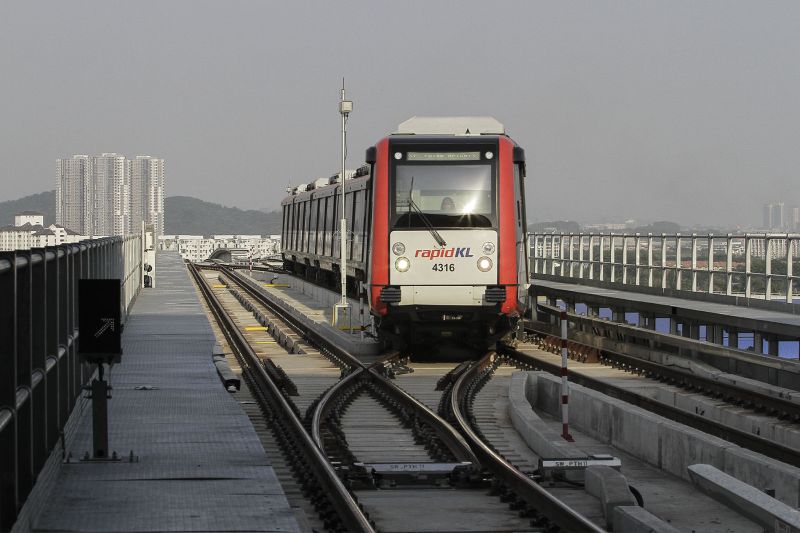
Commuting can take up to an hour or more one way but many are now enjoying better-connected trips with massive savings after rail operator Prasarana opened 23 new stations on both the extended Sri Petaling and Kelana Jaya LRT lines.
Some even became new converts to using public transport while others simply switched to a more efficient route.
Better quality of life
Systems analyst Noor Rehan Elias, 32, said she has been using the extended Kelana Jaya line since its launch on June 30.
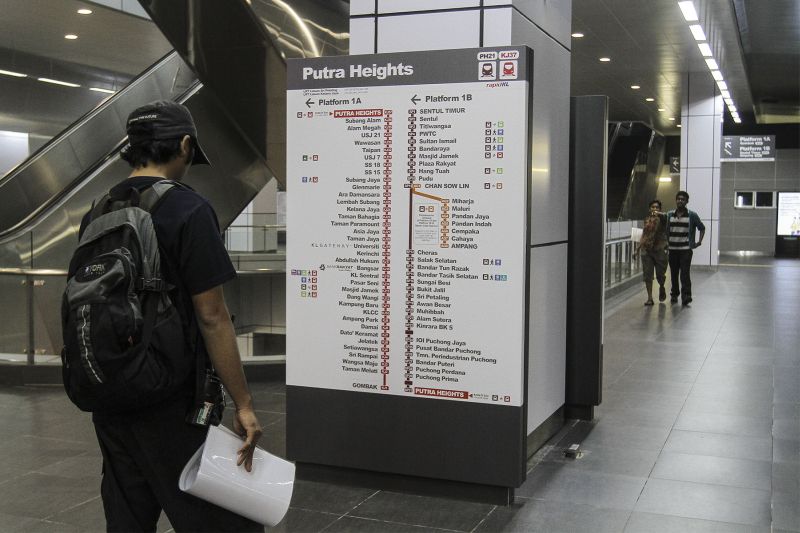
“Before this, normally I take two hours, from Bandar Saujana Putra to Masjid Jamek… that means I spend four hours travelling every day. Now I am using LRT, it's a total of just two hours in one day,” she told Malay Mail Online at the new Putra Heights LRT station that is about 15 minutes' drive from her home.
Before this, Noor Rehan's husband would drop her off at the Batu Tiga KTM Komuter station which is up to 30 minutes' drive away due to traffic jams, where she would have to catch trains with relatively long 15-minute intervals before switching to the LRT line at the KL Sentral transport hub.
Taking the new LRT directly to her workplace in the congested Masjid Jamek area is also cheaper with the discounted return fare of RM6.40 with the Smart 30 Monthly plan under Prasarana's MyRapid card, with total monthly costs coming up to around RM200 instead of RM500 if she drove directly to her office, she said.
A week ago, 38-year-old manager Prakash ditched the half-hour drive to Batu Tiga KTM station coupled with a 40-minute rail journey costing RM3 to get to his office in KL Sentral.
“[I used to drive] more than one hour. One hour at least if the traffic is good, but it can be quite tiring. Sitting in the LRT is convenient, I can do work with my laptop, I can read books, I have more time. If you are driving, you can't do anything right? Just have to focus on the road,” he said of his 50-minute commute now with the direct LRT trip from Putra Heights.
Prakash stopped driving about three years ago to his workplace where parking costs at least RM10 daily… and the parking lot was still a 10-minute walk to his office. He feels he is getting a good deal with the discounted RM3.60 one-way fare for a rail journey that brings him from train terminal to workplace via a five-minute walk under a covered walkway.
A secretary who only wished to be identified as Reena told Malay Mail Online that she had long dreamt of a time when her Puchong house would be connected by rail to her workplace in KLCC.
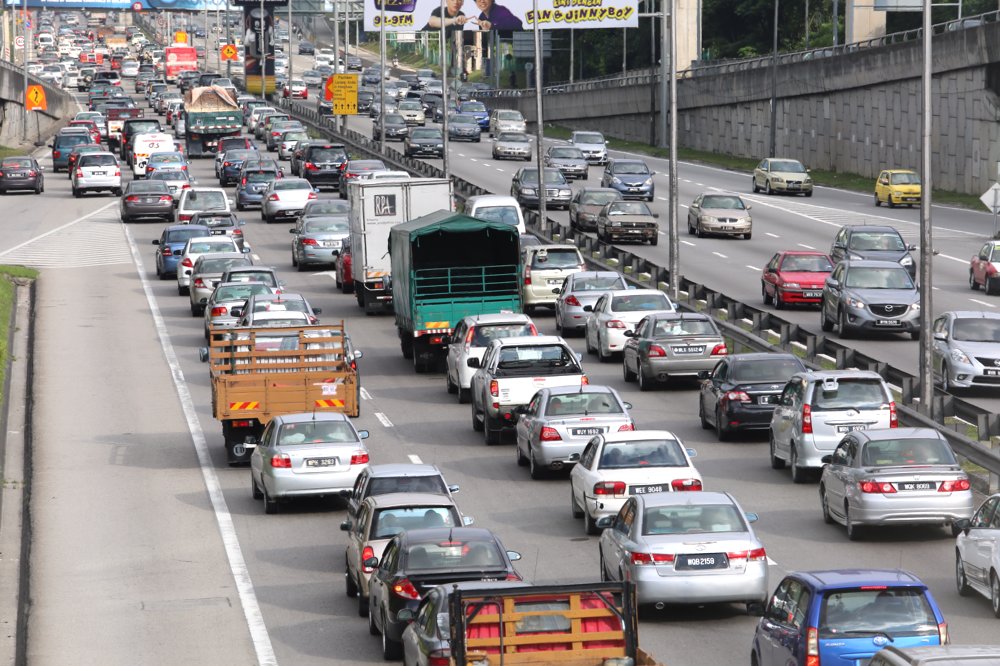
She used to drive more than an hour and spend close to RM50 daily (inclusive of RM15 parking fee, RM10 return toll fares, RM20 petrol), but now pays close to RM11 for a direct return trip of 45 minutes from Putra Heights to KLCC on the Kelana Jaya line.
The 34-year-old said she will not switch back to driving, although her husband continues to use the car as he has to drop off their children at school.
An engineer who only wished to be known as Lee said he used to spend an hour under normal traffic conditions to drive to work from his Puchong home and even spent two hours once stuck in a bad jam.
Lee, 45, said he started using the Kelana Jaya line from Putra Heights to Kerinchi last week, spending close to the equivalent of his toll fare of RM7.90 for a return train trip instead.
For commuters like university student and part-time worker Yap Yuan Ying, 22, however, the extended Sri Petaling line is just an additional option that she has to resort to when she does not have use of the family car.
She used to drive to the Sri Petaling LRT station where parking cost RM2 before taking the LRT to the city's Masjid Jamek station, but now occasionally has her family drop her off at the new Kinrara BK5 LRT station where the daily parking rate of RM4 would be too hefty.
Although she noted that frequency of the extended Sri Petaling line has improved from five to seven minutes to three to five minutes, she said it was still “very slow”, noting that the Kinrara BK5 route would also cost slightly more despite the discounted student rate and yet take more than an hour compared to the 45-minute journey from her house via the Sri Petaling station.
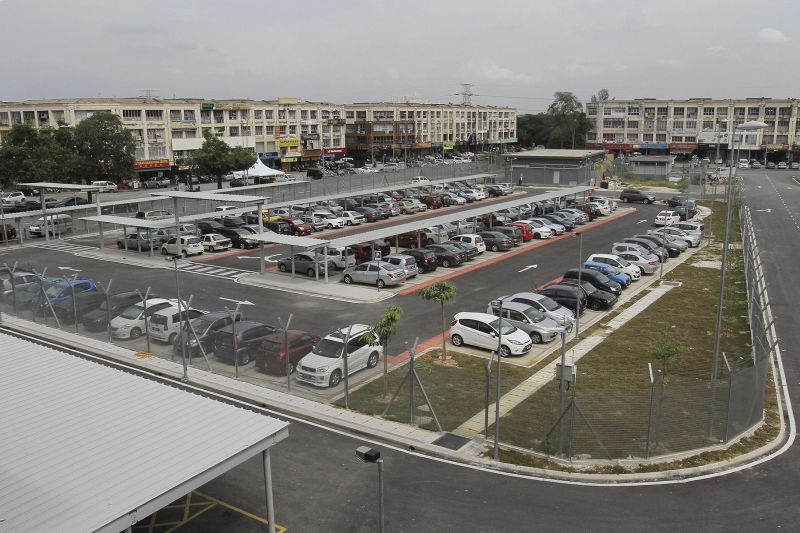
During Malay Mail Online's recent visit on a weekday during office hours to stations along the extended Sri Petaling line, many of the park and ride facilities were well-utilised with hundreds of the lots occupied.
Prasarana's head of media affairs Azhar Ghazali told Malay Mail Online that the parking bays available along the extended Sri Petaling and Kelana Jaya line are 2,200 and 2,036 respectively, and parking will be free for the first month but chargeable at RM4 per entry at the end of that period.
According to Prasarana, it had projected additional daily ridership numbers of 130,000 and 170,000 for the extended Sri Petaling and Kelana Jaya LRT lines respectively on top of the existing figures of 170,000 and 250,000.
Last weekend, Prasarana group communications and strategic marketing head Lim Jin Aun was quoted saying that the extended LRT lines have to date contributed an additional 23,000 in daily ridership numbers.
Nope, I'm sticking to driving
IT manager Alvina, 35, lives about 10 minutes by foot from the Kinrara BK5 LRT station while her office is a 10-minute walk from the Ampang Park LRT station.
But Alvina said she has never tried the LRT services and “honestly don't plan to” do so, believing that driving saves time compared to rail services as she only spends 30 minutes on the road.
“I do have parking provided by the company and I only pay one toll. It's just convenient for me to drive my own car. No issue with weather and I can go off any time I want. Also I can sit the whole time in my car rather than take LRT and make multiple stops,” she told Malay Mail Online.
Alvina also said that it was safer for her to drive instead of walk out to the LRT station as she leaves her home for work at 6am.
She spends RM50 on petrol and RM10 on toll per week, noting that she likes the “convenience” even if it costs her more than taking public transport.
As for Nicole Chan, who lives just five minutes by car away from the newly-opened Puchong Perdana LRT station, the 24-year-old secretarial executive also views driving as a more convenient option.
“I don't take the LRT, because if I took the LRT, I would have to walk for some distance for about 10 minutes and I would be sweating. All this while I did not take the LRT,” she said, noting that it was more troublesome in the past with fewer LRT stations available.
Chan, who does not have to pay toll, spends up to 90 minutes on the road with petrol costing up to RM150 and drives straight into her office building's basement parking that comes with monthly season parking rates of RM85.
Her college-going sister has benefited from the new LRT stations though, with family members dropping her off at the nearer Kinrara BK5 station just 15 minutes away instead of the Bukit Jalil LRT station that is half an hour away from their house.
Car-loving Malaysia needs more push
Ajit Johl, president of the National Public Transport Users Association, said Malaysia is a “car-loving country” where traffic congestion is bad but still bearable, unlike countries where traffic is at a standstill for several hours.
“It'll take a bit of time for people to warm up to the idea. It's not easy for users to ditch cars,” he told Malay Mail Online when contacted.
“We want the government to review prices of public transport, it should be brought down in view of current economic conditions. We hope the government can give a concession period to bring down fares to encourage use of public transport,” he said, suggesting a period of at least three years.
Claiming that the full car parks in the city is a sign of the failure of the public transport system, Ajit said the government's foresight in building the upcoming Mass Rapid Transit (MRT) and extension of LRT lines should be matched by policies that would discourage Malaysians from owning cars ― including heftier road tax and higher speeding fines.
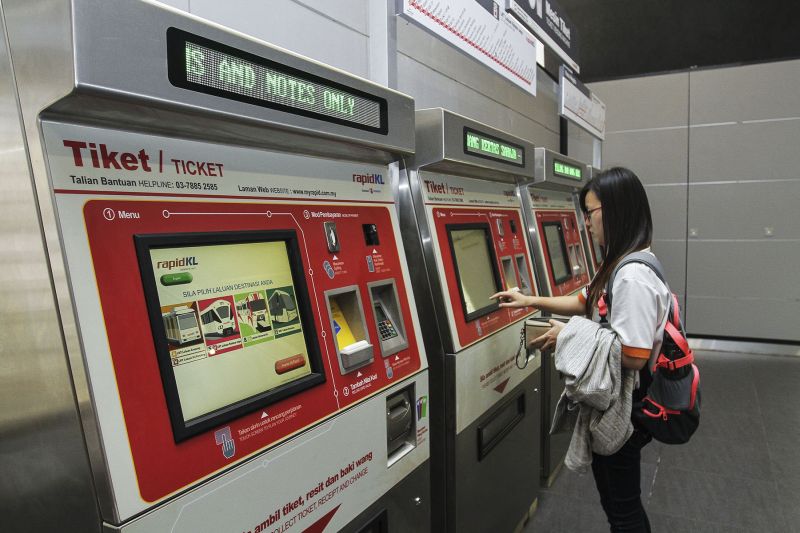
Last December 2, Prasarana revised its fare system, introducing distance-based fares where passengers pay less the further they travel on LRT and monorail lines.
Prices also come in various ranges for the same journey, with tokens purchased with cash costing the most, while a cashless option such as the Touch n' Go card or Prasarana's MyRapid card would be slightly cheaper.
Further discounts are provided for those subscribing to the weekly pass or the monthly package on their MyRapid card, while students, senior citizens and the disabled with a concession card receive discounts of 50 per cent of the cash rate.