




PERTH, June 12— The search for Malaysia Airlines’ missing Flight 370 on the floor of the southern Indian Ocean is nearing an end with no sign of the plane in the area that investigators had concluded it most likely went down, prompting a last-ditch reassessment of assumptions used to calculate its final descent and draw the search zone.
At issue are estimates of how far the plane may have travelled after it ran out of fuel, notably whether it followed a tight or broad spiral down as it fell or glided toward the ocean, officials said.
“We’re really doing further work to test our assumption about the end of flight, which defines our search area,” said Martin Dolan, chief commissioner of the Australian Transport Safety Bureau. “It’s really testing to make sure we haven’t missed anything, and that our assumptions remain valid.”
The failure to find any wreckage in the area also raises the possibility that the plane began descending earlier, or perhaps changed course in an attempt at an emergency landing at sea, though investigators have discounted these outcomes as inconsistent with other evidence.
There is still hope that the plane will be found in the search zone, an expanse of 46,000 square miles, about the size of England. But ocean survey vessels have scoured about 90 per cent of the area and are expected to finish the rest in August. Unless new information emerges, that is when the governments of Australia, Malaysia and China plan to abandon the search, leaving one of the greatest mysteries in the history of modern aviation unsolved.
Flight 370 disappeared on March 8, 2014, while flying to Beijing from Kuala Lumpur, the Malaysian capital, carrying 239 passengers and crew members from 15 nations. An analysis of radar and satellite communications data determined that the Boeing 777-200 made several turns and then flew south for five hours with little deviation. But investigators never pinpointed where the plane ran out of fuel.
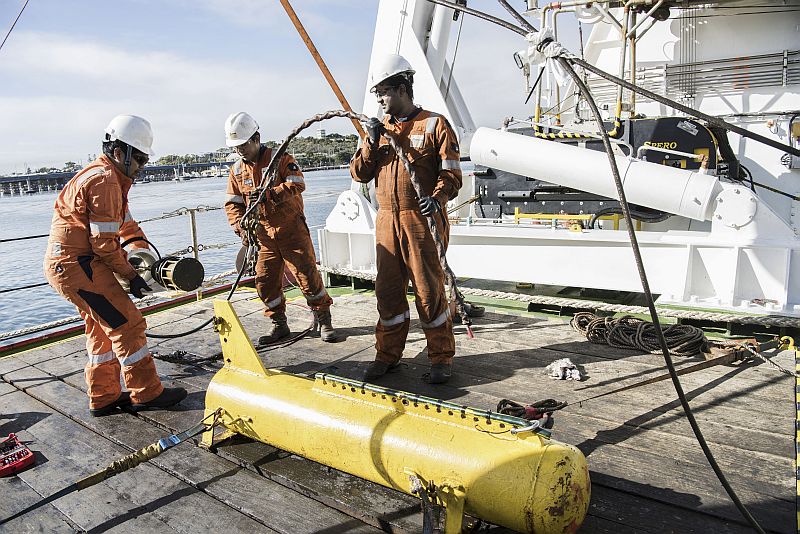
Instead, they identified a 400-mile arc from which the plane most likely sent its last satellite signal. Survey vessels have been going back and forth at walking speed across that swath of the southern Indian Ocean for two years, using sonar devices towed over the seafloor to scan the Stygian depths more than two miles below the waves.
Investigators are now asking whether they have been looking in the right place. They are reconsidering an assumption that when the plane’s engines ran dry, the aircraft spiralled into the sea without traveling a horizontal distance of more than 10 nautical miles — a relatively tight spiral.
Analysts at Boeing and elsewhere have been re-examining their models of how the aircraft operating under autopilot might have responded to an initial loss of power on one side of the aircraft, and, up to 15 minutes later, on both sides. The simulations assume the right engine ran out of fuel first, because over its years of service that engine on the aircraft had tended to burn slightly more fuel than the left engine, according to records from Rolls-Royce, the engines’ manufacturer.
The three countries bankrolling the search for the missing Boeing 777-200 agreed in April last year not to expand the search area unless new information provided clear clues that the plane was somewhere else.
So far, no evidence has emerged that would justify an expanded search, Dolan said.
While the search for Flight 370 is the largest and most costly in aviation history, relatives of passengers on the plane have called for it to be extended, as have many scientists, pilots, hobbyists and others mesmerised by the mystery of its disappearance.
“There is no reason we should give up the search — at least they have to give us an answer,” said Steve Wang, a technology company salesman in Beijing who has served as an unofficial spokesman for the families and whose 57-year-old mother was on the plane. “Everything about MH370 remains a mystery — what happened, and how?”
The search zone was calculated using the last automatic signal sent by the aircraft’s engines to a satellite right before it disappeared. The signal indicated that the satellite system had been reset, suggesting a power failure, possibly caused by the engine’s running out of fuel.
Though the signal did not include location data, analysis of the time it took the transmission to travel to and from the satellite led investigators to focus on the 400-mile arc.
But Duncan Steel, a scientist on a panel of experts that has advised the Australian government, said the arc might have been drawn too far south. Investigators have assumed the plane was at cruising altitude when it sent its last signal, he said, but if the plane had started descending earlier as it ran low on fuel, it would have covered less distance before it hit the ocean. — The New York Times


