









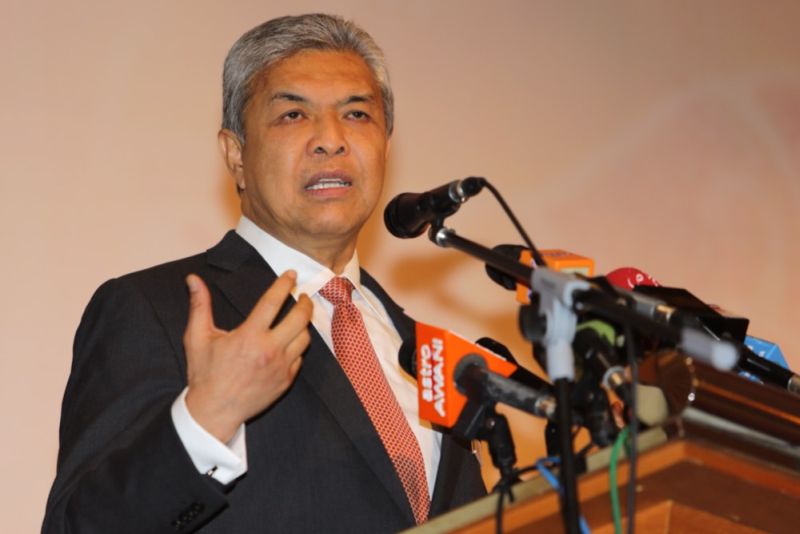


KUALA LUMPUR, March 8 ― Prime Minister Datuk Seri Najib Razak was among several Malaysian leaders on a kidnap list by world terrorist group Islamic State (IS), his deputy and Home Minister Datuk Seri Dr Ahmad Zahid Hamidi disclosed in Parliament today.
Ahmad Zahid said there were no IS branches in the country, but added that many Malaysians were influenced by the militant group's ideology and took orders directly from leaders in Iraq and Syria.
“On January 30, 3015, 13 people with Daesh links have planned to kidnap the country's leaders, including Yang Amat Berhormat prime minister, the home minister and the defence minister,” he told the Dewan Rakyat, referring to IS by its Arabic acronym.
Datuk Seri Hishammuddin Hussein currently holds the defence portfolio.
Ahmad Zahid added that the kidnap plan was part of a list of events during the September 2014 and May 2015 period of activities by Malaysians with suspected links to IS.
In order to fund their jihadist activities in Malaysia, the same group allegedly plotting the kidnaps had also planned to rob a security firm's van that was carrying cash from Genting Highlands, he said.
The three other plots listed by Ahmad Zahid as foiled by local police include the September 2014 attempt to test explosives in Alor Setar in preparation for attacks on Shiah mosques and Chinese temples in Kedah.
The police also uncovered an April 2015 plot to attack Putrajaya with explosives and the May 2015 plot to blow up Freemason Lodge building in Bukit Jalil, he said.
Ahmad Zahid said the government has stepped up efforts to monitor the IS terrorist group, with the Home Ministry and police sharing information with agencies from abroad, especially with those from Asean countries.
Malaysia has been able to track down these suspected IS recruits as a result of the intelligence exchange, he said.
The names of these individuals with suspected links to militant activities have been forwarded to the Immigration Department for blacklisting and for inclusion into the Suspect List to restrict their movements at the country's entry and exit points, he said.
The Advanced Passenger Screening System will be used to check those passing through Malaysia and the Malaysian Communications and Multimedia Commission will also be monitoring social media users.